






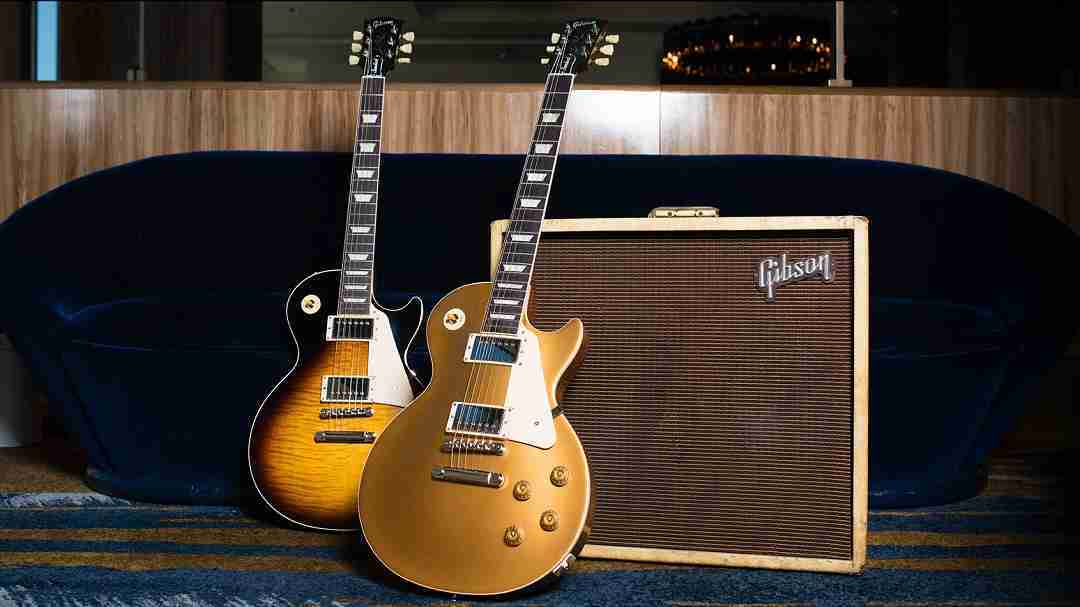
Gibson, guitars of legend
Earn 10.00 Reward Points by commenting the blog post
Introduction
Gibson, on this name falls the weight of being the legend of rock music. Gibson guitars are the dream of many young guitarists, who hope to one day have a Les Paul Standard like Jimmy Page and be able to play “Starway to heaven”. Believe me, some dreams come true, this is the story of one of them.
The thing about dreams, at least mine, is that in the morning we don’t remember what we dreamed. However, I keep alive in my brain, as on the first day, a dream with the image of Peter Frampton on the cover of his double live LP “Frampton Comes Alive!”.
That happened when I was 16 years old (what a time!) and, in my daily transit, on José del Hierro Street (Madrid), there was a small record store where, in its window, Peter Frampton’s double LP looked spectacular. There he was, blonde, long, thin hair, and in his hands, a stunning black Gibson Les Paul Custom 3-pill. I always stayed for a while watching, many days, other days.
Weeks later I bought the record and listened to it two or three times a day. My mother was on the verge of a nervous breakdown. I dreamed of that guitar that “talked”.
Many years later, in a fit of illusion, I bought it. It took over 4 months to come, and, when I opened the case, I couldn’t help but get excited. That beautiful dream had come true and I enjoyed the best company with that guitar for a few years. Later I sold it, got rid of it and it was a very sad goodbye. I know he’s in good hands and I thank him because it was the guitar that brought me back down to earth. I will always remember her.
This is my little story with Gibson and that Les Paul Custom Signature Peter Framptom that gave me unforgettable moments. That’s how I got to know Gibson guitars.
But these guitars are the protagonists of many more things, and most importantly, they are in the songs and in the hands of the musicians. The importance of Gibson guitars in the world of music (blues, jazz, contry, rock, pop, heavy, folk, etc…) is immense. It’s been 130 years and they’ve become legendary guitars.
History
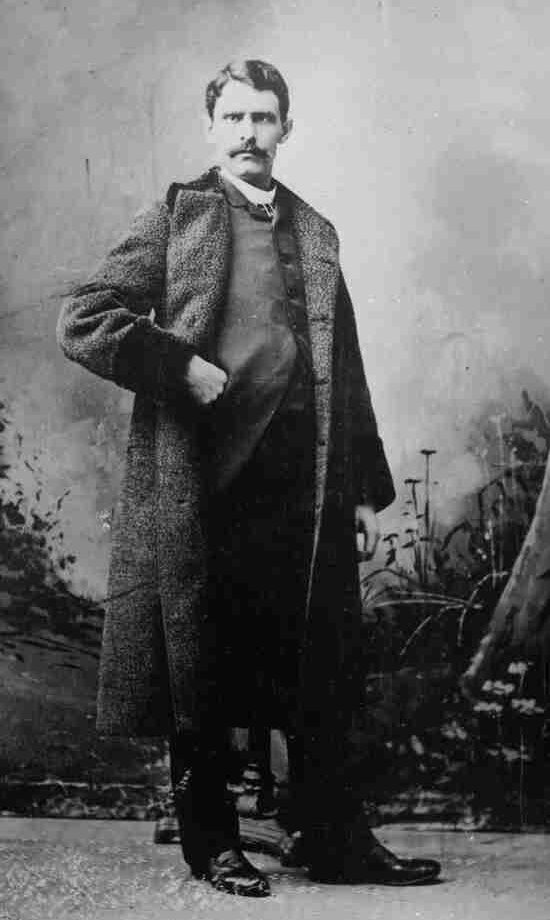
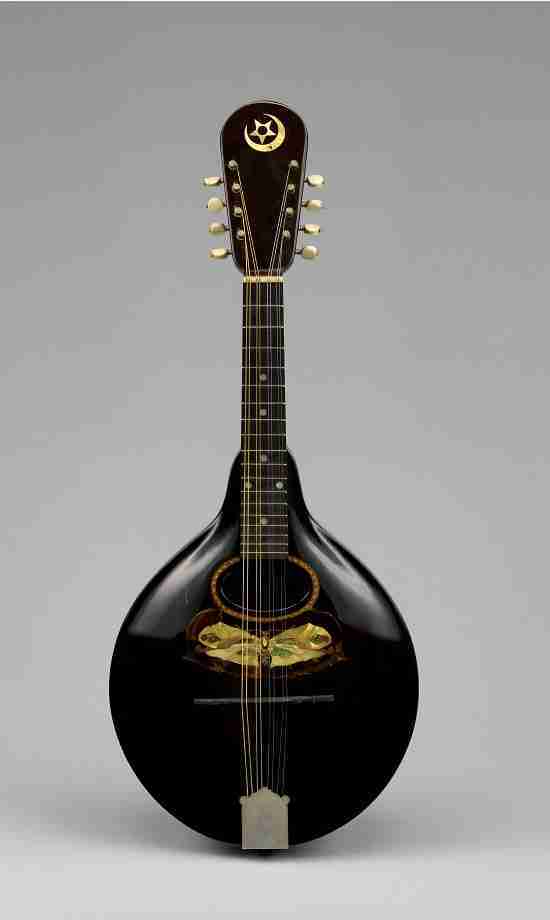
Gibson began in 1894, when Orville H. Gibson (1856-1918), an American luthier, made mandolins and guitars in his home workshop, in Kalamazoo, Michigan. Self-taught, his instruments were unique, with carved and arched tops (like a violin). His creations were so different that he was granted a patent for their design, and they were stronger and more durable than the others. Soon, musicians began placing more orders than he could build in his workshop.
Together with 5 Kalamazoo entrepreneurs, in 1902 they founded the Gibson Mandolin Guitar Mfg Co. Ltd. Soon after, the company’s board decided to pay Orville H. Gibson only for the time he worked for the company. Subsequently, it is unclear whether Orville worked there full-time or as a consultant. Considered “eccentric”, it has not been known if he suffered from any kind of mental illness. From 1908 he received a salary of $500 from the company. He was hospitalized several times between 1907 and 1911; In 1916 he was hospitalized again and died on August 21, 1918 at San Lorenzo State Hospital, a psychiatric facility in Ogdensburg, New York.
Since 1920, Gibson has created many innovations in guitar design, becoming the market leader in archtop guitars, such as the Gibson L5 model. In 1936 he introduced the first electrified Spanish guitar , the Gibson ES-150, recognized as the first electric guitar.
In 1944, Gibson was acquired by Chicago Musical Instruments. 1948 will be a key year for Gibson. Ted McCarty, a Wurlitzer piano worker, joins the company as a management and quality supervisor. The brand returned to the black and, in June 1949, McCarty became Executive Vice President, assuming the presidency in 1950. Undoubtedly, the golden age of Gibson with numerous releases of new guitars.
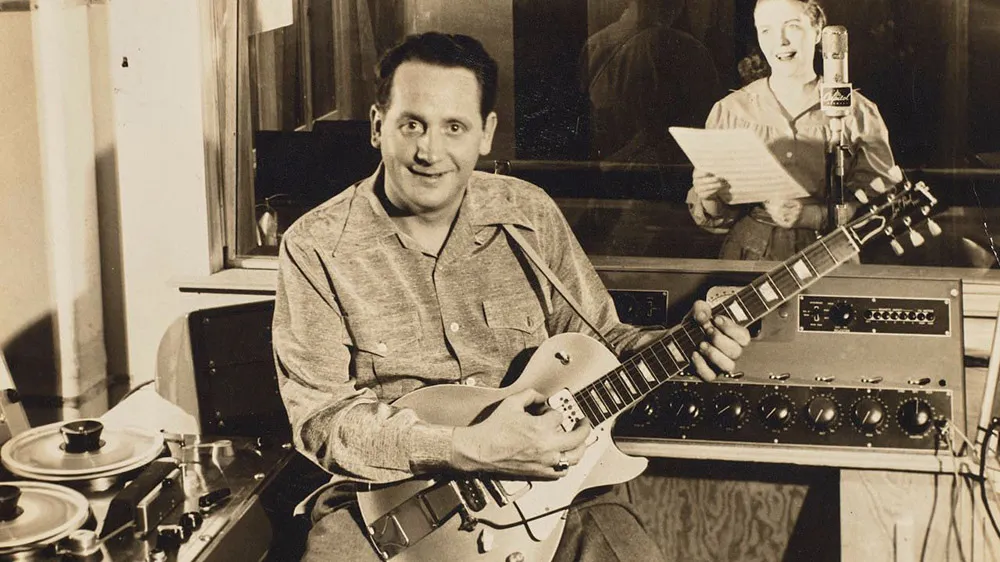
In 1905 1952, in collaboration with the jazz guitarist Les Paul (Lester William Polsfuss), launched a Solid body electric guitar called Gibson Les Paul. At the end of the 1990s, ’50 several new models were introduced: Gibson Explorer, Gibson Flying and the Semi-Acoustic Gibson ES-335. Pills were also presented “humbucker“, which would revolutionize the sound of the electric guitar.
In 1960 the drop in sales led to the reinvention of the Les Paul, looking for lightness in the body (maple/mahogany), cost savings and better access to high frets. It was simplified, reducing the thickness and eliminating the maple top, making a very slender body with double cutaway. (Something similar had already been done in 1959 with the double-cutaway Les Paul Junior .) The new model was introduced in 1961 as the Les Paul with the “world’s fastest mast”.
Les Paul, whose name was on the new model’s blade, didn’t like it at all and asked for his name to be withdrawn. From 1963 onwards, these guitars were marketed under the acronym SG (Solid Guitar).
In 1966, after 18 years with the company, Ted McCarty left Gibson. He was replaced by Al Stanley, who in turn , in 1968, was replaced by Stanley Rendell. That same year, the Gibson les Paul returned to the brand’s catalog, thanks to the influence of Eric Clapton, George Harrison, John Lennon, Paul McCartney and Peter Green.
In 1969, Gibson was acquired by Ecuadorian Company Limited, later Norlin Corporation.
The Gibson Les Paul and the SGwould become very popular among hard rock and heavy metal guitariststags. Jimmy Page (Led Zeppelin), Ace Frehley (Kiss), Dickey Betts (The Allman Brothers Band), Paul Kossoff (Free), Joe Perry (Aerosmith), Slash (Guns N’ Roses) and U2’s The Edge (U2) are known for using Gibson Les Paul. Frank Zappa, Angus Young (AC/DC), Tony Iommi (Black Sabbath) and Glenn Tipton(Judas Priest) are all known for using the Gibson SG.
Between 1974 and 1984, the Gibson factory moved from Kalamazoo to Nashville, Tennessee. Other production plants are: Memphis, Tennessee and Bozeman, Montana. The Memphis factory built semi-solid and custom guitars, while Bozeman’s built acoustic instruments. In 1986, Gibson was acquired by Henry Juszkiewicz and David H. Berryman.
In 2013 the name changed, Gibson Brands would be the new name. In 2018 the company went into Chapter 11 bankruptcy and became controlled by KKR & Co. and other creditors, appointing Nat Zilkha ( guitarist of Red Rooster) to the board of directors.
The dubious purchase of the Phillips’ sound division, in an attempt to Henry Juszkiewicz to convert Gibson Brands at “the best sound company in the world”, along with other factors such as errors in product development, poorly received innovations (G-Force auto-tuning), among others, bankrupted Gibson.


Fortunately for the music world, a new sage joined the company and, under the direction of James ‘JC’ Curleigh (from Levi’s Strauss), Gibson has been regaining his pulse. Going back to the essence, that is, to a very careful elaboration with exceptional woods and finishes. Abandoning “Dangerous” Paths (Tuning G-Force, Firebird X), rescuing the “usual” models with the “usual” specifications. At the operational level, the production centers were reduced to 2: Nashville (solid, semi-solid and custom guitars) and Bozeman (acoustic guitars).
Since 2021, Cesar Gueikian is in charge, having come from the The Commercial Department knows the company perfectly and has incorporated more freshness into the company. Gibson Brands, opening the company to young musicians (Gibson Garage), to the world of communication (Gibson TV, Gibson Gazette, Gibson Generation Group) and turning the Gibson world into an audio-visual experience. It has also rThe offer has been organized with: new collections (Original, Modern, Artist and Mod. Collection), bringing back the Custom Shop by giving a new prominence to the aging Murphy Lab and collaborating more actively with artists on the Signature collections.
And because every success has some luck, this Gibson revival had some luck too. The 2 years of the pandemic were a whirlwind of guitars playing in homes, which produced family savings and, therefore, new guitar purchases. In this way, Gibson’s “rebirth” was consolidated.
Today, Gibson is the go-to brand in the guitar world. Their products, due to their high quality , are highly appreciated and are used, after 130 years of history, by musicians from all over the world.

The Wood
Wood is the Main raw material in the construction of stringed instruments, whether guitars, mandolins, pianos, harps, etc… To Do A good guitar is needed Appropriate woods for: A) Withstand the tension of the strings. B) Give Stability and resistance to the guitartags. C) Promote the resonance and transmission of the sound produced by the strings, and D) Bring beauty to the guitar.
Guitar manufacturers use different species of woods, depending on the type of guitar and the part of the guitar in question. Thus, it is possible to find several species of wood in the same guitar. Gibson uses sustainable wood, i.e. responsibly and legally sourced from sustainably harvested and economically, socially and environmentally controlled forests. Some of the most commonly used species of wood in guitar construction are:

In an acoustic or electric guitar, wood plays a major role. The parts of a guitar where we will normally find wood are:
The Body
Where the sound is produced, either by means of a soundboard or with magnetic microphones (pickups). In electric guitars, the body can be solid or semi-solid (with openings or internal resonance chambers). On acoustic guitars it is completely hollow and keeps one or more mouths open. The body is attached to the mast (glued, bolted, through the body or glued and through the body but not completely).


The Top
It’s the upper part of the body, just below the strings. It can be made of the same wood as the body or different (it adds beauty and nuances to the timbre). On acoustic and semi-solid guitars it has resonant openings. On many occasions, for the top, noble woods are selected with beauty in their grain. In these cases, the lids can be tinted to achieve suggestive and shaded colors. They are then lacquered with a very thin layer of nitrocellulose.
Neck & Headstock
They are the ones that support the tension of the strings. The mast can have several profiles (C, D, U or asymmetrical) and in one or more glued pieces. They may or may not continue the plane of the body. In the case of Gibson, the mast maintains an angle of 4º on the body and blade, one of 14º/17º on the mast. The neck, in Gibson , is almost always glued to the body. The tuners and the top of the neck web are inserted into the headstock.It is also common to place the brand’s logo and model .
Fingerboard
It’s a slat of approx. 10 mm. thick, made of hardwood, where the nut and frets are inserted.It is glued to the mast and covers its core. To indicate the frets , elements of mother-of-pearl, abalone, marquetry or plastic, in the form of rectangles, trapezoids, circles, stars, etc., are embedded in the fretboard. Also, small circles of plastic (sometimes luminescent) are embedded on the side of the fretboard. The fingerboard, once sanded and grooved, composes a very slightly curved surface (not flat) where the notes are fingered and the warmth, brightness of the sound and the speed of execution are defined.

Hardware
In both electric and acoustic guitars there are metal components , called hardware. They are essential for operation and adjustments. We detail them below:
Headstock
It is the set of tensioners (tuners) of the strings that allow, through their rotation, the correct tuning of the instrument. Gibson generally arranges them symmetrical on the sides of the racket (3 to 3). They are usually metallic and the moth is shaped like a kidney, spatula, clover, etc… There are also some mother-of-pearl or plastic moths. The tuners go through the blade and are held by a screw at the bottom and a nut at the top, the stem has a hole through which the string will pass and be locked. The most used by Gibson are: Gibson Deluxe, Gotoh, Grover Rotomatics, Grover Mini Rotomatics, Kluson.


Truss rod
Invented by Gibson on 1921, is a threaded metal bar that has a metal fixing element to the mast at one end and a washer and an adjustment nut at the other end. Gibson uses 2 types of truss rod: Single Action Soul and Hot Rod Soul (this bar is double and soft action). The web runs along the entire neck and, at its exit to the blade, under the acetate plate, the nut appears for its adjustment: concave or convex. This adjustment allows the neck and therefore the fingerboard to be placed in their optimal position , compensating for the tension of the strings and adjusting the harmonic intonation.


Frets
The frets are thin strips of metal embedded transversely into the fretboard. These strips can be made of stainless steel, nickel silver, brass or bronze. They are placed at a certain distance depending on the scale of the guitar (distance that goes from the nut to the bridge saddle), achieving, with the plucking of the string between two frets, a musical note. Depending on the scale, the fretboard can have 18, 19, 21, 22, 24 or more frets.
The frets can be: Low Wide (Dunlop 6150 Scale) They are usually low and wide, ideal for chords and rhythms. Jumbo (Dunlop 6100 Scale) is the largest and tallest fret available. Due to its height, it is the fastest and most suitable for the solo guitarist. Medium Jumbo, (Dunlop 6130 Scale) is the most used, being between the measurements of the previous two, being a perfect compromise between speed and solidity of chord. It’s the one Gibson uses the most. Of particular note in the high-end models of the Gibson range is the protective ABS profiling of the fingerboard and fret edges.


Bridge and tailpiece
The bridge of electric guitars is a metal element that allows the strings to be held. If the headstock, through the rotation of the moths, allows the tuning of the strings, the bridge, with its adjustments, allows the distance of the strings to the frets and the intonation of the strings (harmonics) to be adjusted. There are several types of electric guitar bridges:
Fixed bridges: By means of metal elements (screws) they are fixed to the body of the guitar and allow its height to be adjusted. Examples in Gibson of this type of bridge are:
- ABR-1 – Part of 2 threaded rods in the body, to which a splined metal wheel is inserted that serves to support the bridge and adjust the height to the body. On the wheels rests the ABR-1 metal bar, which has 6 compartments where saddles are inserted (with or without a notch) that will remain under the rope. The saddles are crossed by a metric screw that in turn regulates the location of the saddle in the compartment, adjusting the intonation. This bridge was the one with which Gibson started the Les Pauls and usually uses tremolo tailpieces, such as Maestro Vibrola or Bigsby.

- ABR-1 Tune O Matic (TOM) – Designed by Ted McCarty from the ABR-1 bridge. The support bolts are replaced, which are now threaded onto a metal bushing recessed into the body. The bolt already contains the splined wheel for height adjustment and culminates in a cylindrical bar that is inserted into the bridge. Behind the bridge, a tailpiece is added to the assembly by means of 2 bolts with bushings. This tailpiece, called the Stopbar Tailpiece, is made of nickel-plated aluminum and is crossed by the strings. It is the bridge most used by Gibson and one of those responsible for the great “sustain” of his guitars, as well as excellent intonation.

- Offset Wraparound – This bridge is actually a modified tailpiece stopbar . The body is received with two bolts with metal bushings that will adjust, if necessary, the bridge in height. The strings are seated in the opposite direction through the tailpiece and go up the bridge at the top, where there are fixed saddles to separate the rope from the bridge. It has 2 small allen grub screws to detach the stopbar from the bolt if necessary and adjust the distance between the nut and the saddle. It’s a simple bridge and Gibson uses it for its Junior and Special Double Cut models.

Floating bridges: As the name suggests, they are not fixed, but rather “float” to achieve spectacular guitar sounds. They have additional adjustment mechanisms to regulate not only the pitch and intonation of the strings, but also to adjust the micro-tuning and action of the tremolo (metal bar that varies the tension of the string).
- Floyd Rose Original – Jimi Hendrix, famous guitarist of the ’60s, used his tremolo intensely, creating music far ahead of its time. This intensive use of the tremolo lever inevitably produced (due to the abuse of elongation of the strings) constant detuning. In 1976, Floyd D. Rose , after observing that his strings, when using the tremolo, slid through the nut, understood the reason for his out-of-tune. To fix this, he made a nut that locked the strings. And it worked!
- Then he also redesigned and perfected all the parts of the bridge, to achieve more performance without losing tuning. The idea is to lock the strings at the nut and bridge once the guitar is in tune. The bridge will adjust the height of the strings and, with the movable saddles, the intonation. Small mismatches in pitch or intonation are adjusted with small micro-tuning wheels. Underneath everything was very similar to what there was, springs and counterweight where the ropes were inserted. He subsequently signed a contract with Kramer, used by Eddie Van Halen , and the rest came on its own.
- Gibson uses it in some of its models (Axcess, Artist), but it is not lavish. Gibson is more fond of “surface” tremolos, which don’t require body emptying or additional drilling. To solve this problem and to be able to immediately install a Floyd Rose tremolo on a Gibson Tune O Matic, Floyd Rose devised the Floyd Rose FRX model, easy to install, easy to adjust, “surface” and with the same features as the Floyd Rose Original.


Acoustic guitars also have a bridge, as well as fixed and wooden! This type of bridge is glued onto the top of the body and then subjected to pressure for perfect fixation. Let’s take a look at what types of bridges Gibson uses in its acoustic guitars:
- Rectangular: Made of Ebony, with linear saddle by Tusq (GraphTech). Fixing of strings by means of ABS Pins.
- Traditional belly on the back : Made of Ebony, it presents the belly on the side of the mouth. It has a linear saddle from Tusq (GraphTech) and the strings are fixed with ABS pins.
- Belly upside down: Made of Ebony, it presents the belly on the opposite side to the mouth. It has a linear saddle from Tusq (GraphTech) and the strings are fixed with ABS pins.
- Dove: Made of Palo Santo, it is shaped like a mustache. It has two mother-of-pearl inserts on its sides. The saddle is linear and made of bone. The strings are attached using ABS Pins.
- SJ200 Moustache: A fine ebanistery exercise performed in Palo Santo with 4 mother-of-pearl inserts, linear bone saddle and ropes with ABS pin placement.
- Traditional Belly Up: Made of Ebony, in the shape of an extended bell. It features a linear bone saddle and ABS Pins.
Some bridges are inlaid with mother-of-pearl, either circular dots, rectangles , or other shapes. They are all handmade and adjusted one by one. The gluing of this type of bridge is made of animal glue.

Electronics
For an electric guitar, electronics are essential, as it will define its sound. In addition, thanks to the controls incorporated in the guitar, each musician customizes that sound to their choice. For an acoustic guitar, although it has a resonance chamber and at close range we can clearly appreciate its sound, in live performances it also requires electronics to amplify the sound and reach the entire venue. There are several electronic elements that guitars incorporate, let’s look at them one by one:
The Pickups
- Pickups (microphones) were created to capture the sound produced by the vibration of strings, take it to an amplifier and, by means of one or more speakers, be able to hear it.These electro-magnetic elements contain a large winding of copper wire and magnets. The vibration of the strings alters the magnetic field of the pickup and generates an alternating current in the winding. Through other components it is sent to the amplifier which, in turn, sends it to the speakers.
- The tablets are built on a nickel, brass or bronze frame, a sandwich coil of synthetic material (where the copper wire winding will be made), under which a magnet (ceramic or alnico) is placed. The sandwich coil has holes where metal bars will be inserted to capture the sound of each string. The tablets can be covered with a metal cap (nickel or brass), a plastic cap or bare. They can be single-wound or double-wound (humbucker). The pickups also have 2 screws to adjust their distance to the strings. Some models of tablets, to avoid noise and annoying couplings of single-coils, are bathed in a solution of paraffin and beeswax.
- In 1955, Gibson’s engineer, Seth Lover is tasked with working on a new microphone concept. One of the main problems with single-coil pickups was the annoying noise they generated at high volumes. Lover doubled the winding, reversed the polarity , and created the Humbucker pickup, called PAF for Patent Applied For .
- Magnets can be of 3 types: Ceramic: made from iron oxide and barium carbonate, which, after a high-temperature treatment, are converted into ferrite. These magnets provide a high level of output and are highly appreciated when high gain and distortion are needed. Alnico: these magnets are obtained from an alloy of Aluminum, Nickel and Cobalt. Depending on their power, they can be Alnico II, III, IV, V, etc… If you’re looking for a “vintage” sound, Alnico magnets will give you that kind of expression. The third type is the Neodymium magnet, the most powerful of all but least used.
Gibson has reorganized the world of its pickups, grouping them into 3 collections: Historic, Original , and Modern. The pickups most commonly used by Gibson in their electric guitars are:
- Custombucker: The Gibson Custombucker is the standard equipment for Gibson Custom Shop’s historic reissue guitars and is loved by guitarists around the world for its legendary PAF (Patent Applied For) tone, sweet and warm. Collection: Historic. Position: Any. Magnet: Alnico 3. Wiring: 2 conductors. Lid: None. Coils: Double black. Bathroom: no. Resistance: 8k. Price: €274.80

- Custombucker Underwound: The Gibson Custombucker is the Holy Grail of Gibson Custom Shop’s historic reissue guitars and beloved by guitarists around the world for its legendary PAF (Patent Applied For) tone, sweet and warm. Collection: Historic. Position: Any. Magnet: Alnico 3. Wiring: 2 conductors. Cap: nickel . Coils: Double Black. Bathroom: no. Resistance: 8k. Price: €322.80

- Dirty Fingers: The Gibson “Dirty Fingers” It is an exact replica of the famous humbucker from 1970. Has , 3 powerful ceramic magnets and produces a massive output without compromising the original tone. It allows you to tune the output of each individual string. The Dirty Fingers also features 4-conductor shielded wiring for series, parallel , or split-coil operation and is fully waxed to eliminate any possibility of mating. Collection: Original. Position: Any. Magnet: Ceramic 8. Wiring: 4 conductors. Cover: no. Coils: Zebra. Bath: Wax Potted. Resistance: 15k. Price: €139.00

- P-90 Dogear and P-90 Soapbar : The Gibson P-90 “Dog Ears” and “Bar of Soap” were introduced in the early 1950s. Gibson’s legendary P-90 single-coil pickup had a raw, powerful tone that helped define blues and rock and roll. Today, the bright tone of the P-90 is still considered a favorite by top musicians. Now the P-90 offers a little less output than a standard P-90 but with a bright, clear tone at any volume, with rich, defined harmonics.
- It has 2-conductor wiring and is waxed. The difference between one and the other is the anchorage: in the “dog ears” it is on the surface, while in the “bar of soap”, the anchors are internal. Collection: Original. Position: Any. Magnet: Alnico 5. Wiring: 2 conductors. Lid: Black Dogear and Soapbar Cream. Pills: Black. Bath: Wax Potted. Resistance: 8k. Price: €142.80 each.


- ’57 Classic: The Gibson ’57 Classicwas introduced in 1990 with the classic PAF sound. Built to the original specifications: Alnico 2 magnets and Maple spacers, it provides rich, warm tones. It has 4-conductor wiring and is waxed.Collection: Original. Position: Any. Magnet: Alnico 2. Wiring: 4 conductors. Lid: Nickel. Pills: Double black. Bath: waxed thread. Resistance: 8k. Price: €202.80

- Burstbucker Pro Rhythm / Burstbucker Pro Treble : Para un sonido más contuntente con más impulso y ataque. Las pastillas Burstbucker Pro mejoran el sonido vintage característico de las Burstbucker clásicas. La complejidad armónica dulce y la claridad cristalina de la Burstbucker Pro son producto de sus bobinas ligeramente desequilibradas. Se sustituyen los imanes Alnico 2 por unos Alnico 5 para un tono más grueso y carnoso, proporcionando un sabor PAF. Su encerado mantiene el silencio incluso con equipos de alta ganancia. Colección: Original. Posición: Mástil (Rhythm) y Puente (Treble). Imán: Alnico 5. Cableado: 2 conductores. Tapa: Níquel. Bobinas: Doble negro. Baño: encerado. Resistencia: 7,8k 8,3k. Precio: 178,80 € cada una

- 490R / 490T Modern Classic: As the As rock music developed and increased the power of the amplifiers, pickups with greater resonance and versatility were required (coil splitting via push/pull) and avoiding the microphonic feedback that occurred when the volume was turned up to maximum levels. Gibson answered this call with the pills 490R and 490T and (“R” for rhythmic, and “T” for treble), with PAF (Patent Applied For) specifications, but with two key modifications : a 4-conductor wiring scheme that allows the coils to be split (push/pull) and wax encapsulation, which eliminates any air gaps, minimizing microphonic feedback.
- The 490R is a PAF with a slight increase in response in the upper mid-range. The 490T is calibrated to match the 490R, with the magnetic pieces aligned a little farther apart to accommodate the spacing of the strings on the bridge, which is different than the spacing of the strings on the neck. Collection: Modern. Position: Mast (R) and Bridge (T). Magnet: Alnico 2. Wiring: 4 conductors. Lid: Nude / Nickel. Coils: Double black. Bathroom: waxed. Resistance: 8k / 8.2k. Price: €118.80 (R) and €142.80 (T).

- 496R Hot Ceramic / 500T Super Ceramic: A In the early ’70s, Gibson’s 496R pickup filled the need for a more powerful humbucker for hard rock and heavy metal. With its powerful ceramic magnet, the 496R delivers incredible sustain and cutting power, and adds more treble and definition without producing any turbidity. If you want to play hard rock without limits, look no further! The Gibson 500T Super Ceramic Humbucker’s powerful multi-ceramic magnet structure allows this monster humbucker to encompass a wide range of sounds.
- This pickup features 4-conductor shielded wiring for series, parallel, or split-coil operation. Collection: Modern. Position: Mast (R) and Bridge (T). Magnet: Ceramics. Wiring: 4 conductors. Lid: Nude / Naked. Coils: Double black. Bathroom: waxed. Resistance: 8.4k / 15.2k. Price: €142.80 (R) and €142.80 (T).

Gibson is known for making products with the highest quality and incorporating the best technology. If on the electric side it is the brand itself that makes its own pickups, in its acoustic creations it entrusts the electronics to the American firm LR Baggs.
It is important not to overlook a small observation, but not a minor one. An acoustic guitar sounds good not only because of its electronics, but also because of its woods, its design, its construction, its lacquer… and, of course, also for its electronics. But don’t forget that only a Gibson sounds like a Gibson!
The electronics of an acoustic guitar are more of a sound experience. The guitar itself already has a resonance chamber that elevates the experience, but in addition, the electroacoustic sound can bring nuances of dynamic EQ that will elevate the experience much more. But the goal is to provide a natural sound.
The idea is put into practice by capturing sound in the soundboard, more specifically under the bridge saddle. There, the vibrations of the strings and the expression of the top will be recorded by means of collectors. In other models, the signal is captured by a piezoelectric saddle under the original one. In both cases, the signal is sent to the preamp system, located on the side of the mouth, where the volume and tone controls go unnoticed. Dynamic EQ does the rest, as it doesn’t require adjustments. It is only necessary, to sound the way we want, to keep the battery charged in its bag.
The expression systems most commonly used by Gibson in its acoustic guitars are:
LR Baggs Element Bronze: Advanced under-saddle pickup with unmatched dynamic range. The Element pickup (patented) It obtains the output of the soundboard movement and repels the attack of the strings. Its flexible film sensor captures the guitar’s real voice and its most delicate nuances. This expression system is presented in a minimalist way: pre-wired element pickup, volume control in the mouth of the garrurarra, jack input and electrical socket for 9V battery, as well as a sachet for its interior housing. Price: €195.00.

LR Baggs Element VTC: This expression system solves the problem of multiband compression outside of recording studios. Its Class A preamp uses a proprietary analog compressor that operates below 400 Hz. EIt is tuned to reflect the real dynamics of the acoustic guitar, creating, live, a superior warmth and natural balance of tone that is achieved in professional studio mastered sound. The system has a very small control box to place in the mouth of the guitar and go unnoticed. It includes the LF compressor and volume and tone controls. The system is completed with the Element pickup, the jack input, the 9V battery connector and the bag for placement. Price: €195.00.

LR Baggs Anthem: Features patented TRU•MIC technology, which combines a proprietary condenser microphone with the Element pickup to deliver the warmth and fidelity of a studio mic guitar in any performance venue .
The TRU•MIC is mounted on the underside of the bridge plate and floats just 3mm above its surface to take advantage of the PZM or “boundary” effect. This patented mounting system, combined with noise cancellation, frees up the microphone to function as if it were off the guitar in a studio and maintains remarkable feedback suppression for the stage. This revolutionary microphone has been paired with the Element pickup to deliver solidity and power at low frequencies. The system features preamp and volume, mix, phase , and battery level controls. The unit is placed under the mouth of the guitar and goes unnoticed. It also includes a jack input and connection for a 9V battery along with a sachet for placement. Price: €339.00.


LR Baggs Session VTC: Transfer the magic of the studio to the live thanks to the Session VTC expression system. This system brings superior warmth and richness of tone, very similar to those in the studio.
The novelty of this system is the ability to perform dynamic equalization in real time, eliminating conflicting frequencies. Equalizing the biggest attack, with the most compression and vice versa. All the compression is complemented by the expression of the Element pickup, which reproduces the most delicate nuances. The system features dynamic preamp and EQ, tone controls, phase inverter, volume, and drum status. It also has a control (to be operated with a key or screwdriver) with analogue warmth. The unit is placed under the mouth of the guitar and goes unnoticed. It also includes a jack input and connection for a 9V battery along with a sachet for placement. Price: €254.00.


The Controls
They allow you to adjust the sound of the guitar to your will, until you achieve the tone you want. These settings will be different for each type of guitar and each type of pickup , and it should be noted that they need professional wiring and long-lasting connections . Good controls are free of annoying noise, have a smooth path and a uniform or exponential (logarithmic) performance. Depending on the type of setting , one potentiometer or another, one capacitor or another is used. The aim is to achieve “total control” of the instrument.
Normally, on an electric guitar, we have controls for volume and tone of each pickup, although sometimes master controls are used (they control several pickups).
The controls Gibson uses on his electric guitars are:
- Volume & Tone: They can be of 2 types of 300k Linear (tone) or 500k logarithmic (volume), they can be accompanied by a Push/Pull mechanism with another additional function.
- Pickup selector: It is usually a toggle lever with 3 positions, selecting 3 different circuits.
- Jack Input: For 6.35 mm jack, it can be mono or stereo.
- Capacitors: They usually facilitate the control of the tone of the guitars, giving a warm and vintage tone to the guitar.

The Construction
Building a Gibson guitar is more than a process, it’s a ritual. And that’s because every employee does the best of their best in the task assigned to them. Among the different videos that I have used to document this article, I would highlight that Gibson employees tell their specific work, what their work is like , the importance of their work and their belonging to a great team. Everyone loves Gibson, they consider her their family.
A century-old factory has advantages, and I say advantages because in 130 years of history, there is a legacy of successes and mistakes, and, therefore, there is a “know-how” that is passed on from generation in generation and shift a shift. While the Construction technology has advanced a lot and the machines are a lot more precise and efficient, there are tasks and elaborations that require the “artisan hand” to bestow the “Gibson quality”.
At Gibson , everything is perfectly organized and all processes are defined to achieve the final goal: “Only one Gibson is good enough.” The different construction processes of a Gibson (electric or acoustic) are as follows:
Reception, storage and sawing of wood
Wood, the main raw material, is selected at source with exquisite care. Gibson’s warehouses maintain a constant humidity and temperature so that the wood is always in perfect condition. Each wood is selected according to the function it will fulfill in the guitar. There are hard, beautiful, more flexible, more fibrouswoods, some that sand very well, others do not take nitrocellusose as they should and need more attention. Each wood is treated with expert hands, from its storage, stacking, selection of planks and sawing or carving of the planks of the body, to the “book” fit of the body lid.
In the case of gluing the lid to the body , a specific stacking and pressing is carried out, then a sawing of the approximate contour of the body will be carried out, and then a more precise cutting and milling of the body will be carried out with CNC. This CNC cutting provides more safety and precision.
Gibson was the first manufacturer to make mahogany bodies with maple tops, which gives the guitar a superior tone.

Mast Line
It is on this production line that the masts, obtained from wood, will be made sawn “to the room”. A first manual profiling In the saw it will give the first measurements, then, due to the width of the blade of the Gibson models, 2 wooden supplements (called “ears”) are added to the neck profile, which, in addition to achieving the desired dimensions, allow a great saving of wood. These supplements are glued, pressed and then taken to the CNC machine to give a first profile to the mast. The core is added to the milled channel ( Gibson’s invention of 1921). Two asymmetrical positioners are also added that will facilitate the installation of the fretboard and avoid errors in its placement.
Piping
One of the main features of Gibson’s top models is the piping. Made of plastic material (ABS), usually in cream color (sometimes with some black internal lines: custom models), it is not only an aesthetic element, but also has a very interesting edge protection capacity . It’s a hallmark of Gibson and requires a very thorough process. In the body, in the CNC milling process, a perimeter recess is made, which is where this plastic profile will be housed. It is glued and then It is compressed every approx. 3 cms. By means of a complex manual network of tapes, made by experts, with the mission of maintaining a constant pressure around the perimeter of the body. They are left to dry for a few hours and sanded on the table with a belt sander and then sanded with loose belt on a sliding table, providing the body with the correct perimeter profile and the precise flatness or convection.

Fretboard line
Normally Gibson fingerboards are made of Palo Santo. Sometimes they are made in other woods such as Ebony, Mongoy, Zebra, etc…, but in any case, with very selected woods. The grooves for the fretting and milling for the insertion of wishbones, rectangles, dots or other mast display elements are made by CNC precision milling. These casts are filled with the specific inserts of each model duly glued and pressed. Laterally, on the exposed side of the musician, holes are made by CNC for fret indication inserts. Subsequently, as in the body, the fingerboard is edged with an ABS profile, for a perfect finish (only on specific models). All tuning forks are assigned a tracking bottom magnetic tag .

Fingerboard and neck assembly
Once the fretboard is finished, it is glued to the neck with the asymmetrical positioners and pressed. The black plate is also added to the blade and CNC rocking is profiled. The entire neck is sanded manually, until the section is suitable for the specific patterns (a task carried out by experts with many years of training). In this process , the guitar number is stamped on the back of the headstock. A number that corresponds to a single instrument with its own specifications and that will be kept in the company’s archives. It is also stamped with the review: Made in U.S.A. The base of the guitar on the mortise of the body is checked and, as it has been oversized in the CNC milling of the neck, it is necessary to retouch the hollow or the neck with an expert chisel until the final adjustment, gluing and pressing.


Digital Fret Calibration
The following process has a lot to do with the technological evolution that has occurred at Gibson in recent years. Traditionally, guitar frets have always been calibrated manually. A meticulous work, of extreme detail and subject to the possible errors of human sight. A few years ago, PLEK technology emerged for digital calibration of frets after scanning and mapping them. Gibson was the first guitar brand to adopt this technology (not exactly cheap). In the early days, only Gibson’s high-end models benefited from this type of PLEK calibration. Today, however, in pursuit of “total quality”, it applies to all production. Once the calibration process is complete, the “Tune O Matic” bridge bushings are inserted.

Sealing & Color Preparation
Not all woods are created equal. For example, mahogany, which is the main wood used by Gibson , has a very open pore on which it is very difficult to achieve a good finish without preparation. Maple, however, keeps the pore much tighter and requires hardly any preparation. To prepare the guitars, Gibson uses solutions that provide color and surface sealing. They are brushed, allowed to dry a little, and before complete drying they are removed and sanded, leaving the surfaces of the guitar ready to adopt a finish.

Finishing
The finishing process begins with fine sanding, vacuuming , and cleaning of surfaces for entry into the staining and finishing booths. These booths are outside the rooms “contaminated” with dust and the employees who do the dyeing, and lacquering, have protective measures. Among Gibson’s finishes, it is worth mentioning the “sunburst” finish (shimmering in sunlight), a yellow center and shading on the perimeter of the instrument in darker tones (browns, reds, tobacco, etc…). The first sunbursts date back to 1958 and caused a sensation, giving incredible value to guitars with that original finish. (Les Paul Standars from 1958 and 1959 are priced at over €150,000).
Once the dye has been applied, micro-lacquering is carried out with nitrocellulose. The small microns of this lacquer give Gibson guitars a superior sound and tone. This micro-lacquering is carried out automatically by means of electrostatic support (4 layers of nitrocellulose are applied). While the guitars wander around the finishing area, it takes 4 to 6 days for the lacquer to dry completely. Once dry, the task of screen printing the logo on the blade is carried out.

Scraping
The finishing process and the spraying of dyes or lacquer, although there are parts of the guitar protected with tape, always causes the ABS profiles to be impregnated with these finishes. In the factory there is a group of people, specially trained (6 months of training), who are in charge of meticulously removing these traces of lacquer and leaving the perfect binding, both on the body and on the fretboard. A task that they carry out with blades that they prepare and adapt themselves to be able to “scrape” the most inaccessible parts of the guitar and deliver it with a perfect finish.

Polished
Once the guitar arrives in this section, a very fine sanding is carried out to remove any “orange peel” that may have remained in the lacquer. Once all the surfaces have been well polished, The dust is removed and the polishing the guitar on rollers Foam rubber with wax. It is a very precise task that requires a great deal of training. It also requires a good physical shape since it is done with the instrument in suspense by pressing on the foam rubber rollers that rotate towards the worker. There are 3 types of rollers (red, yellow and white) from highest to lowest intensity, and different widths to be able to fit into each nook and cranny of the guitar. The final finish is shiny and perfect.

Final Assembly Line
The final assembly is carried out in 4 phases which, in order, are: 1) Drills and electronics. Review of all guitar milling, grinding if necessary, placement of potentiometers, pickups, wiring and soldering. 2) Tuners and tuners. Placement of tuners and nut. 3) Bridge and coldal. Placement of tailpiece, bridge and strings. Tuning. Intonation. 4) Final inspection and packing. Checking the action of the strings, checking controls and functions. Visual inspection. Quality signature, photograph, case or sleeve, packaging box and subsequent deposit in warehouse.

Iconic Models
130 years of history are enough to make many models. In fact, Gibson is probably the brand with the most reissue guitars, that’s due to the importance of some of its models. In addition, over the years a new user profile of Gibson, the collector, has been established. Today, some guitar models, such as the Les Paul Standard ’59 , are priced above €300,000. This is because Gibson’s “know-how” has turned its iconic models into true collector’s items.
The truth is, a Gibson guitar is different. Not only because of its construction, its sound or the technological advances it has developed over the years, Gibson has given a “mystical character” to each of its creations. Hence, having a Gibson is not the same as having a good guitar. The value of their guitars is more than proven and the legend behind their models never ends up being written. I’ve selected some of their iconic models, but there are many more…
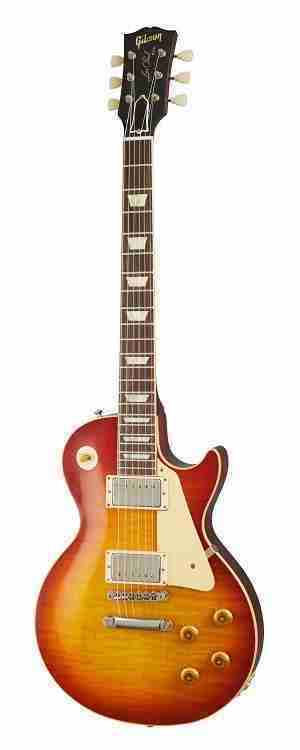
Les Paul Standard ’59
Price: €7,399.00
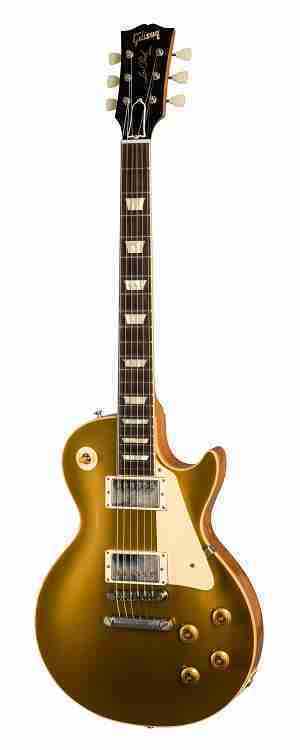
Les Paul Goldtop ’57
Price: €5,499.00
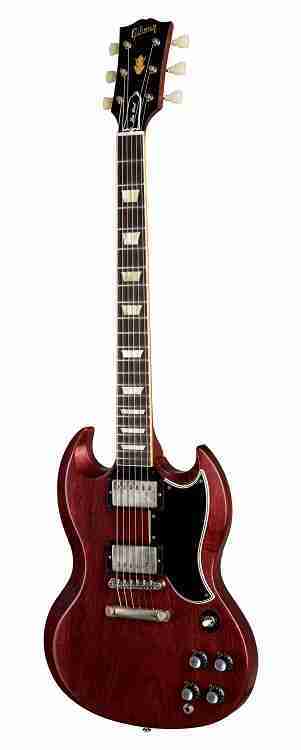
SG Standard ’61
Price: €4,699.00
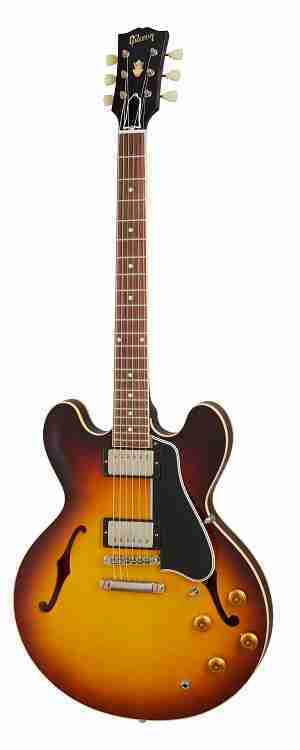
ES-335 Reissue ’59
Price: €6,599.00
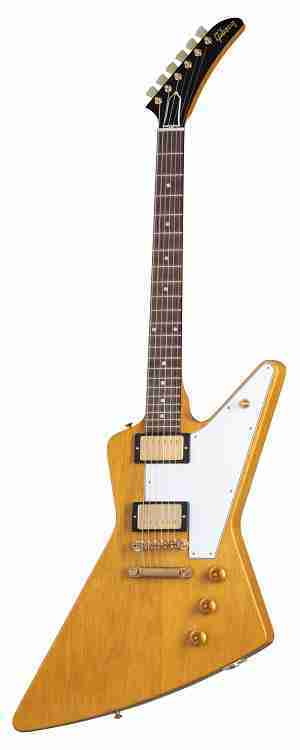
Explorer Korina ’58
Price: €10,999.00
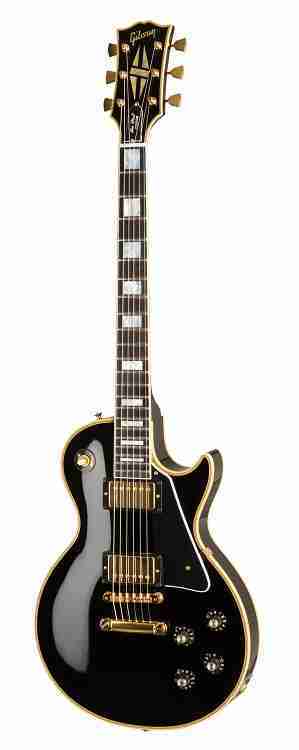
Les Paul Custom ’68
Price: €6,799.00
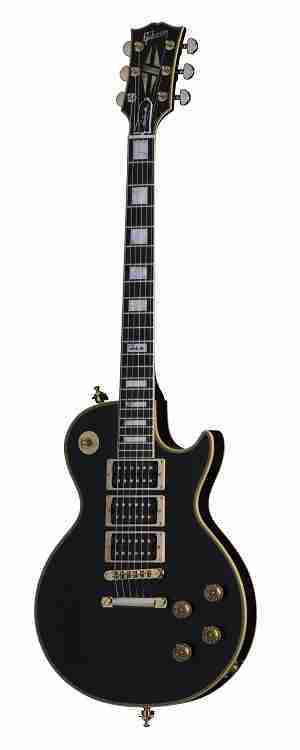
Les Paul Custom “Phenix”
Peter Framptom
Price: €7,699.00
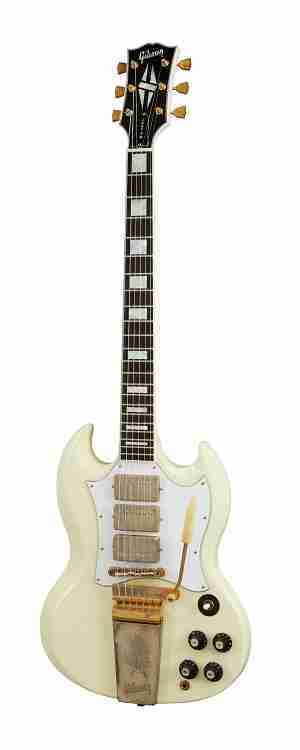
SG Custom ’67 Jimi Hendrix
Price: Discontinued.
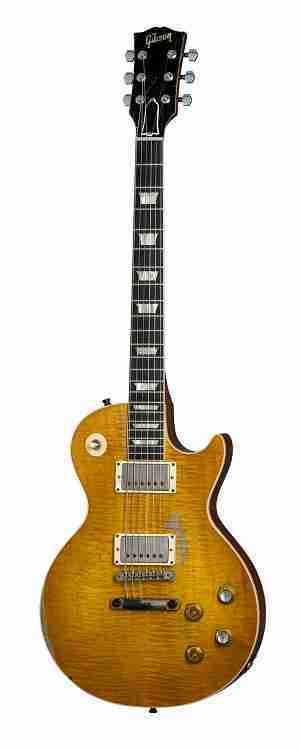
Les Paul Standard ’59 “Greeny”
Kirk Hammet
Price: €21,299.00
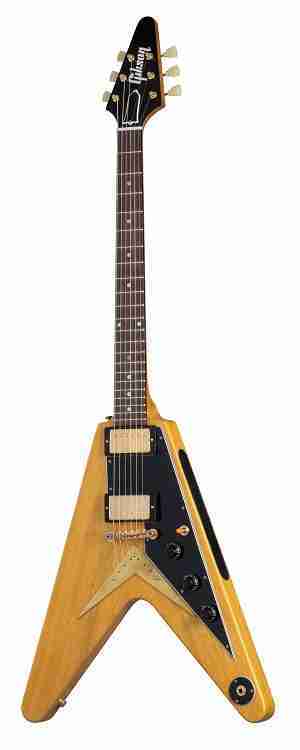
Flying V Korina ’58
Price: €10,999.00
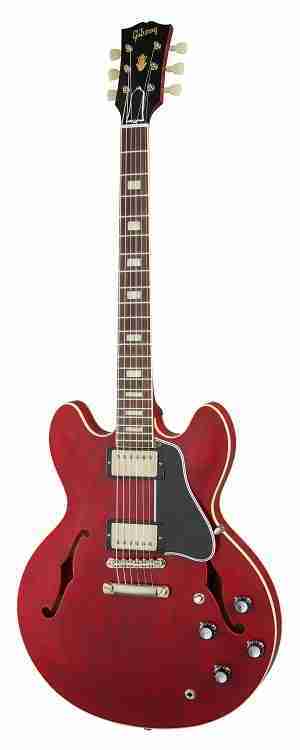
ES-335 Reissue ’64
Price: €6,599.00.
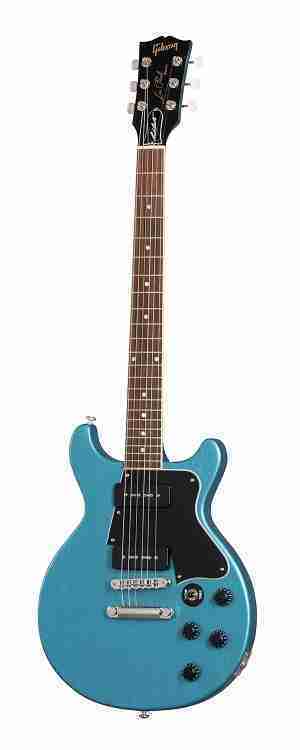
Les Paul Special DC
Rick Beato
Price: Discontinued.
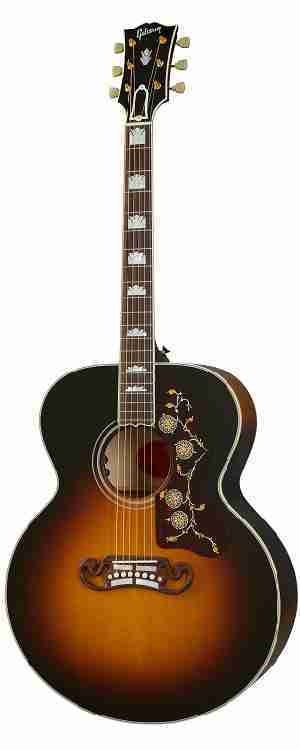
SJ-200 Original ’57
Price: €6,899.00
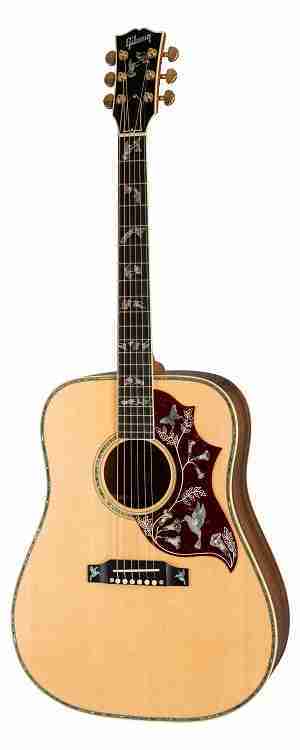
Hummingbird Custom
Price: €9,499.00.
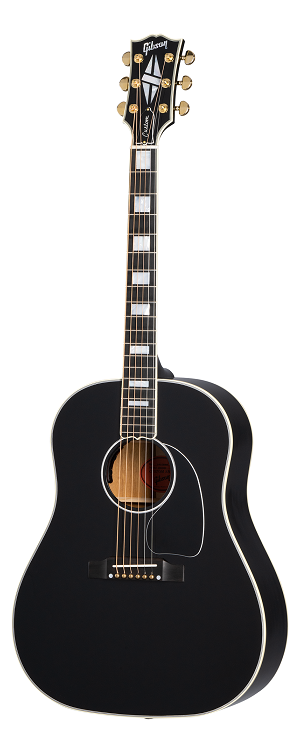
J-45 Custom
Price: €5,399.
Gibson Musicians
Nothing beats the image of a successful musician using your guitars to boost sales. If in the beginning it was Les Paul who was involved not only in the brand, but also in the design of his famous guitar, later there have been many musicians who have used Gibson instruments. Some of the most important have been or are:
Chuck Berry (ES-350T), Elvis Presley (SJ-200, Dove), Bob Dylan (SJ-200), Cat Stevens (J-180), Emmylou Harris (L-200), B.B. King (ES Lucille), Jimmy Page (Les Paul Standard, EDS-1275), Keith Richards (Les Paul Custom, Junior), George Harrison (Les Paul Standard), Joe Perry (Les Paul Standard), Alex Lifeson (Les Paul Axcess), Joe Bonamassa (Les Paul Standad), Gary Moore (Les Paul “Greeny”), Berni Mardsen (Les Paul Standard, “The Beast”), Randy Rhoads (Les Paul Custom), Peter Framptom (Les Paul Custom “Fenix”), Tony Iommi (SG Standard), Eric Clapton (ES-335 Sixties Cherry, Les Paul Goldtop ’57, Les Paul Standard ’59), Tom Scholz (Les Paul Goldtop), John Sikes (Les Paul Custom), Paul Kossoff (Les Paul Standard), Frank Zappa (SG Standard)Peter Green (Les Paul “Greeny”), Michael Schenker (Flying V), Jimi Hendrix (SG Custom, Flying V), Vivian Campbell (Les Paul Standard), Neil Schon (Les Paul Custom), Orianthi (SJ-200), Kirk Hammet (Les Paul “Greeny, Les Paul Custom”), Richie Faulkner (Les mPaul Custom, Flyeng V)Ted Nugent (Gibson Byrdland ’61), Rick Nielsen (Explorer), Mathias Jabs (Explorer), Doug Aldrich (Les Paul Goldtop), Ace Frehley (Les Paul Custom), Angus Young (SG Standard) and Slash (Les Paul Standard, J-45) …


Conclusion
Well, it seems that we have reached the end of the article (more than an article it looks like a report). After two full weeks of work, I would like this “report” to highlight a brand like Gibson. After watching more than 30 videos and studying a lot of documentation, I understood his message. Gibson was born from the hands of a craftsman and after 130 years it maintains intact the artisanal character of its production. Although it is a 21st century company that uses all the technological advances at its disposal, it maintains a romantic and artisan spirit in each instrument.
The most beautiful thing about that spirit is that it is instilled in each and every one of its employees, and they are the ones who give themselves to each guitar, giving the best of themselves. I was surprised by the high seniority of many of its employees in the company, and the regard they have for their colleagues, whom they consider “family”. Actually , Gibson is his family, too. So much so that many stay their entire working lives at Gibson. (When they turn 40 with the company, they can choose the production guitar they want.) I understand that these employees make good guitars, as their attention to detail is permanent.
But it’s not all about the employees. To get a super guitar, you also need wood, electronics and, above all, experience. Those 130 years weigh heavily and have been decisive in the company’s salvation from bankruptcy. One of the successes of the new management team has been the abandonment of “dangerous paths” (Robot guitar, Firebird X, Phillips, electronic tuning, etc…) and the return to the cult guitars, the Gibsons. We had to win back the Gibson user for the simple reason of knowing his opinion, ironing out small details and offering him, once again, the best product, the best guitar. That would prove, once again, that they are in good hands and proudly show off their Gibson to others.
It has not been a bed of roses, the fakes (unauthorized copies) have done a lot of damage, especially to the potential customer who, at times, has believed that a “Chibson” Les Paul Custon of 300,00 € is the same as a Black Beauty. And no, it’s not the same. Gibson makes high-end and very high-end guitars aimed at the most demanding audience. Their mission is to make them perfect.
But man does not live by bread alone and there are more potential customers, more styles of music, more range of products and more opportunities. That is why Gibson has developed over the years a large corporation, which today includes such relevant brands as: Epiphone, Kramer, Steinberger, KRK Systems, Mesa/Boogie and Maestro. All of them are top-level brands, with an audience that is defined and at the same time complementary to Gibson.
Gibson has been able to reconnect with the public, opening the company to new experiences and offering new services. Gibson Garage, Gibson TV, Gibson Gazette, Accessories, Lifestyle, Books and Gibson App are new proposals for a concept rigorously focused on the customer, as it should be.
When you get your hands on a Gibson, you’ll have the dedication of employees and a brand with 130 years of history. You already know: “Only a Gibson Gibson is good enough.”
If you found this article interesting, you can share it on social media from right here. You can also leave your opinion or ask a question. Use the comment box at the bottom of the post.
Information, bibliography and media:
We use our own means and other means with the availability allowed by current legislation and free access to the World Wide Web. (See Terms and conditions)
Texts: Owned, based on information from Guitar Lovers, Eusica, Floyd Rose, Gibson, Grover, Guitarriego, Kluson, The Guitar blog, L.R. Baggs, Madinter, Stringfield, Thomann, Vian Music, Wikipedia.
Images: Amazon, L.R. Baggs, Madinter, Rob Report, The Metropolitan Museum of Art, Wikimedia Commons.
Videos: Gibson TV.










Nice post. I learn something new and challenging on sites I stumbleupon everyday.
It will always be useful to read through content
from other writers and practice something from other web
sites.