



Philippi Design, in search of the perfect form

Earn 10.00 Reward Points by commenting the blog post
Introduction to Philippi Design
Philippi Design is a German company with a history of more than 30 years of presence in the world of design. In that time, he has achieved something that very few achieve, unanimous recognition. Your products are immediately identifiable because the brand seal is unmistakable.
A seal brimming with ingenuity, beauty and quality. All applied in the same article, in each article, in all articles. Jan Philippi, its founder and “alma mater”, is an art lover, his vision detects the beauty of things and turns them into works of art.
I have to confess that I don’t like shine, I’ve always preferred matte or satin surfaces. Not that I have changed my mind, but I have learned to taste the shine. The glossy finishes from Philippi Design have brought the light back to me, I appreciate their clean feel that catches all eyes. It forces you to contemplate and always suggests a very high quality.
But, allow me to make one observation: it has its risks. Any defects, or the slightest imperfections, will be immediately magnified. Only the perfect will shine with its own light, which is why the production is carried out with the highest quality standards and with the highest precision.
Brightness is just one of the notes that Jan Philippi practices with mastery. I would also highlight its delicate curves, which, without stridency, make all its designs pleasant, giving them a softness that I admire. It combines proportions in an extraordinary way, allowing the item to always stand out. Although, the purity of the design is what sets the pace.
The icing on the cake is the function. The items designed by the brand do their job perfectly and, thanks to the added value of the design, are always a conversation starter.
Today, the world of international design would not be complete without the contribution of Philippi Design and, thanks to this contribution, objects take on a prominence that they did not have before, becoming small paragraphs of our own lives.
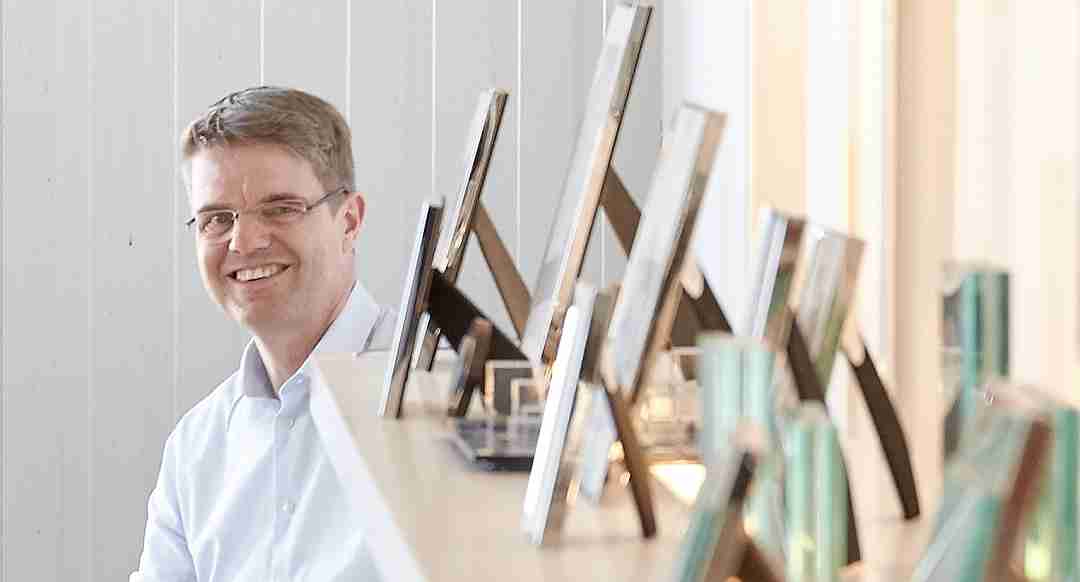
Jan Philippi next to a shelf with some of his portrait frames.
Brief History
The Hamburg-based export merchant Jan Philippi had very early on opted for clear shapes. Although he started selling Hi-Fi equipment from a Hanseatic retailer, Jan quickly realized that he didn’t like the products he was selling, they were ugly. He tried to improve and beautify here and there, because he believed that even Hi-Fi furniture should look good.
At the end of the 80s, consumption increased a lot in Germany and Jan Philippi had to travel to many countries for his company, this allowed him to establish contacts with several companies. At that time, quantity was demanded and not quality. A lover of good taste and quality, this trend was not to his liking and he was not willing to accept it. Disappointed by the prevailing taste, he decided to create his own personal solution and started his own business.
In 1992, Jan Philippi opened two stores in Hamburg with pieces with simple, clear and modern designs. With new ideas, collected in many trips, and an unmistakable sense of good design, he discovered companies capable of translating their visions of design into the tangible. Driven by this development, he soon ventured to take the step from retail to wholesale.
Since then, Jan Philippi, as the creative mind of the company, has inspired its designers. With extreme precision and great attention to detail, he works closely with his team, from the design phase to the moment the product is ready for the market. Even today, it continues to support young talents and cooperates with creative professionals and manufacturers.
Jan Philippi personally and intensively follows the entire design process, continues to personally serve each client and considers philanthropy to be a fundamental principle of the company.
Today, the small company from northern Germany has grown into an internationally renowned brand with approximately 500 products and numerous representatives abroad. Furniture and stationery stores, home and gift shops, florists and emblematic shopping malls successfully sell products designed by Philippi. Present in more than ninety countries, including France, Japan, Colombia, Dubai , and the USA, Russia and Chile have recently joined. Philippi can even be found at the MoMA in New York!
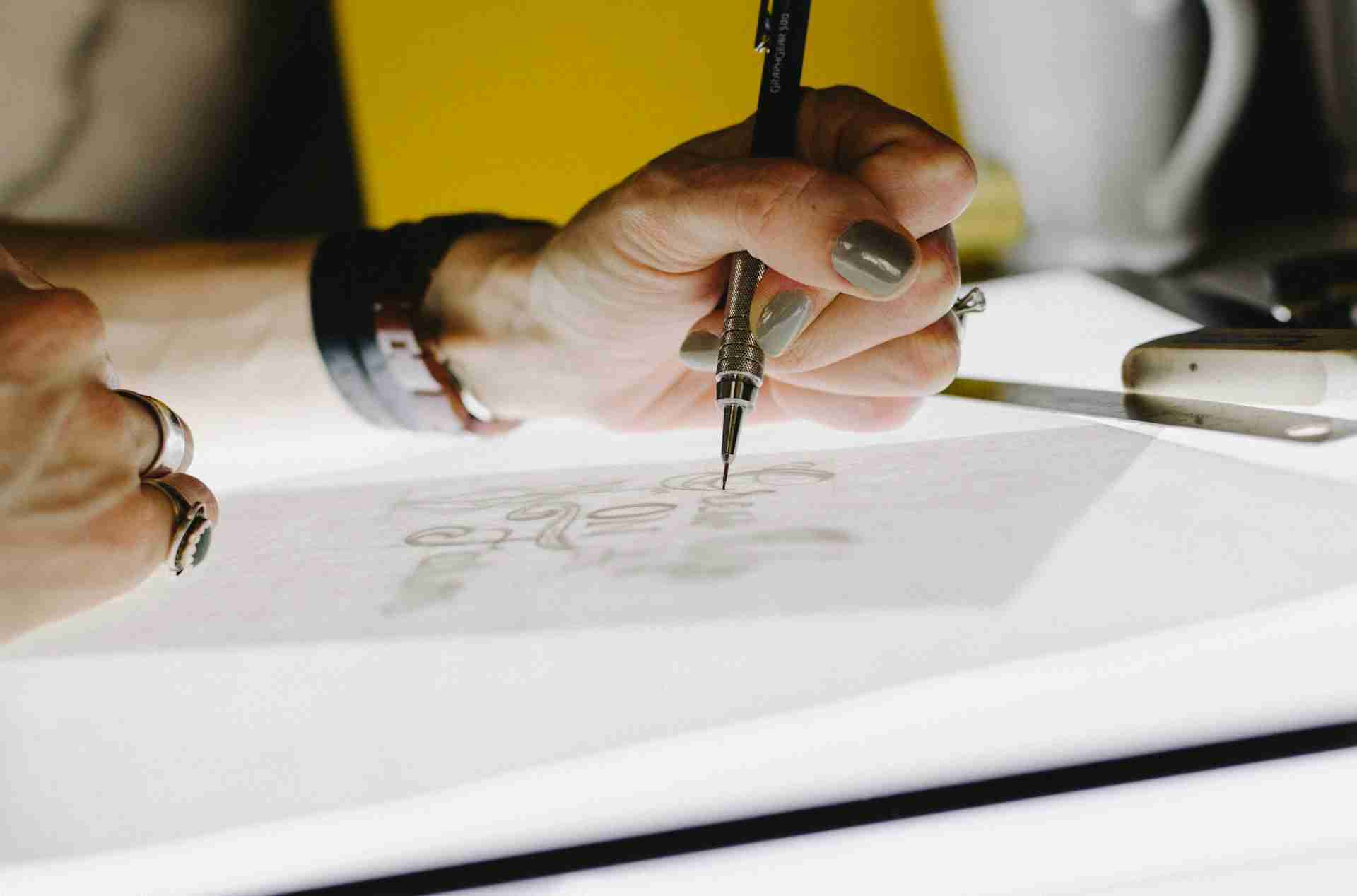
Photo by Kelly Sikkema on Unsplash
Designers
Although Philippi Design has its own team of designers (Flip), it likes to open its mind and let itself be carried away by young figures who bring new ideas and concepts with which to configure its range of products. Many of these young talents, over time, have become famous designers who, thanks to Philippi Design , have also reinforced their style and design concept.
The range of action of this cast of designers is varied and always bears the unmistakable stamp of the Philippi finish and its characteristic imprint of quality.

Joerg Langkop
Langkopdesign was founded in Munich and has been based in Stuttgart since 1996. Jörg Langkop runs the design studio together with his spouse Sabine Langkop, also a product designer. He has designed numerous products for Philippi Design, also for other clients. Her designs have been awarded with National and International Awards.
- Question/Answer:
– If you weren’t a designer, would you be…?
– … mining opals in Australia.
- Featured designs for Philippi Design:
Airplane ruler, base and Barca pen.

Tassilo Von Grolmann
Born in 1942 in Iserlohn (Germany), he trained as a mechanic at AEG Oldenburg. He studied Mechanical Engineering, Fine Arts and Industrial Design. He worked for several design and architecture agencies and has designed hundreds of products for large international firms.
For him, “the most difficult thing is the simple”. “Each product design is unique, singular and inimitable, this is the goal. The design attracts attention and communicates the essence of the product in a way that is convincing, clear and recognizable to the target group.”
- Question/Answer:
– If you weren’t a designer, you’d be…
– I would work as a chef! I’m a gourmet and love to experiment in the kitchen and entertain.
- Featured designs for Philippi Design:
Laszlo coffee maker.
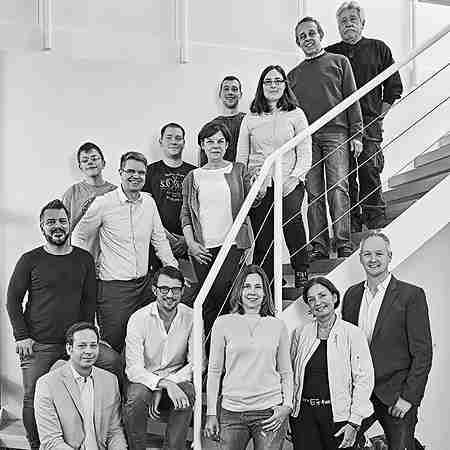
Flip
Flip, founded in 1992, is Philippi’s in-house design team. Together with his team, Jan Philippi develops his own collections.
The conceptual basis of the team focuses on what is useful and feasible, sometimes reinterpreting classics, at other times changing materials and also creating novelties from observation itself.
The Yap Mikado set, made of stainless steel, won the first design prize for Philippi. Many other designs followed suit.
- Featured Designs:
Alba picture frame, Yap chess set, Mesh container, Tobago Christmas tree, Collini cocktail collection, among other designed products (+ of 100).

Susanne Uerlings
Designer Susanne Uerlings is the creative mind behind produktsalon. With a degree in Integrated Product Design (2006), since2011 she has been designing furniture, lamps, home and kitchen accessories for international clients at her design studio in Aachen, Germany.
Susanne Uerlings designs products that are more than just everyday items, they have high emotional value. German Design Award Winner 2024.
- Question/Answer:
– If you weren’t a designer, what would you do…?
– I would probably try to discover and promote individual beauty and strength in those around me rather than in design. However, that would be possible…
- Featured designs for Philippi:

Eberhard Woike
When asked what he would be like if he were not a designer, Eberhard Woike replies without thinking: “I would not be alive”. After all, he started developing things as a kid. For him, his work does not end with the design of a product, but he actively participates until its market launch.
Eberhard Woike does not see the fact that he has not studied design as a disadvantage. As a lateral thinker, you have the opportunity to take different paths and arrive at different results.
- Question/Answer:
– How do your creative ideas come about?
– The best way for me to describe this is as a “positive accident.” My ideas happen to me, so to speak, they find me. Implementation, on the other hand, is very hard work.
- Featured designs for Philippi:
Angelo parking ticket holder.

Peter Kroehl
With his famous Loop keychain, for Philippi Design, Peter Kroehl has won three of its many design awards, including the Red Dot Award.
In general, its products are recognized all over the world. This is undoubtedly due to his clear conception of good design: Peter believes that a product should be self-explanatory, meet all technical requirements and be perceived as a balanced unit with dynamic proportions. In short: great formal aesthetics combined with technical innovation and durability.
- Question/Answer:
– What product did you design for Philippi?
– My product for Philippi is the Loop Hanging Keychain. I came up with the idea during an internship at a metal workshop, where I wanted to create a custom hanging keychain for my first car key.
- Featured designs for Philippi:

Carolin Pertsch
She began her career as a creative designer through her final thesis with the successful Sphere coat rack project. He completed his studies at the Bremen University of the Arts in the master’s workshop in materials and technology with a specialization in product design. He gained valuable experience at the Università Iuav di Venezia.
His first successes were achieved during his studies, and some of his products won international awards.
- Question/Answer:
– What existing product in general would you have liked to design?
– Who wouldn’t want to invent the wheel?
- Featured designs for Philippi:
Sphere coat rack.
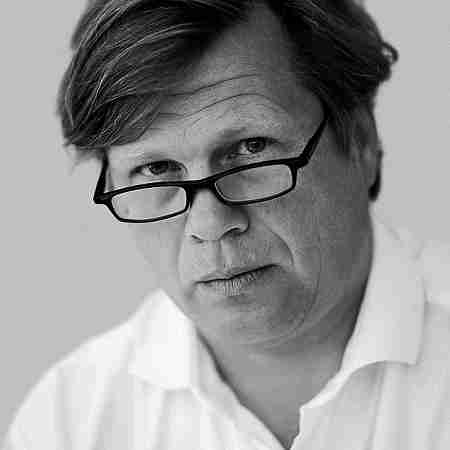
Andreas Ostwald
Andreas Ostwald loves innovative design. That is why he also taught it at the University of the Arts Bremen in the exclusive course of Integrated Design. His works are as diverse as they are unusual.
His mind encompasses everything: Deutsche Bahn platform ceilings, consumer electronics , lighting, furnishings and home accessories .
Andreas Ostwald likes to design for Philippi, because of the demands of his products, the implementation and also the impressive speed with which Philippi brings ideas to market.
- Question/Answer:
– If I wasn’t a designer, what would I do?
– Be an architect or gardener.
- Featured designs for Philippi:
Candlestick, Anais vase, Cocoon container, Cap office utensils, Hamburger door holders, and others…

Lupa Glasses, published by Philippi Design, on a Hamburg newspaper.
Philippi Design’s philosophy and mission
I believe, without fear of being wrong, that Jan Philippi’s philosophy is good, and moreover, very appropriate for his type of business. As Tassilo Von Grolmann would say: “The most difficult thing is the simple”, and it is absolutely true. Summarizing, making the shortest path, synthesizing or obtaining the essence, is the most complicated, it requires a higher level of observation and, I don’t know how to say it better, a kind of “radar” to find the basic ideas, the essential concepts.
These ideas and concepts are what have shaped Philippi Design’s own advanced business philosophy. It is a matter of delimiting, first of all, the areas that are going to make up the bulk of the business. In the case at hand, Philippi Design is in charge of objects for the home, for work and travel, understood as objects that we usually carry with us. Secondly, we must make an inventory of all the objects that we detect in each area. This work, similar to an inventory, requires intense observation, classification and qualification work.
For example, when entering a home, we will most likely find ourselves at the entrance with a coat rack, a chest of drawers with a container where you can leave keys and personal belongings, a picture frame, some flowers in a vase, an umbrella stand, etc… Philippi detects all these objects and classifies them in order to later qualify them. In this way, it obtains the elements that can be improved and, therefore, potential objectives to be incorporated, after reinterpretation, into its range of products.
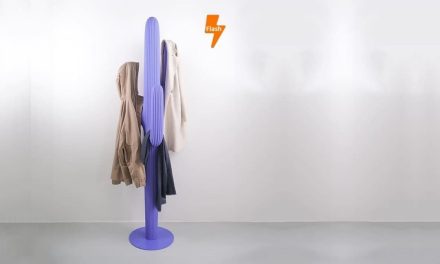
A visual example of this work process would be the Sphere coat rack, designed by Caroline Pertsch. At the entrance of any home there is a coat rack where you can hang warm clothes, bags, caps, etc… There is also a container, in sight, where you can leave keys, wallet and other objects that we carry daily. The idea behind this coat rack is simple (the difficult part): it is about summarizing, synthesizing, that is, using a single object to perform 2 functions: hanging garments or objects and containing keys and small objects.
The reinterpretation of objects is one of the essential missions of Philippi Design. It is about observing and visualizing the improvement, sometimes changing the shape, making it softer or easier to use, other times expanding the function, improving the existing one or expanding the durability, but always, making the redesigned object undoubtedly better. This is the case of the Cocoon containers and the Hamburger stool, both designed by Andreas Ostwald, among others.
The design of new objects is another fundamental mission of Philippi Design. On this occasion, it starts with a blank sheet of paper and produces something new, non-existent until now. This is for example the Airplane ruler, designed by Joerg Langkop, or the Rocky Mountain photo frame, designed by Flip. Novel and functional ideas, but also brilliant, the result of a “simple” philosophy.
Therefore, the constant improvement of the existing, in search of a perfect form and maximum functionality, is the philosophy and mission of Philippi Design.

Different trophies of the Good Design International Design Award.
Awards
There are many awards that the world of design has given to Philippi Design, the result, without a doubt, of its good work in this discipline. Almost all the major International Design Awards have placed their trust in Philippi Design on occasion, proof of its extraordinary contribution to the world of design. Below we list them:
Design Plus Award
The Design Plus award was first awarded in 1983 by the “Form and Life Initiative” at the AMBIENTE International Trade Fair (Frankfurt). It is sponsored by Messe Frankfurt together with the German Design Council and the German Association of Chambers of Industry and Commerce. Today, this award is consolidated and is one of the most important in Germany.
- Award for Philippi Design in the years: 2004, 2016.
- Award-winning products: Fontaine.
Form#
After decades of existence, the Form# (Form from Crafts and Industry) design competition has become one of the most renowned German design awards, valued by manufacturers and buyers alike as a seal of product quality. They are awarded during the TENDENCE consumer goods fair (Frankfurt). Innovative design solutions, materials, functionality and overall concept are awarded.
Good Design Award
Founded in 1957, with the belief that design would contribute significantly to the economic development of Japan. The Good Design Award is a comprehensive design support and evaluation program run by the Japan Institute for Design Promotion.
- Award for Philippi Design in the years: 2009.
- Some award-winning products: Loop.

Green Product Award
It is an annual international competition for innovative and sustainable products. It is aimed at consolidated and newly created companies. The aim of the award is to create a collection of eco-friendly solutions for consumers and buyers. It has been awardedsince 2013 and has received proposals from more than 40 countries. A different award to reward companies that have the greatest impact on sustainability and ecology.
- Award for Philippi Design in the years: 2017.
- Some award-winning products:
IF Design Award
Based at the Hannover Exhibition Centre since 1953, it aims to raise public awareness of design in a sustainable way. Emerging from the “Special Exhibition of Molded Industrial Products”, the iF Product Design Award is now one of the largest and most internationally recognized design awards. “The iF design awards have shown that its seal of quality is considered one of the most coveted awards by companies and designers around the world.”
Interior Innovation Award
At the same time as its new name, imm cologne, the Cologne International Furniture Fair launched an independent, industry-oriented design award in 2002 together with the German Design Council. The result is the Indoor Innovation Award. With its 9 different categories , it is now considered one of the most recognized design awards in the furniture industry globally and stands for maximum innovative performance in all product areas of the industry. The award-winning products are evaluated by an independent jury based on criteria such as ergonomics, durability, aesthetics and degree of innovation.
- Award for Philippi Design in the years: 2011 and 2015.
- Some award-winning products: Sphere.
Reddot Design Award
Since 1955, the Design Centre of North Rhine-Westphalia has been making its famous red dot stand out for the design of products of international excellence. In 2000, the innovations in design (former name) were given a new name: Red Dot Award, Product Design. They grant it world-renowned designers and experts to ensure the highest objectivity . Manufacturers and designers can apply for the coveted reddot award in 19 categories and the winning products are exhibited at the red dot design museum for at least one year.
- Award for Philippi Design in the years: 1998 and 2014.
- Some award-winning products: Loop.

Featured products
More than 500 designed items make for a lot of content within the Philippi Design featured products chapter. I have selected the 10 products that I consider to be the most conceptual, that is, with the most in-depth design, although I could have incorporated many more. So enjoy simply exceptional designs. You will surely understand better the importance of this company in the world of design.
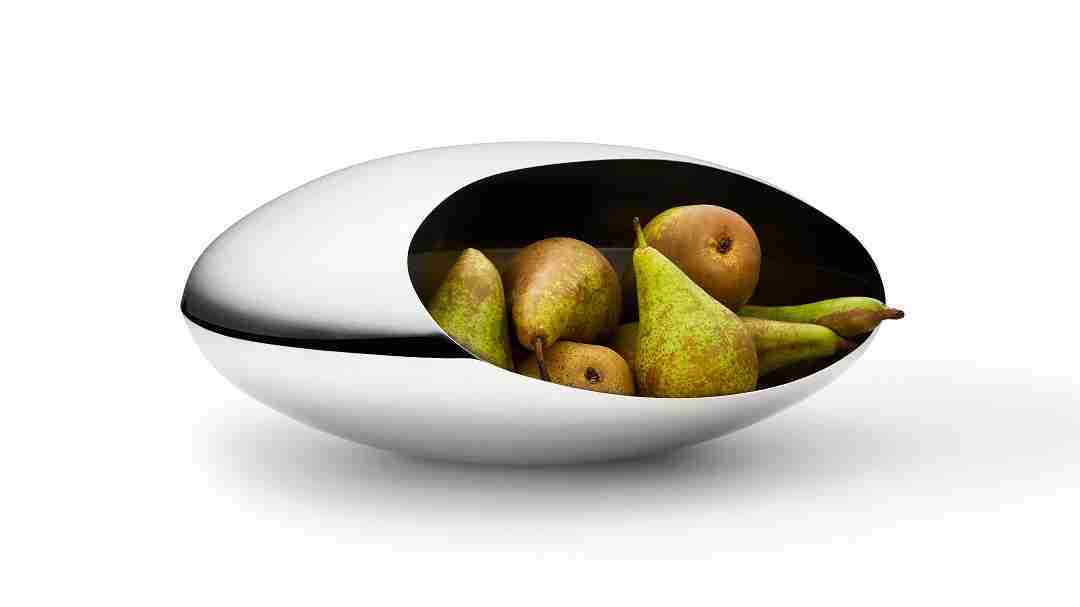
Cocoon Container
This container, inspired by elements from the film of the same name, comes to present, in a different way, the bowls for fruit. Designed by Andreas Ostwald, it confirms a design full of eloquence, providing curves with unlikely radii and a very delicate presentation of the fruit. When fruit is the protagonist, its container does not want to be less. In other smaller formats, it is an element of modernity in the kitchen for fruit, sweets, nuts and even, with ice, it can keep champagne or wine cold.
Made of mirror-polished stainless steel, it has an exceptional finish. Dimensions: (width x length x height) 38 x 38 x 17 cms. Weight: 2.21 Kg. Price: 199.00 € (VAT included).
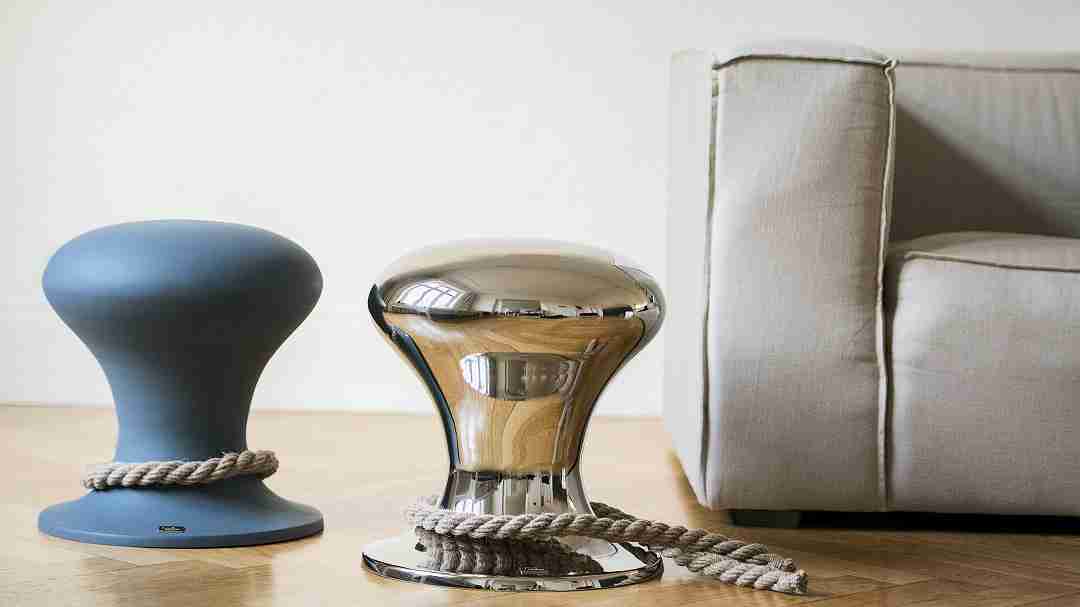
Hamburger Stool
A nod from Philippi Design to his city, Hamburg. A way, let’s put it that way, of making a homeland all over the world. This simple stool is a replica of the bollard to which boats are moored. In order to reproduce it as best as possible, a piece of mooring rope was added. Designed by Andreas Ostwald it is available in 2 finishes: matt galvanized steel and mirror polished nickel.
Also reminiscent of boat moorings on the quays, the Hamburger bottle opener, the Hamburger door clamp and the Hamburger salt and pepper shaker are also available.
Made of matte galvanized stainless steel or mirror polished nickel. Dimensions: (width x length x height) 38 x 38 x 42 cms. Weight: 8.50 Kg. Price: 349.00 € (VAT included).
Anais Vase
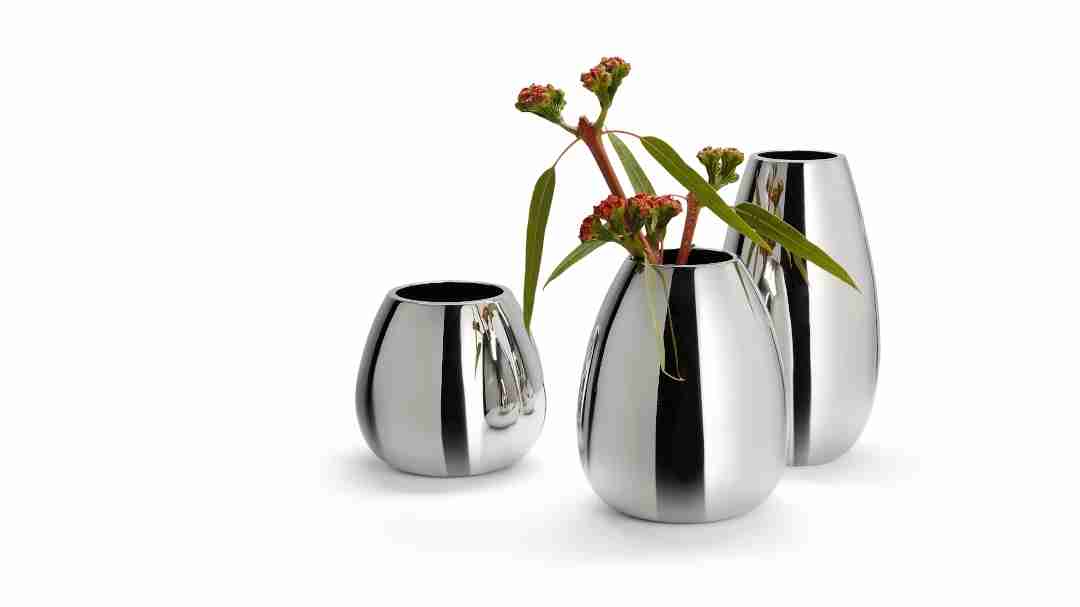
Anais is ideal for the entrance, living room, office or catering. These vases, designed by Andreas Ostwald, have a heavy base, which makes them very stable. Endowed with an elliptical and soft shape , they are appropriate for long-stemmed flowers. Made of aluminum, they have a heavy stainless steel base that provides stability. They are carefully finished in mirror polished nickel and come in 3 sizes: S, M and L. A very special way to present your flowers, they will not go unnoticed.
Made in aluminum, stainless steel. and mirror polished nickel finish . Dimensions: (width x length x height) S: 19 x 19 x 18 cm., M: 20 x 20 24 cm., L: 17 x 17 x 31 cm. Weight: 1.50 Kg. / 2.0 Kg. / 2.08 Kg. (S, M, L). Price: €79.00 / €109.00 / €129.00 (S, M, L), (VAT included).
Laszlo Coffee Maker
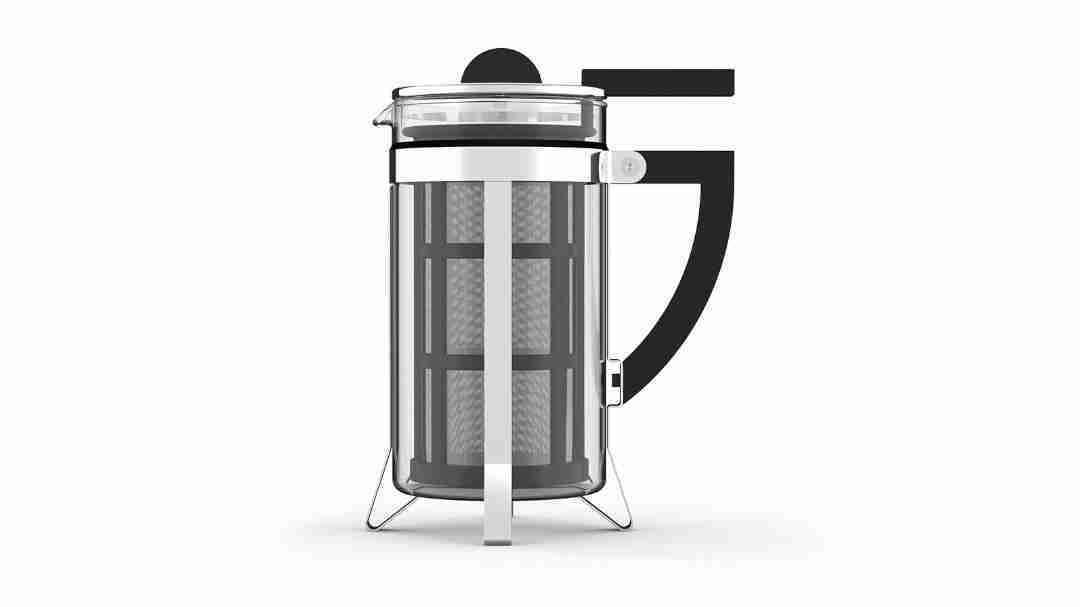
With an undeniable Bauhaus influence, the Laszlo coffee maker is of the French type. Totally sustainable, it does not need capsules or plastic. Unlike conventional coffee press coffee machines, in the Laszlo coffee machine, the strainer and its contents are removed from the coffee machine after infusion and placed on the edge of the coffee maker (in the Wilheim drip tray). The coffee drips gently, allowing for a more intense aroma.
Designed by Tassilo Von Grolman, it is made of glass, stainless steel and plastic. Dimensions: (width x length x height) 16 x 10 x 23 cm. Weight: 1.25 Kg. Price: 149.00 € (VAT included).
Focus Picture Frame
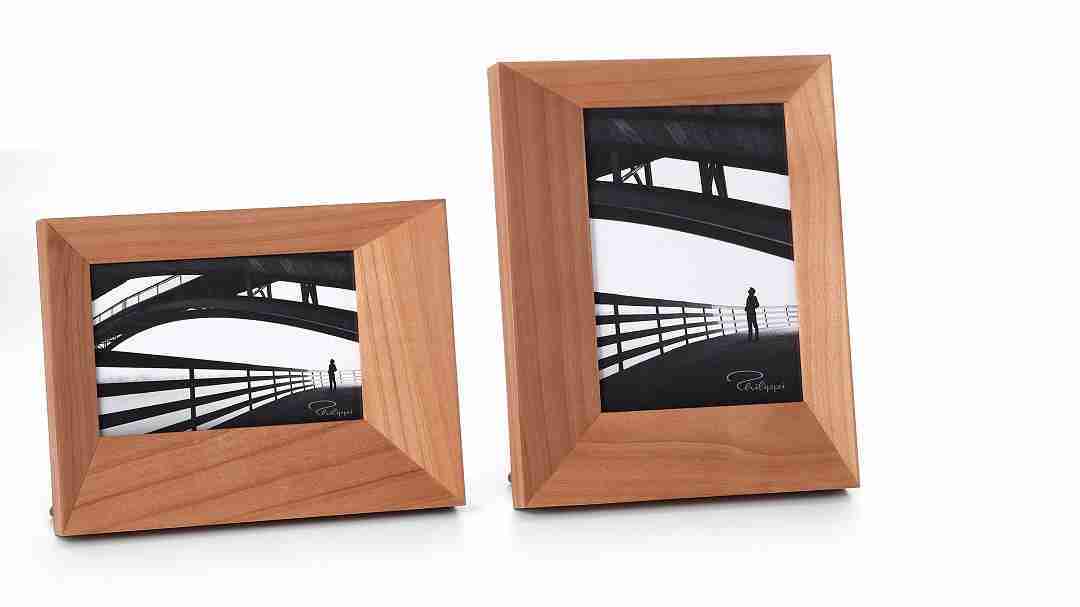
Simply evoking an off-center window from its frame, this Focus photo frame will draw the eye to the photo it contains. Designed by Veit Steitenberger, it has earned a place in contemporary design.
The beautiful moments captured in a photo, should be framed. With the Focus photo frame, in addition to showing love for wood, you will turn those moments into something very special. Available in 2 sizes: 10 x 15 cm. and 13 x 18 cm., is made of exquisitely mitered Alder wood. It can be used hanging, standing or leaning.
Dimensions: 10 x 15 cm. and 13 x 18 cms. Weight: N/A. Price: 49,00 € / 49,00 € (S,M), (VAT included).
Rocky Mountain Picture Frame
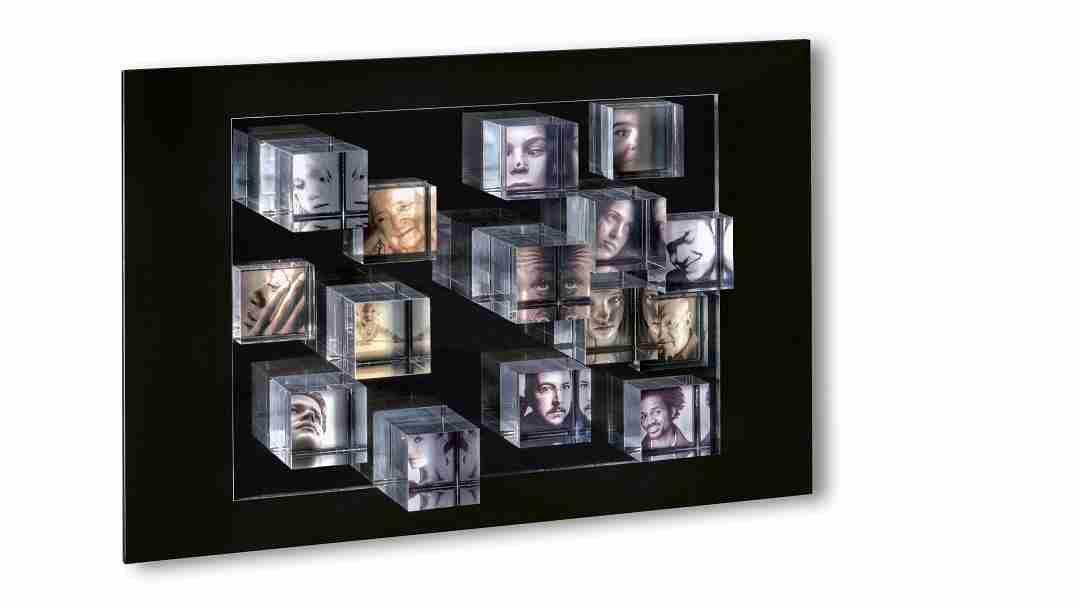
An avant-garde way to expose your family tree or other images. Rocky Mountain is composed of 15 cubes or prisms, with a square base (35×35 mm.) and different heights (like a mountain range), made of transparent acrylic glass that give visibility to your most beloved portraits. The effect is to raise the portrait to the top. The anchoring system, based on simple magnets on the back, is very ingenious, as well as clean.
Designed by Flip ( Philippi Design’s own design team), it received the Form# Design Award in 2009. Since then, it has remained a bestseller of the company.
Dimensions: (width x length x height) 34 x 23 x 8 cm. Weight: 2.00 Kg. Price: 199.00 € (VAT included).

Airplane Ruler
This rule, of very clear adolescent inspiration, comes to cover the space for mischief, ingenuity and imagination that we have all had at school. The concept, a paper airplane, has been used by its designer, Joerg Langkop, to build a simply wonderful object: a ruler-airplane.
The Airplane ruler, made of highly polished stainless steel, features two elongated wings, on which a measuring ruler in centimeters and inches has been engraved on their outer edges. The space between wings can be dedicated to carrying a fountain pen, a pen or a pen as a passenger.
An exceptional, original and at the same time useful gift. Who wouldn’t want to have it on their desk?
Dimensions: (width x length) 25 x 11 cm. Weight: 0.25 Kg. Price: 28.90 € (VAT included).
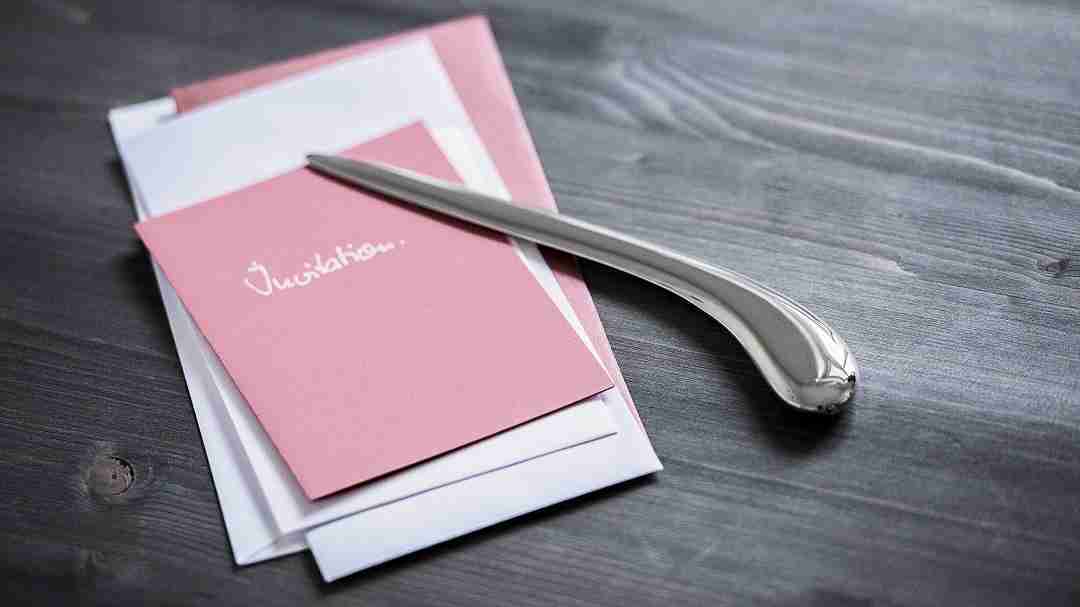
Letter Opener Paco
Made on a base of polished mirror finish nickel, Paco, presents an ideal shape for its task, opening envelopes. The length of the letter opener is 22 cm., it is reasonable for use. It has a slightly pointed finish and a narrow blade with profiled edges to effortlessly separate the flap from the body of the envelope.
No other Philippi Design product has been in the catalog as long as Paco. More than 20 consecutive years! This speaks volumes about its timeless and modern design. A perfect gift!
Dimensions: (width x length x height) 22 x 3 x 1 cm. Weight: 0.323 Kg. Price: 28.90 € (VAT included).
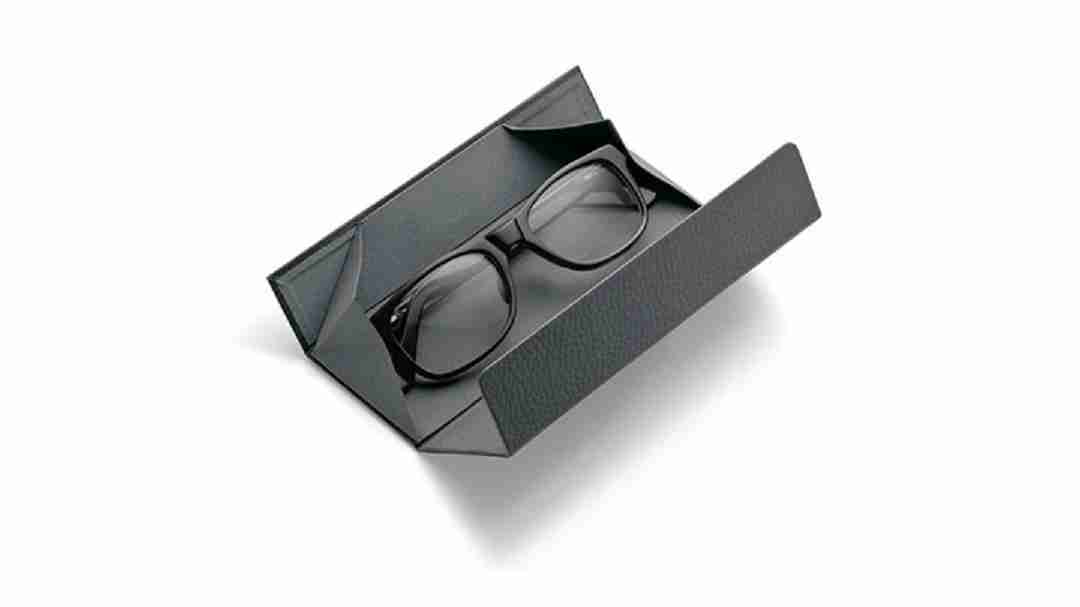
Allegro, flat glasses case
Allegro is a very original eyeglass case. Designed to occupy a minimum and regular space, rigid sheets , covered on the outside with a fine dark grey grained leather, and on the inside with a delicate black lining, will become a triangular prism that will protect our glasses. This prism folds flat thanks to the magnetic closure of this case.
Like everything manufactured by Philippi Design, the finish is perfect and the presentation is very careful, including, in this case, a sachet with a sample of the leather used, as well as a practical product brochure, all this, as always, in a black box. Allegro is very practical, elegant and an excellent gift.
Dimensions: 160x60x35 mm. Weight: N/A. Price: 34,70 € (VAT included).
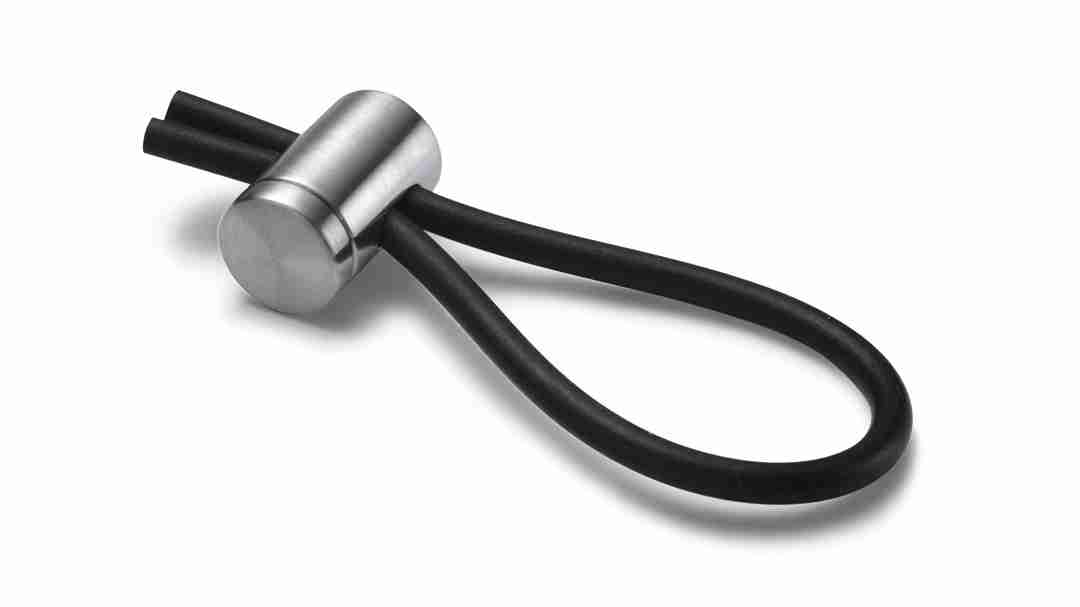
Loop Keychain
The Loop key ring was launched in 1996 and is today one of Philippi Design‘s flagship products. Conceived and designed by Peter Kroehl, it combines the three fundamental elements of a winning design: a formal aesthetic, technical innovation and proven durability.
For Kroehl , a product must be self-explanatory, meet all technical requirements and be perceived as a balanced unit with dynamic proportions. So much so that Loop has been awarded the reddot Award and the IF Design Award, both of which are benchmarks in the world of product design and innovation.
Conceptually, Loop is beyond reproach. The simplicity of his idea contrasts with the enormous technology he carries inside.
We are talking about holding keys with a rope or cord, and for this, we use a cylindrical stainless steel pin containing 2 tangent circular holes, through which the 4.00 mm rubber cordon will pass.Once the keys are in place, leaving the ends of the cord to one side of the pin so that, perpendicularly, a stainless steel screw with a circular head without a notch compresses the ends of the cord and leaves a perfectly formed loop with the keys. And we can do all this and adjust it without any tool, just with our hands.
Dimensions: (Length) 10 cms. Weight: N/A. Price: €26.90 (VAT included).
Opinion
Although we have already done an article on Philippi Design products (8 accessories and everyday objects…), we had a larger article on this extraordinary German firm pending. We cannot deny that their influence in our magazine is high, due, in part, to our previous stage, but, when it comes to fairness, they deserve all the best
And this is due to the continuous work they do, not only at the level of production and design (both exceptional), but also to their ever-increasing didactics of design.
Just as I began to digest the shine, Philippi Design has been spreading that much-needed design culture for 2 decades. You need to understand the design, but to do that, you need to explain it. Explaining things in people’s language brings design closer to their minds, allowing design concepts to be understood and valued in their proper measure.
The rest is pure and simple business work: clear concepts, rigour, exemplary production, quality control, marketing, e-commerce, finance, etc…, everything you would expect from a German company! Even so, it is already known: “the most difficult thing is the simple”, which is why, in the 21st century, all the details must be taken care of. Philippi is a great company and I predict a great future for it.
While you arrive, let’s enjoy the time with your products. 100% design.
NOTE: If you liked this article, you can share it on social media. You can also rate it with stars below. If you wish to leave a comment, ask a question or make any suggestion you can do so in the comment box below. Thank you for your attention!
Information, bibliography and media
We use our own and other means with the availability allowed by current legislation and free access to the World Wide Web. (See Terms Conditions)
Texts: Owned, based on information from Langkopdesign, Philippi, Produktsalon, Tassilo Von Grolman.
Images: Good Design Award, Philippi, Unsplash.
Videos: s/n.





That is really fascinating, You are a very professional blogger.
I have joined your rss feed and look forward to in thee hunt for extra of
your great post. Additionally, I have shared ylur
website in myy social networks
my webpage … Velda