



Adidas: “Impossible is nothing”
Earn 10.00 Reward Points by commenting the blog post
Introduction
Adidas is the most recognized sports brand worldwide. And it is so because of its constant innovation, its quality and its commitment to sport. Since its inception it has been a benchmark in the world of sports footwear, clothing and accessories for all kinds of sports.
Who hasn’t ever owned Adidas sneakers? It’s not a matter of betting anything but I think that most of us, without fear of being wrong, have used Adidas sneakers at some point. This is because of the sporty spirit that this renowned brand transmits to everything it does. Adidas sneakers transcend from the sporty to the personal, taking us close to Jesse Owens, Franz Beckenbauer, Stan Smith or Kobe Bryant.
Today, in a globalized world, Adidas offers the world of sports a product designed for athletes and the urban world its own style, without compromises. All derived from the passion of Adolf Dassler, an athlete who dedicated his life to providing athletes with suitable sports shoes. At last, someone off the track would help you run faster, jump higher and be stronger.
Muhammad Ali, in an emotional speech, pronounced the following:- “Impossible is just an imposing word used by ordinary men who find it easier to live in the world they have been given than to explore the power they have to change it. Impossible is not a fact. It’s an opinion. Impossible is not a statement. It’s a challenge. Impossible is potential. Impossible is temporary. “Impossible is noting.”
Adidas, in 2004, recovered this iconic phrase in its most aggressive advertising campaign, seeking to recover the lost ground in the young world. The result: a success.
I have used this resounding phrase to title this article and introduce you, with a sporting spirit, to this fascinating brand.

David Beckham with Real Madrid. Adidas Advertising : “Impossible is nothing”. Image: bensutherland on Flickr.
History
Adolf Dassler (1900-1978) was the youngest of 4 children from Christoph and Pauline Dassler. While he helped his mother in the laundry, it would be his father, a worker in a shoe company, who would introduce him to the trade of shoemaker.
In 1913, “Adi” (affectionate nickname of his friends) finished high school and began as an apprentice baker. Adi was, along with his friend Fritz Zehlein, very fond of athletics, football, boxing, javelin, hockey and also ski sports.
In June 1918 he was drafted into the German army where he served until October 1919. Before, he had already delved into an idea: if an athlete used footwear optimized for his sport, he would undoubtedly improve his performance and his marks. In 1920 , together with the experienced shoemaker Karl Zech , he began to prepare sports shoes and sandals.
In his beginnings, he sent samples of his footwear to neighboring Sports Clubs to demonstrate his quality to the players, coaches and managers, who sent him numerous orders.

Young Adi Dassler . Image: Adidas.

Establishment of the Gebrüder Dassler Schuhfabrik. Image: Adidas.
Young Adi Dassler . Image: Adidas.
Establishment of the Gebrüder Dassler Schuhfabrik. Image: Adidas.
The story of Adidas begins in Herzogenaurach, a town in Bavaria, Germany. On 1 July 1924, Adolf Dassler and his brother Rudolf registered the Gebrüder Dassler Schuhfabrik (Dassler Brothers’ Shoe Factory). Adi was in charge of technical development while Rudolf would be in charge of marketing and sales.
In 1928 the Olympic Games were held in Amsterdam. Adi He was there willing to show that athletes could improve their marks with the right shoes. Adi gave German long-distance runner Lina Radke a pair of 6-spike athletics shoes developed by him. With the Dassler shoes, Lina won the race and with 2’16″8/10 she set a new world record.
It would be in 1932 when Adi, at the Technical School of Footwear in Pirmasens, where he perfected his techniques for footwear, would meet Käthe Martz whom he would marry on March 17, 1934.
In 1936, the Olympic Games in Berlin would be the best showcase for Dassler shoes. Adi equipped many athletes, most notably Jesse Owens, who won four gold medals. For athletes in Dassler shoes, these games were impressive: 2 world records, 3 Olympic records, 7 gold medals, 5 silver and 5 bronze.

Lina Radke, Amsterdam 1928. Image: Adidas.

Jesse Owens, Berlin 1936 long jump. Image: Wikipedia.
Lina Radke, Amsterdam 1928. Image: Adidas.
Jesse Owens, Berlin 1936 long jump. Image: Wikipedia.
In 1938, Adi and Rudolf opened another factory on Würzburger Street in Herzogenaurach. In 1939 they went to compulsory military service. After the market crash caused by the war, they had to close Factory II on Würzburger Strasse.
In 1941 they received an order from the German army to produce 10,500 pairs of sneakers. Adi was in favor of shoe development, while Rudolf focused on the company’s cash flow and profitability .
After Rudolf’s recruitment in 1943, the discrepancies worsened. Rudolf, in his absence, suggested that Friedl, his wife, act on his behalf, which Adi rejected based on the agreement they had. The conflict, after different communications by letter, worsened. The bond between brothers was broken, and separation was glimpsed.
The post-war years (1945 – 1947) were the most difficult. Adi struggled to keep the company afloat , however, in 1946, he was classified as a member of the Nazi party and banned from running a business. In 1947, after proving his innocence, he was allowed to regain management of the company.
In 1948, after years of disagreement, Adi and Rudolf decided to separate. Adi kept the factory next to the train station. Rudolf took over the premises on Würzburger Street and founded the company “Puma”. Never again they would talk to each other again.
Adi initially called his company “Adolf Dassler – Addas Special Production of Sports Shoes”. In 1949, when registering the company, he added a handwritten “i”, since the name “addas” was already used by another shoe company.
A year earlier Adi had developed football boots with 3 parallel straps that provided more stability to the footwear and foot. Those three strips would become the company’s logo.

Adolf Dassler “addas” card. Image: Apparel Journal.

Ass Slipper, 1949. Image: Adidas.
Käthe became involved in the management of the company and took care of sales. Käthe and Adi were constantly receiving athletes and people linked to sports, with whom they became good friends. They were known as great hosts and highly regarded in the world of sports.
Sepp Herberger, the German football coach, shouted: “Adi, tacos!” It was the final of the 1954 World Cup in Switzerland. Germany against Hungary, the favorite. Adi, at half-time, placed long studs on the boots of the German players, getting better traction on a very muddy pitch. Germany won 3:2. This event is known as “the miracle of Bern”.
In the 1960s, Adidas became the world’s largest manufacturer of athletic shoes. Adi, despite his success, always maintained a humble attitude, was not a friend of fame and gave very few interviews. He was interested in experimenting with new ideas and solutions.
He registered many patents to protect himself from competition, especially from Puma. He was constantly working on the functionality of the shoe and on reducing its weight. Adi savored the success of “his athletes” as his own, it was his greatest motivation.

Original adilette . Image: Wikipedia.

Stamp with the image of the fight Frazier vs. Ali , 1971. Image: Wikimedia Commons.
In 1963, the request of some athletes was to create a practical shoe that they could wear in the locker room, even in the shower. Adi Dassler responded and the result was the Adilette (a modern version of rubber sandal).
The first warm-up uniform for athletics, with the iconic three stripes, was made in 1967. It would be the beginning of the brand’s expansion into sportswear and the casual wear market, greatly increasing the brand’s visibility.
The problem generated by the change of the cement track for another of synthetic material and rubber in the 1968 Olympic Games in Mexico had a difficult solution. In the dry, the surface was rough, but in the wet it slipped, and the long nails penetrated too far and became embedded.
Athletic shoe manufacturers placed numerous fine needles (brush shoes), but they were banned because of the risk of injury to athletes. Adi opted for a new technique and developed the blunt triangular element (nail) that did not jam and reduced the strain on the athletes’ Achilles tendon.
In 1971 Muhammad Ali and Joe Frazier wore Adidas boxing shoes in “the fight of the century” at the MSQ in New York. At the 1972 Olympic Games in Munich, the percentage of medalist athletes wearing Adidas shoes was overwhelming: 80%.
In the 70s, due to the professionalization of sport, athletes chose their supplier of sporting goods for its economic contribution. Adi didn’t like that attitude in athletes and was reluctant to hire them. He always had one wish: that athletes choose their shoes because they were the best and would help them in their marks.
On September 6, 1978, Adi died after a brief illness.

Adi Dassler showing an Adidas football boot to an athlete. Image: Adi&Käthe Dassler Memorial Foundation.

Käthe Dassler at his desk. Image: Adi&Käthe Dassler Memorial Foundation.
With Käthe at the helm, continuing Adi’s legacy, Adidas came out on top: 280,000 pairs of shoes a day! However, after a few good years, the decade of the 80s would bring turbulence. The global competition for sporting goods grew and Käthe was not prepared for the rapid developments in the market. Käthe called on his son Horst to return to Herzogenaurach. Horst Dassler He applied his father’s business acumen and re-strengthened relations with international sports organizations .
On December 31, 1984, Käthe died unexpectedly. Horst took over the management of Adidas and from the first moment he expanded Adidas‘ commercial activity to lifestyle. Now not only athletes would promote the brand, but also pop stars and celebrities would be part of its marketing strategy. Adidas managed to make sneakers used daily by young and not so young.
In 1987, Horst Dassler died unexpectedly at the age of 51. The Dassler heirs would entrust an executive with the management of Adidas, and the company entered a deep crisis. The sports shoe market had become saturated, Puma, Reebok and the world leader Nike, landed in Europe. Adidas ignored the amateur “running” effect and did not adapt its footwear to the growing fashion. The losses in 1989 would be in the millions.
In a difficult decision, Adi and Käthe’s four daughters decided to sell. Bernard Tapie led the purchase with 80% of the capital but did not refloat the company. It would be Robert Luois-Dreyfus, after listing it on the stock exchange in 1995, who returned Adidas to the top of the sports industry.
Herbert Hainer, in 2001, took over the executive management and together with Erich Stammiger returned Adidas to the roots and principles that Adi Dassler instilled in the brand. Adidas‘ fascinating history weighed heavily on the world of sports and would be the ultimate marketing tool. In 2016, Kasper Rorsted took the helm until today, continuing the legacy of Adi Dassler.
Since then, Adidas has been walking in a straight line on the path of innovation and its passion for sport.

Athlete in competition, Adidas shoes and equipment, Adidas advertising. Image: MarketingDirecto.
Adidas and sport
Linking Adidas with sport is a tautological obviousness. The brand lives by and for sport and its products are born from the need for sport. The philosophy of the brand, with Adi Dassler, arises from his concern for various sports and his idea of improving athletic performance with optimized footwear.
But Adidas, with the passage of time, and as a result of the relationship with athletes that Adi undertook, has been continuously contributing means to the world of sport. Either in the form of achievements, obtained in part, by the technological contribution of their footwear, or through the sponsorship of athletes, clubs, international organizations, events and various aids.
Everything for sport, that is the heart of Adidas, the engine that continues to drive the brand with the slogan “nothing is impossible”.

Javier Sotomayor in a high jump in 1995. Adidas shoes and equipment. Image: Flashcore.
Sporting achievements
On July 27, 1993, in Salamanca, Javier Sotomayor (Cuban athlete) surpassed the high jump bar placed at 2.45 meters, achieving the world record. Since then, no one, neither world champion nor Olympian, has been able to beat that record.
Adi Dassler was excited about every record or success that “his athletes” obtained. Jesse Owens, the German National Football Team, Ilie Nastase, Sergio Garcia, David Beckam and others, as more recently, Noah Lyles are some of the sporting achievements of this fascinating brand.

USSR 4×400 m relay team. celebrating the Olympic Gold in the Olympic Games. OO. Moscow 80. Image: Sz9.
A truly unexpected success was that of the 4×400 m relay team. of the then USSR in the Olympic Games. OO. of Moscow in 1980. They won the final with a time of 03:01.100 and celebrated the return to the Olympic Stadium with the Adidas shoes that led them to victory. One contradiction was that West Germany boycotted the Olympics and the quintessential German sports brand won such a precious Olympic gold.
Records, medals and triumphs are the fuel that moves the engine of this giant of the sport. They dedicate a lot of resources, time and enthusiasm to them and, every time the 3 bands climb to the top of the podium they are rewarded for their effort every day, and they imagine the smile of Adi “the chef” enjoying success.
There are many sporting achievements achieved by Adidas, individually or collectively, and there is no possible comparison with any other brand. The best guarantee for every Adidas user is their impressive sports background.

Advertising banner with the sponsorship of Adidas to footballers in the 2006 World Cup. Image: Ben Sutherland on Flickr
Sponsorship of athletes
For the big sports brands, sponsoring the main sports stars is almost an obligation. It is not only about being present among the elite, but also about supporting a marketing policy at a global level. That requires sponsoring the best, stars like Messi, Ali, Sotomayor or Zidane.
Why? Young people have the big stars in their heads and they want to wear the Adidas they wear. In addition, and more and more every day, these users value the updates, looking for each technical or aesthetic improvement that receives “their star”.
Adidas has many athletes under its patronage, some of them are:
- Football: Leo Messi, Karim Benzema, Jude Bellingham, …
- Athletics: Noah Lyles, Grant Holloway, Marileidy Paulino, Ana Peleteiro, …
- Tennis: Stefanos Tsitsipas, Alexander Zverev, Garbine Muguruza, …
- Golf: Dustin Johnson, Collin Morikawa, Sergio Garcia (until 2024), …
- NBA Basketball: Anthony Edwards, Damian Lillard, James Harden, …

Real Madrid players celebrating a goal at the Santiago Bernabéu stadium. Image: Marca.com.
Team sponsorship
Fans of each sport, in addition to having admiration for the stars of the sport, always have a favorite team. Adidas knows this well and understands that, in order to recover the money invested in sponsorships, it is also good to associate your image with that of a National Team, sports club or football team. Equipping these communities can be very important for penetrating the sports equipment market.
Adidas, like other major sports brands, sponsors many groups. Among them we highlight the following:
- Football Clubs: Real Madrid, Manchester United, Bayern Munich, Juventus, Ajax, Boca Juniors, etc…
- National Football Teams: Argentina, Mexico, Germany (until the end of 2026), Spain, Sweden, Japan, etc…

Exhibition of Adidas balls used in the Football World Cups at the FIFA headquarters in Switzerland. Image: Wikipedia.
Event and competition sponsorship
Top-level sporting events and the most important international competitions are an appetizing candy for the big brands. Adidas, in its “consanguineous” work of commitment to sport, has sponsored and sponsors many international events, organizations and competitions.
I would highlight the World Cup, dependent on FIFA and sponsored by Adidas with its line of soccer balls. Since 1970, with its Telstar ball, every 4 years it has not missed the most important event in world football, innovating, in each edition, the physiognomy of the ball. Also, Adidas balls are present in the football competition at the Olympic Games, such as in the European Championship. It’s not just a way to sell balls, it’s the way Adidas uses to continue its commitment to the sport.
In 2008 Adidas signed a sponsorship contract with the International Association of Athletics Federations (IAAF), a contract that it stopped sponsoring in 2016 due to the doping shadow that extended over the IAAF, which gives good proof of the seriousness that Adidas gives to its “commitment to sport”.

JFA and Adidas Program: “Her Team Cup” with its participants on a soccer field. Image: Adidas.
Social Sponsorship
Adidas proposes to change lives through sport. To do this, it participates in many programs to bring the sport to the whole world. Its two main objectives are: “People” and “Planet”. Adidas aspires to achieve a better future for all, using sport as the vehicle for change.
Adidas promotes access to sport for all in an equal and safe environment. In its productive facet, it acts to end plastic waste, supports sustainable and environmental initiatives. In all the social programs in which Adidas participates, the humanitarian component is always present.
The best way to take care of “People” and “Planet” is with active policies, which is why Adidas does not hide and participates in hundreds of social programs.

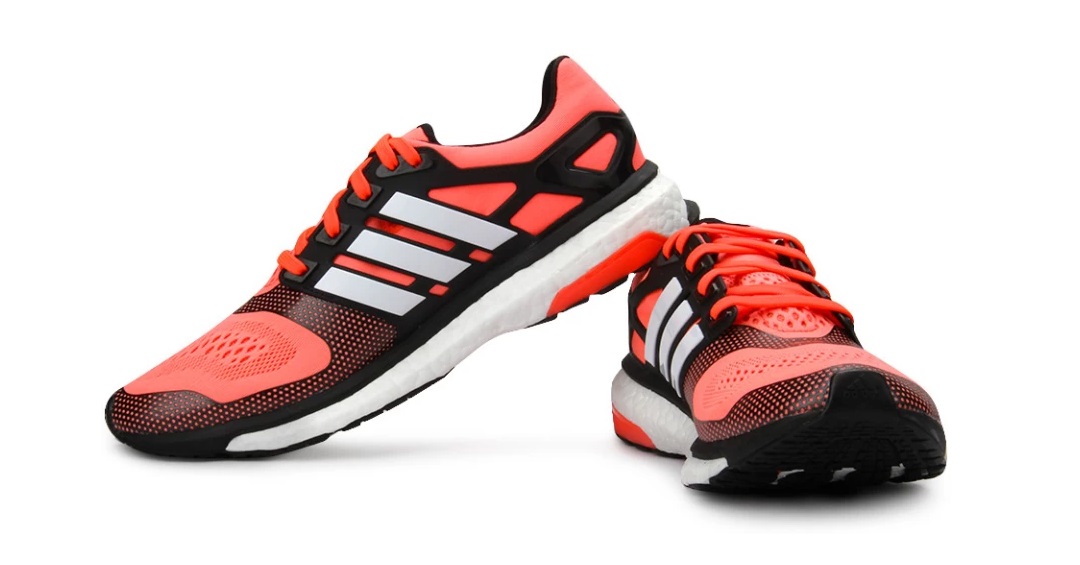
Athlete in full effort with Adidas Energy Boost 2 shoes.
Technological innovations
The continuous work of its founder Adi Dassler in product development and improvement has taken Adidas one step ahead of the rest of sports brands in the R + D chapter. Adidas has always been considered another tool for the athlete. In his sporting spirit, “faster, higher, stronger” is always present.
But it’s not just Adidas ‘ continuous innovation that is done to improve brands. Avoiding injuries, polluting less and making the practice of sport safer are also in the Adidas DNA. That is why it has always dedicated a lot of resources to making lighter shoes, interchangeable studs, more breathable fabrics, soles with greater momentum, integral recycling of the product, biodegradable paper bags , etc…
Innovation is a flag that Adidas waves every time a product comes to market, and it will continue to be so for a long time. Let’s look at some of the most important innovations from Adidas:

Image of Adidas sneakers and detail of the boost sole. Image: Adidas.
Boost technology
Boost marked a before and after in running shoes. Since 2013, the concept of “energy return” has changed the course of running. The result of the collaboration between AIT (Adidas Innovation Team) and the German chemical company BASF, it united 2 antagonistic concepts such as soft cushioning and great response.
Traditionally, the midsoles of shoes were made of EVA foam. Boost creates a midsole with thousands of tiny expanded particles that, together, provide extraordinary energy return with each stride.
In short, Boost provides more comfort and excellent behavior in all types of atmospheric situations. It is resistant, flexible, absorbs the kinetic energy of the stride and returns some of that energy. This innovation is the absolute icon of energy return and is used by Adidas in several running models and also in several “street” models.

Adidas Predator Elite Laceless football boot with Primeknit fabric on the embouchure. Image: Adidas.

Primeknit Volleyball Knee Pad. Image: Adidas.
Primeknit
Primeknit is a type of fabric that Adidas uses in its products. It is a fabric that is produced to “have no seams”, that is, it can be used in one piece, adapting to the foot as if it were a sock. It also has superior breathability. The use of cast yarn allows for better adjustment of flexibility, stability and support.
Its launch year was 2012, coinciding with the London Olympics. The most famous Adidas shoes with this type of fabric are the UltraBoost, which would set a new course in running and walking on the street.

Adidas sneakers with Futurecraft 4D technology. Image: Contemporary Crafts Debate.
Futurecraft 4D
Adidas has already started using 3D printing technology in the manufacture of its sneakers. It has presented a pair of shoes called “Adidas Futurecraft 4D”, which will allow the sole of the shoes to be customized, in the future, according to the customer’s biometric data.
The result of the collaboration between Adidas and the company Carbon, it aims to 3D print with high-performance polymers. The particularity of this 3D printing is that it starts from a liquid resin to form the “bee panel” through a process exclusive to Carbon’s 3D printers.

Adidas sneakers made with recycled fabric 2015. Source: Adidas.

Papael bag after the withdrawal of Adidas plastic bags, 2016. Image: Adidas.

Adidas shoe soles recycled and ready for a new recycling, 2019. Image: Adidas.
Parley for the Oceans
Adidas‘ philosophy is present in recognizing that, to some extent, its industry is part of the problem. Aware of this, Adidas is changing industrial processes to reduce the impact on the environment. To this end, in recent years, it has carried out very specific actions that minimise its environmental impact. The most important are:
- 2024 – All virgin polyester is replaced with recycled polyester (provided an alternative exists).
- 2023 – New areas: changing materials, extending their useful life, reducing the carbon footprint and the Move for the Planet initiative.
- 2021 – Launch of Mylo, a material created with lab-grown mycelium.
- 2019 – Launch of Futurecraft Loop. The world’s first footwear made entirely from the same material so it can be shredded and reconverted into something new.
- 2018 – Partnership with Parley for the Oceans to organize the 2nd edition of Run for the Oceans in the fight against plastic pollution in our oceans.
- 2017 – Manufacture of sneakers with Parley Ocean Plastic.
- 2016 – Removal of all plastic bags in Adidas stores.
- 2015 – Beginning of collaboration with Parley for the Oceans. First shoe partially made with Parley Ocean Plastic.
Iconic products
Some of the Adidas products that have left an indelible mark on sport and culture:

Adidas Superstar.
Adidas Superstar
Description: Officially launched in 1970, they featured a luxurious leather exterior and the famous embossed toe cap. Their comfort and durability soon gained great popularity. In the late 80s they became a cultural phenomenon and a design icon.
Year of release: 1970. Condition: On sale. Last: Classic. Upper: Leather. Lining: Synthetic. Sole: Rubber. Price: €140.00.

Adidas Stan Smith.
Adidas Stan Smith
Description: Launched in 1964 in collaboration with tennis player Robert Haillet, who designed them. They were named after tennis legend Stan Smith. Made of top quality leather , they also have a leather lining and a cushioned sole. The 3 bands are highlighted with perforations. It is a versatile and timeless sneaker.
Year of release: 1964. Condition: On sale. Last: Classic. Upper: Leather. Upper: Leather. Lining: Leather. Sole: Rubber. Price: €130.00.

Adidas Rod Laver.
Adidas Rod laver
Description: Considered one of the greatest tennis players in history, Rod Laver is still the only one to have managed to win, in the same season, all 4 Grand Slam tennis tournaments, twice! These sneakers were characterized by their mesh upper and PVC tongue.
Year of release: 1970. Condition: Discontinued. On sale in Zalando.es. Last: Classic. Upper: Mesh. Upper: PVC. Lining: Synthetic. Sole: Synthetic fiber. Price: €79.95.

Adidas Ilie Nastase.
Adidas Ilie Nastase
Description: The charismatic Romanian tennis player Ilie Nastase triumphed in 2 Grand Slams and won 47 tournaments. Her image and her smile captivated not only the public, but also many women. In 1973 he broke his contract with Nike and signed with Adidas, which immediately launched a sneaker model with his face on the instep. The Adidas Ilie Nastase was soon the best-selling model and the figures exceeded 20 million units. This made them an urban icon in Britain, where they are still highly sought after and where there is an active second-hand market.
Year of release: 1973. Status: Sold out. Last: Classic. Upper: Mesh / Leather. Upper: Leather. Lining: Leather. Sole: Synthetic. Price: — €.

Adidas Ultraboost 5
Adidas Ultraboost 5
Description: The first Ultraboost model was launched in 2015 and is named after the famous “energy return” Boost technology.Considered one of the best running shoes, it stands out for its Pimeknit mesh, its lightness and its Continental™ sole
Release year: 2015. Condition: On sale. Last: Classic. Upper: Mesh. Upper: Textile. Lining: Textile. Sole: Continental™. Price: €180.00.

Adidas Predator Pro BWR
Adidas Predator PRO BWR
Description: With the classic Predator colors, white, black and red, this limited edition commemorates 30 years of existence on the pitch. Footballers such as Zinedine Zidane and David Beckham have used this iconic model of football boots.
Year of release: 1994. Condition: On sale. Last: Classic. Upper: Leather. Upper: HybridTouch with Strikeskin inserts. Tongue: Foldable. Sole: Controlplate for dry natural grass. Price: €160.00.

Adidas Samba OG.
Adidas Samba OG
Description: One of the most accepted urban models from Adidas for good weather. Its breathable cotton mesh upper keeps the foot cool. Its suede reinforcements provide fit and wear resistance to the toe. Its futsal beginnings are long gone, becoming an urban icon.
Year of release: 1972. Condition: On sale. Last: Classic. Upper: Cotton mesh. Upper: Cotton mesh and suede overlays. Lining: Textile and synthetic. Sole: Rubber. Price: €120.00.

Adidas NMD.
Adidas NMD
Description: Designed for the runner, this Adidas model features Boost technology. It sports striking reinforcements that give it a cyberpunk touch and that are very pleasing to the young user.
Release year: 2015. Condition: On sale. Last: Classic. Upper: Textile. Upper: Textile. Tongue: Foldable. Lining: Textile. Midsole: Boost. Sole: Rubber. Price: €120.00.

Adidas Yeezy Boost 350 V2.
Adidas Yeezy Boost 350 V2
Description: A true gem in the world of sneakers. These sneakers are the result of the innovative collaboration between music icon Kanye West and Adidas. A fusion of avant-garde design and cutting-edge technology. They are distinguished by their color palette and their realization with Primeknit fabric and their extraordinary fit and comfort. They also incorporate Boost technology in the midsole.
Regrettable anti-Semitic statements by Kanye West forced Adidas to end the partnership, leading the company to a loss in 2023.
Release year: 2016. Status: Sold out. Last: Classic. Upper: Primeknit Mesh. Upper: Primeknit. Lining: Primeknit. Sole: Rubber. Price: €350.00.

Adidas FX ZK Boost FV.
Adidas FX ZK Boost FV
Description: In its own right, the FX series is considered one of the forerunners of modern running. Immediately upon its launch, this sneaker was incorporated into the outfit of thousands of young people who were looking not only for an image but also for a performance. Within the FX family there are many models, each with its specific DNA. After more than 40 years since its launch, the FX ZK Boost FV model is undoubtedly its greatest exponent, now sold out. Will?
Year of release: 1984. Status: Sold out. Last: Classic. Upper: Textile. Upper: Textile. Tongue: Textile. Lining: Synthetic. Midsole: Boost. Sole: Rubber. Price: — €.

Adidas Adizero Adios PRO 4
Adidas Adizero Adios PRO 4
Description: Undisputed dominator in the world of running, the Adizero Adios PRO shoe is the pinnacle of the Adizero Racing saga. It incorporates the improvements designed to improve running efficiency. ENERGYRODS 2.0 carbon rods for a smooth transition from heel to toe. The midsole features a curved profile that improves running economy. The cushioning is in the hands of the ultra-light LIGHSTRIKE PRO double-layer foam. The sole is made of Continental™ rubber and LIGHTRAXION technology is responsible for reducing weight.
Release year: 2008. Condition: On sale. Last: Classic. Upper: Textile and synthetic. Lining: Textile. Sole: Continental Rubber™. Price: €250.00.

Adidas Forum LOW CL
Adidas Forum LOW CL
Description: With a classic vintage finish, the Forum 84 pays homage to the original design. The suede and nubuck upper and self-adhesive strap help you put them on and take them off. A classic that continues on its way.
Year of release: 1984. Condition: On sale. Last: Classic. Upper: Leather. Upper: Nubuck and suede. Tongue: Nubuck. Lining: Textile. Sole: Rubber. Price: €104.00.

Adidas Beckenbauer.
Adidas Beckenbauer
Description: One of the most beautiful sneakers that Adidas has ever made. Designed for training, they owe their name to the legendary captain of Bayern Munich and the German national football team. Made of suede, they feature reinforcements on the toe and white rubber sole .
Year of release: 1982. Status: Sold out. Last: Classic. Upper: Textile and synthetic. Lining: Textile. Sole: Rubber. Price: €75.00.
Product Selection
After presenting the iconic Adidas products (sneakers), I have made a selection of the current products to check the range of activity of this legendary brand. The selection of the shoes I have made is as follows:
Sports
Shoes designed and manufactured for sports practice, whether amateur or professional. Products that you can find for sale in any Adidas Store and that, without a doubt, will meet all your expectations.

Adidas Adi Racer LO
Adi Racer LO
Description: This shoe exudes speed everywhere. Its double stitching in white thread gives it stability and a truly racing look. It has a carbon insert inside that brings lightness to the stride.
Sport: Motor. Last: Narrow. Upper: Nylon and suede and leather details. Lining: Textile. Trims: Reflective. Sole: Rubber. Price: €120.00.

Adidas Adizero Sprinstar.
Adizero Sprintstar
Description: Designed for technical sprinters, this shoe features a breathable synthetic mesh upper. The TPU spike plate helps with stride propulsion. This shoe exudes speed everywhere.
Sport: Athletics. Last: Classic. Upper: Synthetic mesh. Lining: Synthetic. Sole: Synthetic. Price: €80.00.

Adidas Adizero Ubersonic 5
Adizero Ubersonic 5
Description: Designed for tennis, this shoe allows very quick reactions thanks to its reinforced lightweight mesh upper. The midsole is made of Lighstrike, which guarantees optimal contact with the court and the Speedframe sole allows more support in the heel, being ideal for hard surfaces.
Sport: Tennis. Last: Classic. Upper: Textile and synthetic. Cushioning: Lightstrike. Sole: Speedframe. Price: €150.00.

Adidas Adizero ZG Spikeless
Adizero ZG Spikeless
Description: Golf shoes should have some characteristics of their own: good cushioning, lightness and dynamic stability. In addition, the Adizero ZG Spikeless has a waterproof upper to keep your feet dry.
Sport: Golf. Last: Classic. Upper: Waterproof Sprintskin. Cushioning: Lighstrike Pro. Sole: Spikemore. Price: €200.00.

Adidas Anthony Edwards Low
Anthony Edwards Low
Description: Designed for young people with a talent for scoring, this shoe, designed for Anthony Edwards, combines Boost and Lightstrike technologies in the midsole, providing excellent energy return . The rubber sole provides stability. The Anthony Edwards logo finishes off her striking look.
Sport: Basketball. Last: Classic. Upper: Synthetic. Midsole: Boost. Cushioning: Lightstrike. Sole: Gum. Price: €90.00.

Adidas Box Hog 4
Box Hog 4
Description: High-top, these boxing shoes feature a breathable mesh upper and internal reinforcements. The midsole is die-cut in EVA, providing stability and support. The sole has a multi-directional design that provides excellent grip.
Sport: Boxing. Last: Classic. Upper: Textile. Sole: Gum. Price: €110.00.

Adidas Kakari RS.
Kakari RS
Description: This rugby boot features a lightweight one-piece sole that allows for good multi-directional traction and greater stability even on muddy surfaces. The Fusionskin upper has reinforcements for greater support.
Sport: Rugby. Last: Classic. Upper: FusionSkin. Lining: Synthetic. Sole: for wet natural grass. Price: €220.00.

Adidas Puig.
Puig
Description: Inspired by the aesthetics of indoor football, this shoe, designed by Lucas Puig, stands out for its finish and premium materials. Suede upper with 3 synthetic stripes, nylon side panel and molded Adiprene insole. The EVA midsole absorbs impacts and the Adituff reinforcement in the toe offers more resistance to wear. Ideal for Skateboarding.
Sport: Skateboarding. Last: Classic. Upper: Leather and synthetic. Lining: Textile. Sole: Rubber. Price: €100.00.

Adidas Stabil 16 Indoor
Stabil 16 Indoor
Description: Designed for indoor practice, this shoe has Boost technology in the midsole and also offers optimal support. The mesh upper and tongue promote ventilation.
Sport: Handball. Last: Classic. Upper: Mesh. Lining: Textile. Sole: Gum. Price: €160.00.

Adidas Tempo Boa
Tempo Boa
Description: Performance and comfort are the characteristics of this cycling shoe. Its breathable mesh upper provides comfort. The micro-adjustable BOA® Fit System quick-release closure allows for a perfect fit. The sole is compatible with most fit systems for road cycling.
Sport: Cycling. Last: Classic. Closure: Quick micro-adjustable bow BOA® Fit System. Upper: Mesh with reinforcements. Lining: Textile. Sole: for 3-screw cleat. Price: €200.00.

Adidas Terrex Skychaser
Terrex Skychaser
Description: This hiking shoe offers a balance between protection, control and comfort on all types of terrain. The waterproof and breathable GORE-TEX EPE membrane keeps feet dry and ventilated. The Continental™ rubber sole offers exceptional grip on dry and wet ground. The Lightstrike cushioned midsole provides speed and responsiveness.
Sport: Hiking. Last: Classic. Closure: Quick lacing. Upper: Textile and synthetic. Sole: Continental rubber™. Price: €160.00.

Adidas Y3Adios 9
Y3 Adios 9
Description: A sophisticated version of the Adidas running shoes. It features a unique silhouette that allows you to run faster and make smoother, more fluid transitions. The breathable LIGHTLOCK upper adapts to the natural movement of the foot. The Lighstrike Pro midsole and LIGHTTRAXION sole reduce the weight of the shoe offering more traction. The Y-3 logo and Yohji Yamamoto’s signature offer a distinctive look.
Sport: Running. Last: Classic. Upper: Elastic mesh. Cushioning: Lightstrike Pro. Sole: GCPU. Price: €250.00.
Urban Activity
Although Adidas mainly manufactures sports equipment. From well into the 70s, some of his sneakers began to be part of the clothing of the young people of the time. This, far from diminishing its incidence in urban culture, has been increasing this image of “informal”, “casual” or “street” clothing.
Some of its sneakers are already part of a “casual” fashion, and are a mandatory stop for young and not so young. The fact is that some models have climbed on the most significant trends of this urban fashion that concerns us. Some examples of these shoes are:

Adidas Campus ADV
Campus ADV
Description: As the name suggests, a pioneer on college campuses, this Adidas sneaker continues to maintain the classic style of the 90s and add some Skate use. The suede upper is combined with an EVA midsole and a molded Adiprene insole. The sole is made of rubber with a lot of grip.
Activity: Casual, skateboarding. Last: Classic. Upper: Suede. Midsole: EVA. Cushioning: Adiprene. Sole: Geoflex drawing. Price: €100.00.

Adidas Gazelle Indoor
Gazelle Indoor
Description: Initially designed as a training shoe, the Gazelle has become a timeless icon. This model features a suede upper and caramel-colored rubber sole . It features reinforcement on the heel and the 3 stripes of the house.
Activity: Casual. Last: Classic. Upper: Suede. Lining: Leather. Sole: Rubber, caramel color. Price: €120.00.

Adidas SL 72 OG
SL 72 OG
Description: Simplicity and comfort, plus a retro running image. This sneaker has a streamlined silhouette with a Nylon upper and suede reinforcements. It has an EVA midsole and an embossed rubber sole that offers excellent traction.
Activity: Casual. Last: Classic. Upper: Nylon. Midsole: EVA. Lining: Textile. Midsole: EVA. Sole: Gum. Price: €100.00.

Adidas VL Court 3.0
VL Court 3.0
Description: An example of simplicity, this sneaker has its own personality. The soft leather upper and a very comfortable textile lining make it very easy to wear. The lightweight midsole provides cushioning and support. The vulcanized rubber sole offers a skater look.
Activity: Casual. Last: Classic. Upper: Leather. Lining: Textile. Sole: Vulcanized rubber. Price: €70.00.

Adidas sneaker example of sustainability and ecology. Image: Adidas
Legacy and future
It’s been 47 years since Adi Dassler left us and I think if I could see his creation now, I’d be proud. Adidas has come a long way, thanks to the legacy of this incredible athlete and the activity of thousands of people around the world.
Adidas‘ footprint in the world of sport will never be erased, and it will also be matched in pop culture and sustainability. The commitment to innovation, performance and design continues to drive this fascinating brand. Today, Adidas is no longer only a benchmark in the world of sports, it is also a benchmark in the world of fashion.
The brand’s sporting commitment , together with the commitment to sustainability and social programs are its best legacy. Sport served as a springboard, now Adidas is also a sustainable, cultural and social reference. Bringing sport to all places and to all people is a great task. In that Adidas is the undisputed leader.
I don’t see a future without Adidas because I know that the spirit of Adi Dassler is still in the brand, and Adi was not one of those who dropped out in the middle of the race. I know that there is a future for Adidas as there is also for sport, culture and sustainability. People and Planet, two unavoidable commitments for Adidas. For them, Adidas will continue its work.

Adidas Headquarters, Herzogenaurach. Image: Adidas.
Opinion
In 2024, Adidas had sales of €23,683 million, with a profit of €1,337 million and a workforce of 62,035 people. Are these data enough to know the impact that Adidas has on the global economy, on sport or on sustainability ? Economically, yes, but there are more parameters to be evaluated.
If Adidas is known for anything, it is for its contribution to sport. This measurement is difficult to evaluate, since it needs to evaluate the results, the competitions and, let’s not forget them, the athletes. So how do you assess Adidas‘ impact?
You have to abstract yourself and think about each of your achievements, each of your innovations, each recycling, each child who accesses the sport and thus, understand the value of an Adidas shoe and everything behind it. Only in this way, we will do justice to Adidas.
While you think about all this, thousands of children will have played football with their first Adidas balland will have scored their most important goal: They will have changed their lives!
See? Impossible is nothing.
NOTE: If you liked this article, you can share it on social media. You can also rate it with stars below. If you wish to leave a comment, ask a question or make any suggestion you can do so in the comment box below. Thank you for your attention!
Information, bibliography and media
We use our own and other means with the availability allowed by current legislation and free access to the World Wide Web. (See Terms Conditions)
Texts: Owned, based on information from adidas, blog.footdistrict.com, Adi & Käthe Dassler Foundation, Wikipedia.
Images: adidas, Apparel Journal, Contemporary Crafts Debate, blog.footdistrict.com, Flashcore, Flickr, Adi & Käthe Dassler Foundation, idealo, Marca.com, MarketingDirecto, Sz9, Wikimedia Commons, Zalando.es.
Videos: s/n.