




Omega, the value of time
Earn 10.00 Reward Points by commenting the blog post
Introduction to Omega
Omega is the twenty-fourth letter of the Greek alphabet (Ω, ω), but it is also the brand of watches that represents “the value of time”.
While there are other big watch brands (Swiss, generally), Omega stands out. And it does so because it has been able to offer an extraordinary watch to an “extraordinary” normal audience. It has also been able to provide its creations with captivating features for different audiences .
All seasoned with an impressive dose of innovation, with irreproachable quality, unique precision and attractive design. Omega has been able to captivate an audience that longed for an extraordinary watch at an “extraordinary” normal price.
Omega is a brand that is well liked, it is appreciated. Appreciated by those of us who have not been and will never go to the Moon, by those of us who have only dived in the neighborhood pool, by those of us who will never run the 100 m in less than 15 seconds and by those of us who will never win a poker game with a straight flush in a casino in Monaco.
Omega is the reference brand for understanding the value of a good watch and perceiving the importance of the passage of time.
The Omega Story
A 23-year-old named Louis Brandt founded the company that became Omega in La Chaux de Fonds (Switzerland) in 1848. A lover of precision, he dedicated himself to constantly improving his watches, gaining a great reputation in a few years.
Upon his death in 1879, his sons Louis-Paul and César continued the family business. Under the new name Louis Brandt & Fils, in 1880 they moved to Biel/Bienne, to larger premises at 96 Rue Jakob-Stämpfli, which is still the company’s headquarters.
In 1885 they presented their first mass-produced caliber: the “Labrador”, which featured many technological advances and excellent timekeeping.
It would be in 1892 when they presented the first wristwatch with minute repeater sound. It was a miniaturization of existing pocket watch movements and chimed the hours and minutes at will.
In 1894, the Brandt brothers launched the caliber: “19 lines”. Made in series with new production methods, it set a new standard in watchmaking. Not only was it extremely accurate , but every component could be replaced by any watchmaker in the world.
They called their new achievement “Omega” a classic and definitive name. They already knew that precise mass-produced movements were the future and the public did not take long to realize it.
The success led them to change the name of the company to “Omega Watch Co”.

Portrait of Louis Brandt. Image: Wikipedia.

Image of the first mass-produced caliber: Omega Caliber.


In 1900, in Paris, Omega received the Grand Prix of the Universal Exhibition in recognition of its technology.
Omega’s commitment to timekeeping began in 1905 by participating in 16 sporting events. In 1909, Omega timed the Gordon Bennett Cup, a prestigious and dangerous balloon race.
After the hard years of World War I, in 1925 it merged with the Swiss company Tissot to form the SSIH watchmaking group in Geneva. Also, in that same year, after its international expansion and confirming its innovative vocation , it created a selection of Art Deco watches.
In 1931 , Omega set records (6) for accuracy at the Geneva Observatory. Its chronometer was more accurate than any other watch ever produced. That same year he presented the first automatic movement with two oscillating weights, which allowed the movement to be recharged in both directions.
Beginning its sporting tradition, in 1932, Omega began to time the Olympic Games (Los Angeles), becoming (in almost all the Olympic Games. OO. celebrated) the Official Timekeeper firm, improving sports timekeeping from 1/10 s. in 1932 to 1/1000 s. today.
The first diver’s watch, the Omega Marine, introduced in 1932, featured an ingenious double case sealed with cork to keep water away from the inside of the watch. Also, an adjustable clasp made it easier for divers to adjust the watch to their wrist.
On July 31, 1936, a 47.7 mm Omega caliber tuned by Alfred Jaccard achieved a new accuracy record of 97.8 points out of 100 at the Kew observatory. Just 2.2 points shy of perfection, this record remains unbeaten to this day.
In 1937 the Omega Medicus was introduced incorporating a larger, easier-to-read central seconds hand. In World War II it was used to accurately measure the pulse and was known as “the nurses’ clock”.
In 1947 he created one of the first tourbillon wristwatches, successfully miniaturizing one of the most complex mechanisms. Today Omega offers the only central tourbillon with automatic movement.

Omega Medicus. (Note the size of the second needle.)

1948 was the year of the launch of the iconic Omega Seamaster.
In 1948, thanks to Omega , electronic timekeeping was born, which replaced the tape used until then by the “Magic Eye” photoelectric cell which, together with the photofinish camera created by the British Race Finish Recording Company , marked a new era in sports timekeeping. A year later, both companies integrated both technologies into the Omega Racend Timer.
On its centenary (1948) Omega launched the iconic Seamaster model, produced to withstand any challenge, at any height, in the sky or below the surface of the ocean. Renowned for its reliability and superior watertightness, the Seamaster is a symbol of mastery.
In 1952 , Omega launched the Constellation model, named after the 8 stars that appear on its emblem.
Its excellent structure and consistent precision made it “the Swiss watch”. The stars on its emblem match the 8 accuracy records that Omega set at Kew Teddington and the Geneva Observatory in the mid-20th century.
Omega launched the Ladymatic model in 1955, its first women’s wristwatch.
Its movement became the smallest automatic caliber equipped with a rotor.

Omega Constellation, released in 1952.
1957 was the year of the three legends: Speedmaster, Seamaster 300 and Railmaster. The Speedmaster model was intended for a future of space exploration with NASA, it became known as the “Moonwatch”. The Seamaster 300 ushered in a new era in underwater watches. The Railmaster was the first Omega capable of resisting magnetism up to 1000 gauss.

Omega Speedmaster, Seamaster 300 and Railmaster. Launched in 1957.
John F. Kennedy wore at his inauguration as President of the United States of America an extra-thin Omega watch that his friend Grant Stockdale gave him with a prophetic engraving days before the 1960 presidential elections.
In 1965 NASA certified the Omega Speedmaster (the only watch that passed all the challenges of the test) for all manned space expeditions and Extravehicular Activity (EVA). It remains, to this day, the only watch certified by NASA.
In 1967 the Omega De Ville watch was no longer called “Seamaster”, recovering its own personality with simpler, thinner and more varied cases, maintaining the appeal of the series and incorporating the most advanced technology.

Extra-flat omega worn by John F. Kennedy in 1960.

In 1967 the Omega De Ville was no longer called Seamaster.
1969 was the year in which man landed on the moon. At 02:56 GMT on July 21, Neil Armstrong set foot on the lunar surface for the first time in our history. An essential part of the astronauts’ space equipment was the Omega Speedmaster Professional watch. After the Apollo 11 moon landing, the Speedmaster watch was forever known as the “Moonwatch”.
In that same year, Captain John Hackett was the first pilot to sail the Atlantic Ocean aboard the Concorde with the Omega Speedmaster on his wrist.
On April 11, 1970, at 1:13 p.m. Houston time, Apollo 13 lifted off for the Moon. An explosion of an oxygen tank left the ship with minimal power. Thanks to the Omega Speedmaster, the crew successfully timed the ignition of a rocket engine (14 s) allowing the spacecraft to splash down on April 17, 142 hours and 54 minutes after launch.

Omega Speedmaster on Buzz Aldrin’s wrist on Apollo 11.

Omega Speedmaster on John Hackett’s note on the first flight of Concorde.
On April 11, 1970, at 1:13 p.m. Houston time, Apollo 13 lifted off for the Moon. An explosion of an oxygen tank left the ship with minimal power. Thanks to the Omega Speedmaster, the crew successfully timed the ignition of a rocket engine (14 s) allowing the spacecraft to splash down on April 17, 142 hours and 54 minutes after launch.
After ten years of development, in 1974, Omega launched the Megaquartz movement, a wristwatch caliber, which was certified as a “Marine Chronometer”. Due to its accuracy of less than 0.002 seconds per day, it remains the world’s first and only wristwatch with this award.
In 1978, the Omega Seamaster Professional 200, which stood out for its octagonal steel case and luminous black dial, was selected as the watch of choice of the Service Hydrographique et Océanographique de la Marine (SHOM).

Omega Constellation Marine, the only “Marine Chronometer” certified watch.


Original poster for the film 007 GoldenEye (1995).
In 1989, legendary Italian mountaineer Reinhold Messner made the first trek to Antarctica on foot. With his Omega Speedmaster he walked for three months until he completed 2,800 km, usually enduring temperatures of -40ºC and blizzards that exceeded 145 km / h.
1995 was the year of the premiere of “Goldeneye” and the first year of the Seamaster on the James Bond wrist , starring actor Pierce Brosnan. In the decades since, a Seamaster has faithfully served Bond on each of his missions.
In that same year, Cincy Crawford became an ambassador for Omega, sharing with the brand values such as quality, reliability and respect for tradition. Crawford has also participated in events and the design of new Omega products.
1999 was a turning point in mechanical watchmaking. Omega launched the first new watch escapement in 250 years: the Co-Axial escapement. This movement produces less friction and requires less lubrication, making it much more reliable.
During the year 2000, Omega opened its first boutique on the Bahnhofstrasse in Zürich. Thanks to the success of the concept, today, more than 300 boutiques can be visited in the most prestigious points of sale in the world.
In 2008, Omega rethought the heart of its movements, creating the Si14 (Silicon 14) balance spring, the best of which were greater resistance to electromagnetic forces and a significant reduction in gait deviation and chronometric stability. Watches equipped with the Co-Axial escapement offer exceptional stability and reliability .

Image of the back of an Omega De Ville with Co-Axial escapement.

Omega, spiral Si14 (2008)
In 2010 , the new Ladymatic is launched with a new mechanical movement (the best in the world).
In 2011, Omega became Official Sponsor and Timekeeper of the prestigious PGA golf tournaments and the Ryder Cup.
The year 2013 would be the year of the discovery of the new watch movement resistant to magnetism of more than 15,000 gauss, the 8508 Co-Axial.
In 2015, at the request of Omega, the Master Chronometer certificate was established by the Swiss Federal Institute of Metrology (METAS). It consists of passing 8 independent tests with parameters established by the Contrôle Officiel Suisse des Chronomètres (COSC) that qualify a watch as a Master Chronometer.
In 2017, a limited edition of 2012 pieces made the Omega Speedmaster “Speedy Tuesday” watch the first to be available for pre-order online, selling out in 4 hours, 15 minutes and 43 seconds.
2018 was the year in which Omega introduced its 5-year universal warranty on all its watches.
In 2019, Omega rescues its iconic Caliber 321. Once incorporated into the Speedmaster models, it has been rebuilt with the utmost precision.
2019 is also important in Omega’s history. Victor Vescovo successfully piloted his submersible to the bottom of the Mariana Islands Trench, up to 10,925 m. A special pride for the Expedition Five Deeps and Omega, as the Seamaster Planet Ocean Ultra Deep model participated in the descent and worked perfectly.
In the same year, Omega launched, continuing its incredible history of pioneering materials and innovation, the Semaster Aqua Terra “Ultra Light” model. Only 55 grams with its fabric bracelet it is made with Gamma Titanium and a recessable crown.
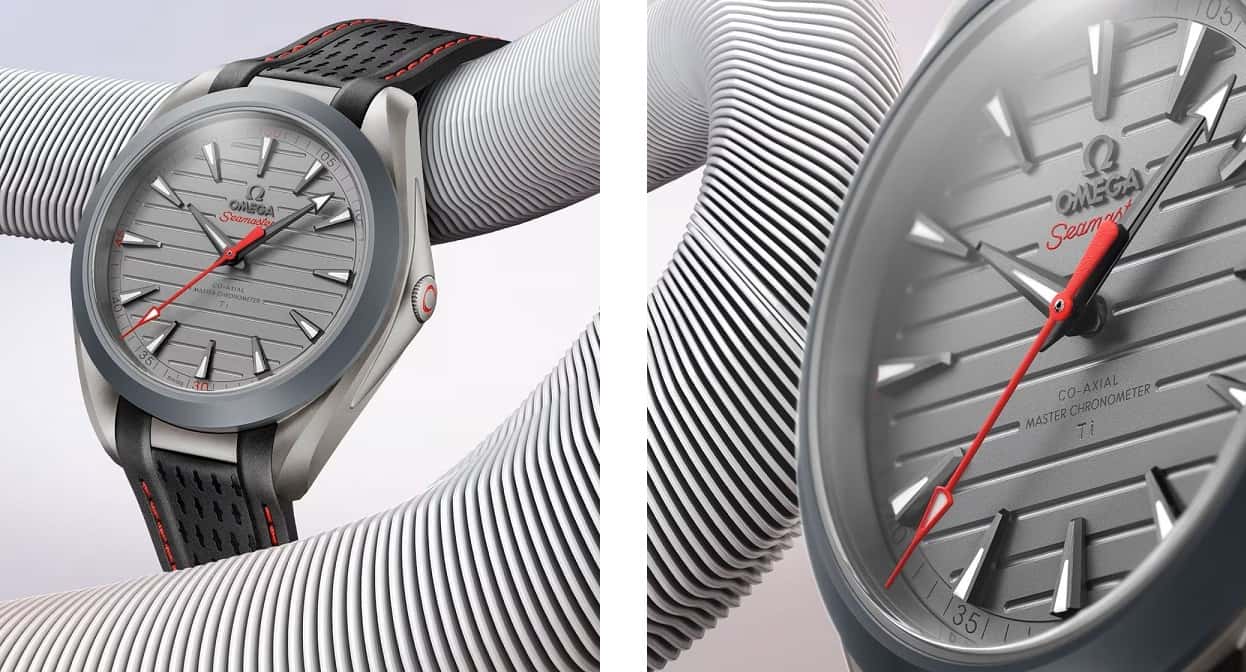
Omega Seamaster Aqua Terra “Ultra Light”.
In 2020, Omega, to celebrate 25 years of Omega and James Bond, launched the Seamaster Diver 300M Edition 007 model. Made of resistant and lightweight titanium, it has multiple military-inspired details.
In 2021, the Moonwatch becomes a Master Chronometer thanks to the new Caliber 3861 that improves power reserve, chronometric performance and magnetic resistance.

Omega Speedmaster “Moonlight” 2021.
Types of Movement
Manual mechanical movement
It is the oldest type of movement used in wristwatches. Derived from the mechanism of pocket watches, its main characteristic is that it must be wound manually periodically by turning the crown of the watch.
The mechanism is simple: inside the watch there is a spring that, when untensioned, moves certain mechanisms to operate the hands of the watch and other functions. When the spring completely loses tension, the clock stops. It is necessary to wind the watch again by turning the crown clockwise (excuse the redundancy) to tighten the spring again.
Tips for manual recharging: Periodically recharge the watch to prevent it from stopping. Avoid recharging with the watch placed on the wrist. Appreciate the moment of recharging as a routine that preserves the traditional character of the watch.

Omega, caliber 321
Automatic mechanical movement
In this case, a first evolution of the mechanical movement, the energy that assists the movement is generated with a part called a rotor.
Placed at the bottom of the watch case (sometimes seen), it oscillates by means of a rocking movement (provided by the normal activity of our hands) tensioning the balance spring that provides the energy of the mechanical movements, therefore, it does not require winding with the actuation of the crown.
Only in the event of a prolonged stoppage of activity of our watch, it will require a manual recharge by operating the crown, coming back to life again and self-charging through the activity of our hands.
Watches with automatic (or kinetic) movement are highly valued and maintain a higher level of precision than simple mechanical watches, although lower than the accuracy of watches with quartz movement.

Omega, caliber 2507
Co-axial Motion
A second, and very important, evolution of the mechanical movement. In this case, it is the adaptation of what we call a “Coaxial escapement” in the mechanical mechanism of a watch.
Invented by George Daniels in 1976 and patented in 1980 , it is a modification of the traditional Swiss escapement or lever escapement and works with a system of three vanes that separate the locking and impulse function, avoiding friction and lubrication, ensuring reduced maintenance.
It is used by most of Omega’s mechanical and automatic movements and provides greater precision and less maintenance.

Omega, caliber 8800
Quartz movement
This movement was, in the 1970, the cause of the call “Quartz crisis”, a jolt in the waterline of the Swiss watch companies. The entry into the watchmaking market of a much more more precise, simpler, more economical and practical, it immediately led to the protagonist of wristwatches.
This movement obtains its energy through the vibration of a piece of glass (quartz) that occurs when the electric currents of a small button battery pass through it.
The battery power (button cell), converted into electric current, applied over a quartz sheet, which produces a vibration with a regular frequency (32,768 beats per second). Invention of Girard-Perregaux In 1971, by means of an electronic circuit, he transferred the movement to the hands of the clock from second to second.
An advantage of this type of movement is the Display Form Time. Not bad analogical (needles) or digital (numbers on LCD support), the quartz movement even allows both at the same time. In addition, by varying the type of glass sheet, they can be obtained Other frequencies that allow Other features to the clock.
Another advantage, no less important, is its low maintenance, limiting itself to Changing the battery at the end of its useful lifein most cases. There is no doubt that we are facing the Cheaper version of watch movements.
There are watches with quartz movement that do not have a button cell as a power source. This is the case of the Solar charging watches. One Photoelectric cells capture solar energy and store it in a accumulator or internal battery. This accumulator provides The same electric current as a button battery, which also allows the operation of the quartz movement.

Omega, caliber 1310

Seiko Astron 1969, the first caliber of quartz and the cause of the great “Quartz Crisis”.
Material Selection
Omega’s continuous pursuit of progress in its watches stems from the use and refinement of essential materials. Not only to enhance the beauty of the watch, but to enhance functionality and longevity.
All Omega products are ethically sourced and manufactured and independently inspected by third parties in accordance with the Responsible Jewellery Code of Practice.

Image of a steel mill in a steel mill. Image: Metinvest.
Metals
Omega uses appropriate metals to make its creations resistant to abrasion, magnetism, temperature and, above all, corrosion. Each metal offers its character and performance to the cases, bracelets, clasps and components of the movement. Let’s look at the materials most used by Omega.

Red Gold Cylindrical Bar. Image: Omega.
Red Gold
The 18k copper and silver alloy offers excellent corrosion resistance, and is biochemically inert. It provides a beautiful shade that is highly appreciated in jewelry.
Example: Omega Speedmaster Broad Arrow

Cylindrical Yellow Gold Bar. Image: Omega.
Yellow Gold
Considered the top level in watchmaking and jewelry, 18k gold (with at least 75% pure gold) offers the ultimate balance between purity and utility. Traditional yellow gold is alloyed with copper and silver and offers excellent corrosion resistance, as well as being biochemically inert.
Example: Omega De Ville prestige (yellow gold with leather strap)

Cylindrical White Gold Bar. Image: Omega.
White gold
At 18 k, it is alloyed with palladium and copper and offers excellent corrosion resistance, as well as being biochemically inert.
Example: Omega Olympic Pocket Watch (White Gold)

Cylindrical Stainless Steel Bar. Image: Omega.
Stainless steel
The most conventional metal in the world of watchmaking. The AISI 316L quality is obtained by adding Chromium, Nickel and Molybdenum to the alloy, in addition to iron and carbon. Extraordinarily resistant to corrosion, it has an intense shine after polishing and is optimal for daily use and in high-tension sessions such as diving and adventure.
Example: Omega Seamaster Aqua Terra 150 M 41 mm (Steel to Steel)

Cylindrical bar from Liquidmetal™. Image: Omega.
Liquidmetal™
Since 2010, Omega has fixed its ceramics with an alloy called Liquidmetal™, which offers superior scratch resistance and long-lasting stability, as well as new decoration possibilities in a metallic grey colour.
Composed of titanium, zirconium and copper, this amorphous alloy is three times harder than stainless steel. When joined to ceramic pieces, Liquidmetal™ can be offered in contrasting finishes (brushed or polished), thanks to the difference in hardness between the two materials.
Example: Omega Seamaster Planet Ocean Liquidmetal™

Cylindrical Aluminum Bar. Image: Omega.
Aluminium
Aluminum is a very light material. Its anodizing offers a wide range of colors to create attractive parts of the watch, such as: bezel rings, elements on the dial and hands.
Example: Omega Seamaster Diver 300 M 42 mm

Titanium cylindrical bar.Image: Omega.
Grade 2 Titanium
Titanium alloys are lightweight, corrosion-resistant, biochemically inert, and withstand extreme temperatures. They are particularly suitable for aeronautical, space and medical products. Grade 2 titanium offers a faint gray color and allows for a brushed finish. It is used by Omega in sports and space exploration, where light reflections must be avoided.
Grade 5 Titanium
Grade 5 titanium offers a bright gray color similar to that of stainless steel and allows for both a brushed and polished finish.
Examples: Speedmaster X-33 Marstimer 45 mm. (Ti grade 2), Seamaster Planet Ocean 6000M 45.5 mm. (Ti grade 5)

Image of the dosing process for a special alloy.
Exclusive alloys
Omega has created a variety of unique alloys composed in an innovative way and providing unique functional, appearance and quality advantages.

Cylindrical Gold Bronze Bar. Image: Omega.
Gold Bronze
Developed to produce a pleasing aesthetic and shine, thanks to its composition, it can also be worn in contact with the skin. This one-of-a-kind alloy is enriched with noble elements such as 37.5% gold, with 9k contrast, as well as palladium and silver, to create a unique color that sits exactly between 18k Moonshine™ gold and 18k Sedna™ gold.
It has a soft pink tone and offers enormous corrosion resistance without verdigris oxidation, so it will age slowly and retain its beautiful natural patina for longer.
Example: Omega Seamaster 300 M Bronze Gold

Cylindrical Gold Sedna™ bar. Image: Omega.
Sedna™ Gold
Since 2012 Omega has been using its exclusive intense rose gold alloy, the exclusive Sedna™ gold. Named after a planetoid of the same name and color. Its composition includes copper and palladium to give it color, stability and great resistance to loss of hue.
Example: Omega De Ville Prestige 30 mm. Sedna™ Gold with Steel

Cylindrical Gold Moonshine™ Bar. Image: Omega.
Moonshine™ Gold
Omega created in 2019 the exclusive Moonshine™ gold, an 18k yellow gold alloy. Inspired by the bright moonlight in a dark blue sky, it offers a distinctly paler hue than traditional 18k yellow gold and great resistance to fading and shine over time. Its unique composition includes silver, copper and palladium for color and stability.
Example: Omega Speedmaster Moonwatch Professional 42 mm. gold Moonshine™

Cylindrical Gold Canopus™ Bar. Image: Omega.
Canopus™ Gold
Since 2015 , Omega has been using the exclusive Canopus™ gold, an 18k white gold alloy. It is distinguished by its high brilliance, whiteness and longevity, making it an ideal material for high-end watches or with diamonds set. The alloy is named after the bright star Canopus, which is 71 times larger and 10,000 times brighter than our Sun.
Its unique composition includes platinum, rhodium and palladium for color and stability.
Example: Omega Speedmaster 321 Canopus Gold™.

The five steps to the creation of an Omega watch case from ceramic powder.
Ceramic materials
The word pottery is of Greek origin, it comes, specifically, from the word “keramiké”. Omega has a great deal of experience in the use of ceramic materials for more than 10 years. From the finest ceramic powder, pressure in moulds and subsequent firing at 1,400 ºC, a highly resistant, attractive, non-magnetic material with a good range of shades is obtained.

Pressed ceramic powder for a watch case. Image: Omega.
Ceramics
Ceramic is an inorganic and non-metallic substance that is obtained by firing at high temperatures. It has exceptional mechanical properties and is an ideal choice for the watch industry, thanks to its attractive range of colours and properties. It is twice as light as stainless steel, durable, highly scratch-resistant, chemically inert, hypoallergenic, environmentally friendly and non-magnetic.
Example: Omega Speedmaster Moonphase 44.25 mm.

Image of the polishing process of gold deposited on a ceramic bezel. Image: Omega.
Ceragold
Omega Ceragold™ allows the ceramic parts of the watch to be decorated with 18k gold . The process used to create a ceramic bezel with numerals and scale in 18k gold results in a product that combines both materials.
Example: Omega Seamaster Planet Ocean 600M Ceragold™ GMT
Natural materials
Some of the materials Omega uses are expertly designed and innovated to provide unique attributes. Other materials used by Omega in his creations have been shaped by the natural forces of the Earth and the “beyond”.
With this type of materials, Omega achieves a perfect balance as it maintains its organic beauty , treating them in a masterful way.

Magnified image of a diamond. Image: Omega.
Diamond
Ranked as the hardest material on Earth, with grade 10 on the Mohs hardness scale, it is the only all-carbon gemstone. It can only form under conditions of high temperature and pressure at a specific depth (~ = 100 miles; approximately 160 km) below the earth’s surface.
To adorn its watches and jewelry, Omega uses diamonds with the so-called “4 English CES”: “Top Wesselton” color , i.e. extra white; Clarity ranging from totally pure to VVS (Very Very Small, i.e. with absolutely tiny inclusions). In addition to choosing the best Carat weight, the Cut is also carefully selected, to maximize shine and sparkle.
Example: Omega Constellation 29mm. Moonshine™ with Gold Moonshine™

Image of the inside of a shell of a mollusk: mother-of-pearl. Image: Omega.
Mother of pearl
Also known as “mother-of-pearl”, mother-of-pearl is an organic and inorganic composite material produced by some mollusks as the inner layer of the shell, similar to pearls. It is strong, resistant and iridescent, with changing colors according to viewing angles.
Example: Omega Constellation 25 mm., Steel, yellow gold with steel.

Image of a real meteorite. (Note the ferric content). Image: Omega.
Meteorite
Meteorites are extraterrestrial stones that contain mostly iron. Omega uses them as the base of its spheres and, due to their character and low availability, each sphere is a unique element (no two spheres are the same). Meticulously polished, they offer an aesthetic with exceptional value.
Example: Omega Constellation 41 mm. Steel with Steel
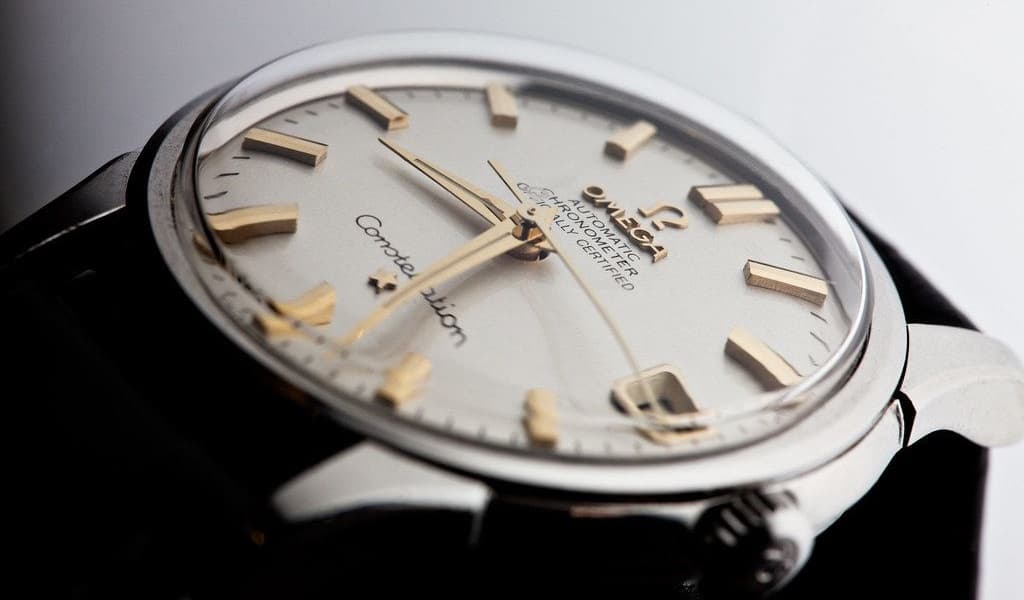
Sapphire crystal of an Omega Constellation watch.
Crystal
It is the transparent element that covers the face of a watch and that protects and allows the hands and information to be visualized. There are several types of crystals used in watchmaking and they are included in 3 large groups:
- Acrylic or Plexiglass glass. With a hardness between 3 and 4 on the Mohs scale, this type of glass is used in basic and inexpensive models. It has a low level of hardness and scratches easily. Not so its breakage, in which it performs well. Glass has another particularity and that is that it can be polished to remove scratches.
- Mineral glass. It is obtained in the process of melting quartz and silicon. It is located at degree 5 on the Mohs scale. They are much more resistant than acrylics and, over time, their characteristics have been improved. If they present scratches, their re-polishing is more complicated than in acrylic crystals. Featured crystals are: Hardlex Crystal (Seiko, 7 Mohs grade), Sapphlex Crystal (Seiko, 90s, combination of mineral crystal and sapphire crystal sheets, 8 Mohs grade), FlameFusion Crystal (halfway between mineral crystal and sapphire crystal, grade 8 Mohs scale) and Krysterna Crystal (originating from optics, grade 8 on the Mohs scale, used by Stürhling).
- Sapphire crystal. It has a very high scratch resistance and scores 9 points on the Mohs scale. They are made using the Verneuil process, also called flame fusion, which results in a glass cylinder. Sapphire crystal is used in high-end watches such as Omega.

Sapphire crystal. Image: Omega.
Sapphire crystal
Omega uses a synthetic sapphire crystal with a treatment that is highly resistant to scratches and reflections. With a hardness rating of 9 on the Mohs scale, sapphire crystals are virtually scratch-resistant and extremely hard, ensuring perfect vision at all times.
Non-ferromagnetic materials
Magnetism can alter or stop the march of a watch. But by using a silicon balance spring in their movements, in addition to Nivagauss™ alloy and other non-ferromagnetic materials, Omega’s revolutionary Master Co-Axial calibers resist magnetic fields of up to 15,000 gauss.

Silicon 14
In 2008 Omega launched the first Co-Axial movement with a balance spring made of Si14 silicon. This material maintains the exact geometry of the spiral indefinitely without affecting magnetic fields.
Nivagauss™
This material, used in the impulse wheel of the Co-.Axial escapement, is made of non-ferromagnetic materials and is coated with NiP (nickel-phosphorus alloy) and then gold-plated to ensure anti-magnetic ability. The drive pinion and black flywheel are made from Nivagauss™, an amorphous metal alloy developed by Omega.
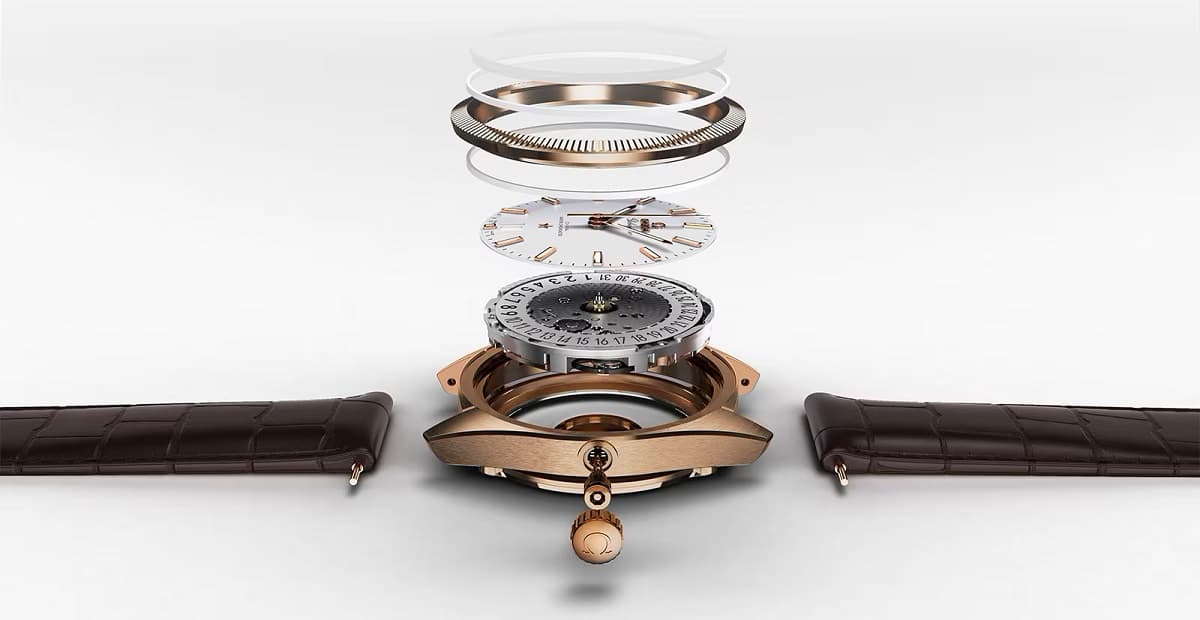
Interesting recreation of the parts of an Omega watch. Image: Omega.
Manufacture
You can imagine that, at this point in the article, talking about how Omega makes its watches may seem redundant, but we must mention some elements and processes in the manufacture of an Omega watch.
I want to emphasize that, as I did in the Omega story, it’s about making watches in an “industrialized” way. Although the manual component is very important in the assembly task, the parts, or rather, their processing, are carried out by sophisticated CNC machines. In them, tiny pieces will be obtained that will be used, one by one, to the manufacture of legendary movements.
Omega has many calibers (different sets of parts that generate the movements) and therefore require different parts, which, as a whole, have been designed to meet needs such as type of movement, case size, chronographic certification, etc.
High precision in the manufacture of the components is essential to achieve a perfect assembly and achieve an exceptional watch. Something that Omega’s master watchmakers do daily. In Omega there are no anodyne tasks: “Either perfection, or nothing”. This is the case at all times, from the first sketch to the completion of the work.
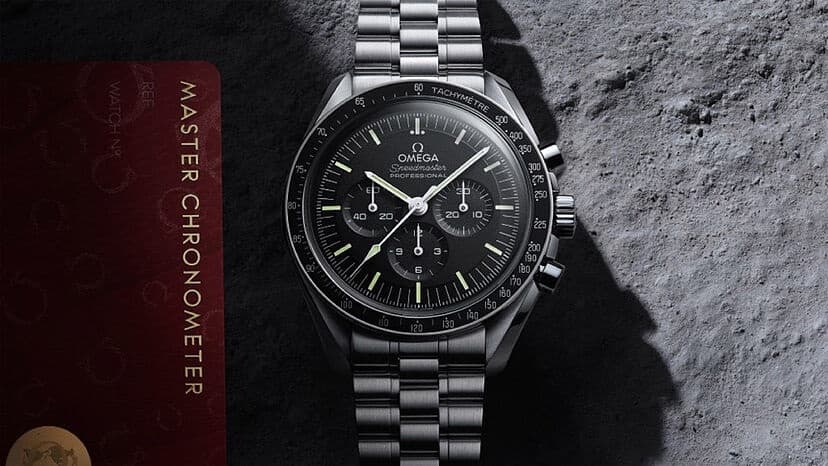
Omega Speedmaster Professional “Moonwatch” watch and its Master Chronometer certificate. Image: Omega.
Quality Control
A slogan such as “Either perfection or nothing” would be useless if it is not strictly complied with. Omega watches have permanent controls in all the processes of their manufacture.
Everything is not enough when it comes to certifying an Omega chronograph, perfection alone is enough. To this end, Omega subjects all its models to exhaustive tests that certify their reliability in timekeeping.
COSC Certification
Omega calibers are certified by the COSC (Contrôle Officiel Suisse des Chronomètres), an independent organization that tests and certifies watch models. The certification process is very rigorous and involves testing the accuracy of the watch under different conditions (temperature and position) and taking the results.
For 15 days, the watches, placed in 5 different positions, are exposed to temperatures ranging from 8°C to 38°C. The watch must maintain a daily average of -4/+6 seconds to pass the test.
If a watch passes the test, it is awarded the COSC certificate, which is a guarantee of its accuracy and precision. The certificate includes the date of the test, the serial number of the watch and the results of the test.
Master Chronometer Certification
The reputation of the Omega brand is built on revolutionary watch movements. Master Chronometer watches achieve this designation after passing the tests approved by the Swiss Federal Institute of Metrology.
A Master Chronometer watch means being sure that it has been certified not once, but twice! There are 8 rigorous METAS tests that a watch must pass in order to obtain the Master Chronometer title, which, in turn, can only be started with movements already certified by the COSC (Contrôle Officiel Suisse des Chronomètres).
A completely transparent process, in which, if you own a Master Chronometer certified watch, you can see the exact results of your watch’s performance, simply by entering your certificate number online.
Planet Omega
I have studied the history of Omega in depth and, although I already had notions as a Seamaster 300 owner, I have discovered many other things. Planet Omega may sound pretentious, but it’s very close to the brand’s range of activity.
There are several sectors of our world in which Omega has left its mark and always an indelible mark, due to the importance of its milestones and the constant innovation it has demonstrated throughout its history.

Arrival of man on the moon July 20, 1969. Image: Omega.
Omega and space
NASA put all the chronographs sent to the agency to hard tests, in the end, only one watch survived: the Omega Speedmaster.
The Omega Speedmaster Moonwatch Professional is an icon in the world of watchmaking. The legendary chronograph has been updated inspired by its original design and has received the Master Chronometer certification.
Whenever we talk about the moon, the Speedmaster watch will accompany our conversation with the historical events that happened on Apollo 11 and Apollo 13.
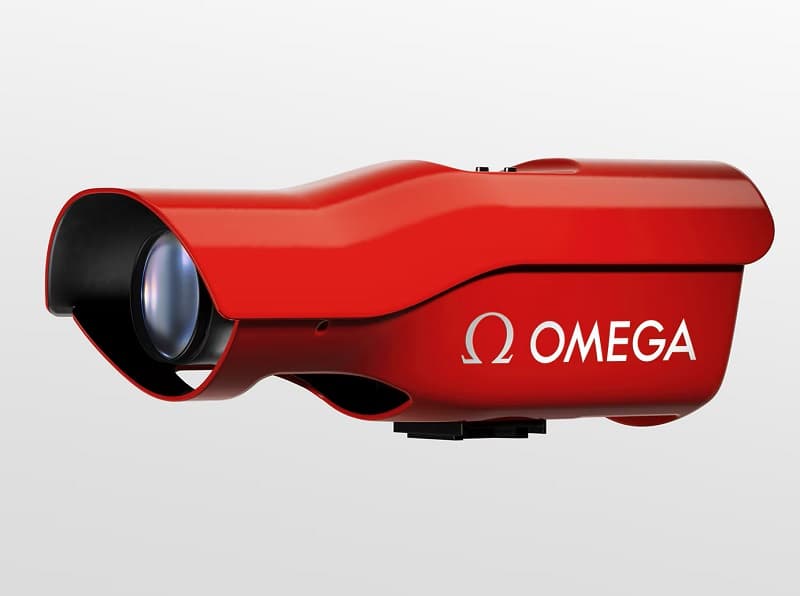
Photofinish Omega, collector used in the JJ. OO . Image: Omega.
Omega and sport
Omega, since 1932, has been the benchmark in the official timing of the Olympic Games. It has sponsored and timed this sporting event on 31 occasions, contributing, in each of them, novelties that have evolved sports timing.
Among the most outstanding advances that Omega has brought to the Olympic world are the following: Starting Pistol, Starting Block Blocks, Photofinish, Photocell, Light Show, Touchpads, Timer and Markers.
Their presence is such that certain sports are already associated with Omega’s timekeeping: Sailing, Athletics, Golf, Swimming, Bobsleigh and Monobob.
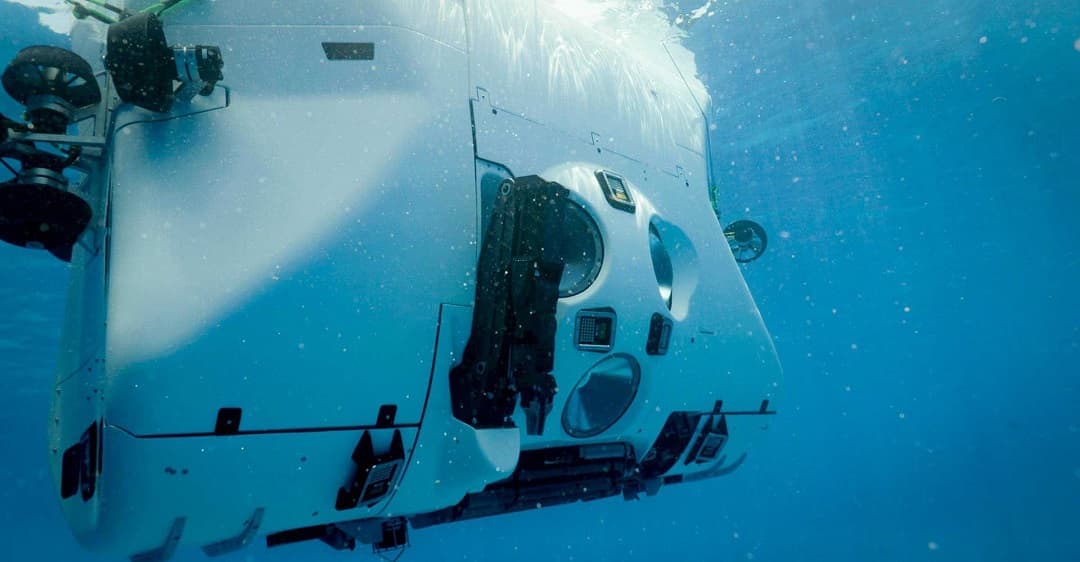
Limiting Factor, an underwater submersible capable of reaching the bottom of the oceans. Image: Omega.
Omega and the ocean
Omega’s passion for the ocean is limitless, a fascinating story. Decades before venturing into space, the brand already went out to explore the sea. Omega’s divers’ watches are among the most reliable and innovative in the world.
In 1932, the Marine watch was already in the idea, and 1948 would be the year of birth of the renowned Omega Seamaster.
120, 300, 600, 1,000 meters…, as explorers have become more and more submerged, Omega Seamaster has accompanied them.
The needs of professional divers have inspired Omega. His designs have been born from the depths. The characteristics of the Seamaster are unparalleled.
Water resistance, helium valve, diving bezel, brightness, resistance, strap extension, anti-magnetism and special pushbuttons are characteristic elements of the Seamaster family. Watches made for water, the best companions for underwater activity.
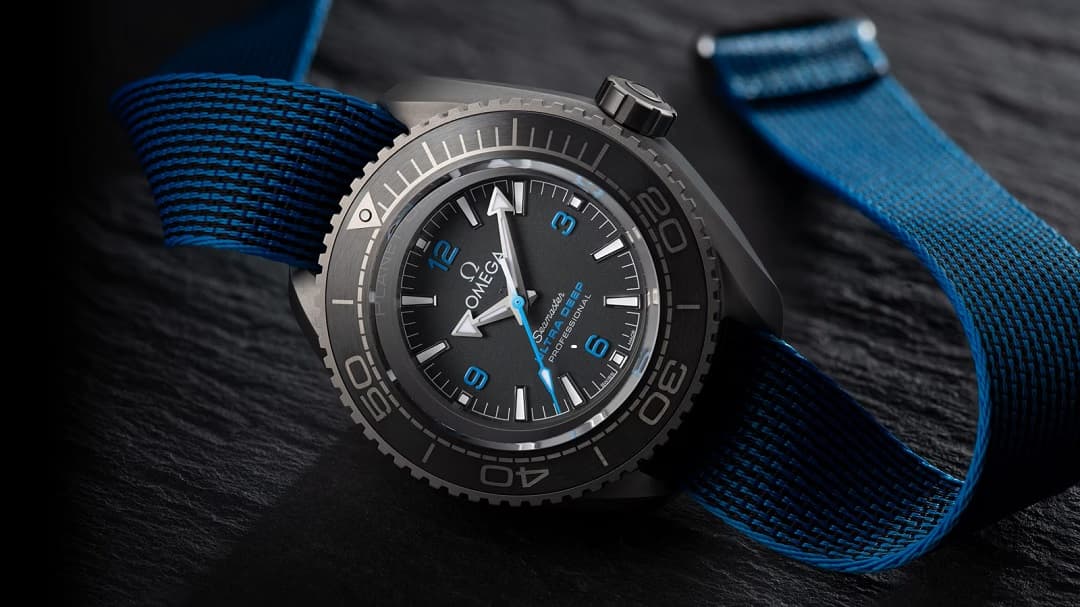
The Omega Seamaster Planet Ocean Ultra Deep, in 2019, chasing the world record for diving deeper, descended to the base of the Mariana Islands trench to 10,925 m., working perfectly. Made of grade 5 titanium , it is certified for a depth of 6,000 m., something never achieved before.
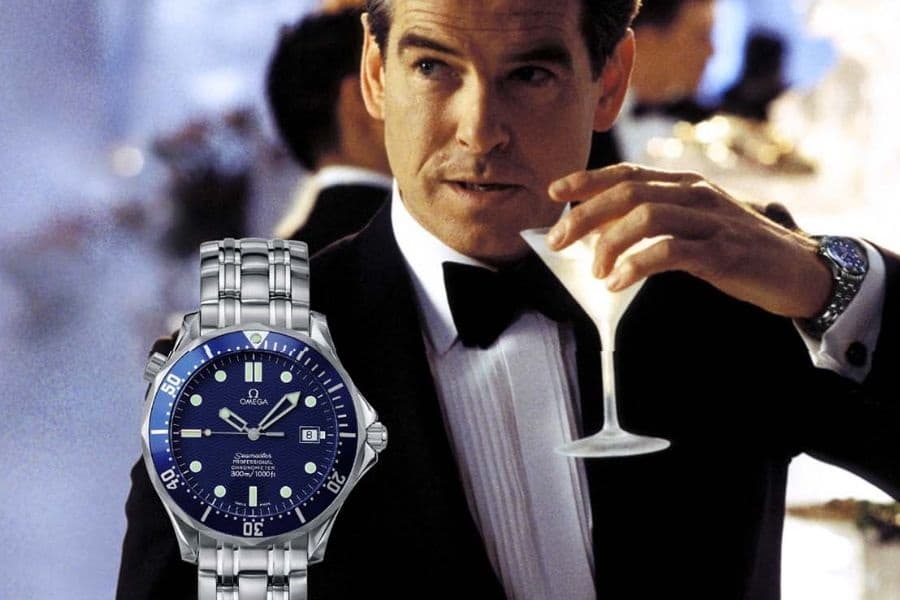
James Bond, Agent 007, played by Pierce Brosnan and his iconic Omega Seamaster. Image: Omega.
Omega and cinema
If there is a spy attached to Omega , it is James Bond, the iconic 007 agent in the service of Her Majesty the Queen.
Equipped with his trusty Seamaster, 007 solves an action-packed movie and achieves success for the British Empire’s Secret Service.
In the 007 films, both Pierce Brosnan and Daniel Craig wear different models of the legendary Seamaster. Its “partners” also feature Swiss manufacturer creations such as Seamaster Aqua Terra or Omega De ville Prestige (Moneypenny).
United since 1995, James Bond and Omega are the perfect symbiosis of the secret agent. The Seamaster Diver 300 M Edition 007 model was created to commemorate such an excellent fusion.
Selected Watches
We have selected some of Omega’s most significant watches. Not all of them are there, not even all of the most important ones, but we have tried to include a sample of almost all of their collections. This is our selection:
Constellation
Born in 1952, Omega Constellation watches are steeped in history. They were created as a tribute to Omega’s many precision achievements in the early 20th century, including world records and competitive victories .
They take the name Constellation from the 8 stars featured on their emblem, and match the 8 accuracy records that Omega set at Kew Teddington and the Geneva Observatory in the mid-20th century.
Constellation 41 mm. Steel with Steel
Timeless 41 mm design. with “claws” on the box. It features a blue ceramic bezel with Roman numerals in white “Grand Feu” enamel. The dial is white ceramic with a date window at 6 o’clock. Hands, Omega logo, the Constellation star and the hour markers are blue.
On a stainless steel bracelet, it is powered by a Master Chronometer Co-Axial calibre 8900 movement. Its crystal is scratch-resistant domed sapphire .
Technical data. Case diameter: 41 mm. Thickness: 13.5 mm. Case: Steel. Dial: White ceramic. Crystal: Sapphire, convex, scratch-resistant and anti-reflective treatment on both sides. Water-resistance: 5 bar (50 m.) Total weight: 171 g. Caliber: 8900. Movement: Automatic. Power reserve: 60 h. Bracelet: Steel. Closure: folding butterfly. Price: €8,100.00

Constellation 41 mm. Steel with Steel . Image: Omega.
Constellation Globemaster 39mm, Steel with Sedna™ Gold
This legendary name has been updated and become the world’s first Master Chronometer. Of simple design, it features a stainless steel case with a fluted bezel in 18k Sedna™ Gold, a material also used in the Constellation star and in the hands and indexes, both filled with Super-LumiNova.
The dial is blue with solar brushing, inspired by the first Constellation model from 1952. The strap is made of blue leather and the movement is Co-Axial Master Chronometer calibre 8900.
Technical data. Case diameter: 39 mm. Thickness: 12.6 mm. Case: Steel – Sedna™ Gold. Dial: Blue. Crystal: Sapphire, convex, scratch-resistant and anti-reflective treatment on both sides. Water-resistance: 10 bar (100 m.) Total weight: 94 g. Gauge: 8900. Movement: Automatic. Power reserve: 60 h. Bracelet: Blue leather, crocodile top layer, calf bottom. Closure: fold-out. Buckle: Stainless steel. Price: €11,400.00

Constellation Globemaster 39 mm. Steel with Sedna™ Gold . Acero con Acero. Image: Omega.
De Ville
In 1967 the Omega De Ville series was no longer called “Seamaster”. With a simpler concept, thinner and more varied boxes and the incorporation of new technology , it recovered its own personality.
Today, this Omega series reflects the prestige that the brand has achieved throughout all these years.
De Ville Prestige, 41 mm., Sedna™ Gold
A symbol of classic design and elegance, in 1994, Omega launched the De Ville Prestige series. Now, in its 3rd generation , it presents a new range of designs, finishes and colors.
This 41 mm model, made of Sedna™ Gold , features a silver-plated convex dial. The hands and indexes (alternating with Roman numerals) are also made of Sedna™ Gold. The power reserve indicator (270°) is located at 6 o’clock, above the date window. A seconds sub-dial at 9 o’clock and a railway minute scale on the outside complete the design.
Certified Master Chronometer, it is equipped with the Master Co-Axial calibre 8810, visible through the sapphire crystal case back on its back.
Technical data. Case diameter: 41 mm. Thickness: 10.8 mm. Case: Sedna™ Gold. Dial: Silver. Crystal: Sapphire, convex, scratch-resistant and anti-reflective treatment on both sides. Water-resistance: 3 bar (30 m.) Total weight: 88 g. Caliber: 8810. Movement: Automatic. Power reserve: 55 h. Bracelet: Leather, burgundy, crocodile top layer, beef bottom with grain. Closure: fold-out. Buckle: Sedna™ Gold. Price: €15,900.00

De Ville Prestige, 41 mm. Sedna™ Gold. Image: Omega.
De Ville Prestige, 30 mm., Steel with Steel.
This 30 mm model, made of stainless steel, features a black dial in PVD (extra fine metal coating by steaming in a vacuum environment) with a sun-brushed finish.
The hands are rhodium-plated, and the indexes alternate Roman numerals and cabochons (polished and uncut gemstone, convex in shape). It features an inner minute scale and a caseback with the medallion of the God Chronus in relief.
With a stainless steel link bracelet, it is powered by an Omega 4061 quartz caliber.
Technical data. Case diameter: 30 mm. Thickness: 7.3 mm. Case: Stainless steel. Dial: Black. Crystal: Sapphire, convex, scratch-resistant and anti-reflective treatment on both sides. Water-resistance: 3 bar (30 m.) Total weight: 61 g. Caliber: 4061. Movement: Quartz. Battery life: 48 months. Bracelet: Stainless steel. Closure: butterfly. Price: €3,300.00

De Ville Prestige, 30 mm. Steel with Steel . Image: Omega.
De Ville Trésor, 40 mm. Steel and Leather.
The Trésor line was launched by Omega in 1949 and was powered by the legendary 30 mm caliber. More than half a century later , it still features one of the most advanced mechanical movements.
With 40 mm polished stainless steel case. and leather strap, the domed black dial includes a power reserve indicator at 12 o’clock. and a small seconds hand at 6 o’clock. The hands and indexes are made of White Gold.
The movement of this watch is powered by a Co-Axial Master Chronometer caliber 8934.
Technical data. Case diameter: 40 mm. Thickness: 10.1 mm. Case: Stainless steel. Dial: Black. Crystal: Sapphire, convex, scratch-resistant and anti-reflective treatment on both sides. Water-resistance: 3 bar (30 m.) Total weight: 60 g. Caliber: 8934. Movement: Manual reloading. Power reserve: 72 h. Bracelet: Black leather, crocodile top layer, bottom in grainless calf. Buckle: Stainless steel, herringbone. Price: €9,200.00

De Ville Trésor, 40 mm. Steel & Leather . Image: Omega.
Seamaster
Born in 1948, the Seamaster Collection presents a complete program of designs, each with its own style and purpose. From the elegance of the Aqua Terra to the functionality of the Diver 300M.
A model for every need, but all with its exceptional craftsmanship and innovative technology. The Omega Seamaster has earned its place among the most famous watches in the world.
Seamaster Aqua Terra 150M
The Aqua Terra line is a tribute to Omega’s marine heritage. This model, 41 mm. It has a symmetrical steel case with a wave design. It features a silver dial with a subtle horizontal motif inspired by the teak decks of luxury sailing ships.
The date window is at 6 o’clock and the blackened hands and indexes are filled with white Super-LumiNova . The orange color is present in the “Seamaster” logo, the seconds hand and the 4-quarter numerals.
The bracelet is made of structured rubber, with a gray lining and an additional stainless steel link. It is powered by the Omega Master Chronometer calibre 8900.
Technical data. Case diameter: 41 mm. Thickness: 13.2 mm. Case: Stainless steel. Dial: Silver. Crystal: Sapphire, convex, scratch-resistant and anti-reflective treatment on both sides. Water-resistance: 15 bar (150 m.) Total weight: 107 g. Caliber: 8900. Movement: Automatic. Power reserve: 60 h. Bracelet: Gray rubber. Buckle: Folding clasp. Price: €6,700.00

Seamaster Aqua Terra 150M 41 mm. Image: Omega.
Seamaster Aqua Terra Ultra Light 41 mm.
This “Ultra Light” model is made from a gamma titanium alloy, a solid and lightweight material used in aeronautics. It features a grade 5 titanium dial sandblasted with the iconic horizontal lines of the Aqua Terra series. The telescopic crown is stored inside the case when not in use. Its weight? 55 grams.
The seconds hand is made of red aluminium, with black indexes and hands filled with white Super-LumiNova . The bracelet is black rubber stitched in red thread. It is equipped with the Omega Co-Axial Master Chronometer caliber 8928 Ti, First caliber made by the brand from titanium.
Technical data. Case diameter: 41 mm. Thickness: 13.5 mm. Case: Titanium. Dial: Gray. Crystal: Sapphire, convex, scratch-resistant and anti-reflective treatment on both sides. Water-resistance: 15 bar (150 m.) Total weight: 55 g. Gauge: 8928 Ti. Movement: Manual recharge. Power reserve: 72 h. Bracelet: Black rubber. Buckle: Folding clasp in Titanium. Price: €59,200.00

Seamaster Aqua Terra Ultra Light 41 mm. Image: Omega.
Seamaster Diver 300M 42 mm.
The professional underwater watch is called the Seamaster Diver. A multitude of followers have raised it to the top of diving watches. The 42 mm model, made of stainless steel , is one of the most requested. It features a black ceramic bezel with a white enamel dipping scale. The dial is made of polished black ceramic with laser-engraved waves.
The date window is at 6 o’clock, the hands are skeleton-shaped and rhodium-plated and filled with white Super-LumiNova. The helium escape valve is present and is one of the characteristic elements of this watch, as well as its stainless steel bracelet.
It features the Omega Master Chronometer calibre 8800 , visible on the back thanks to the lower sapphire crystal.
Technical data. Case diameter: 42 mm. Thickness: 13.6 mm. Case: Stainless steel. Dial: Black. Crystal: Sapphire, convex, scratch-resistant and anti-reflective treatment on both sides. Water-resistance: 30 bar (300 m.) Total weight: 194 g. Caliber: 8800. Movement: Automatic. Power reserve: 55 h. Bracelet: Acer. Closure Type: Folding clasp with diver extension. Price: €6,600.00

Seamaster Diver 300M 42 mm. Image: Omega.
Seamaster Diver 300 M 60th Anniversary 007
To commemorate the 60th anniversary of the famous secret agent’s films, in 2022, Omega launched this edition of the Seamaster Diver 300M. Made of stainless steel, this 42 mm watch features a blue oxalic anodized aluminum dial with the classic wave design. The commemorative number 60 replaces the famous inverted triangle of the diving scale.
A significant detail of the Golden Eye film is Bond’s silhouette framed in the opening sequence of a rotating cannon, depicted on the caseback and visible through a sapphire crystal.
The stainless steel bracelet is brushed and reminiscent of Bond’s titanium watch mesh bracelet in “No Time to Die“. The heart of this watch is the Omega Co-Axial Master Chronometer calibre 8806.
It is presented in a blue wooden box with 3 white dots inspired by the opening sequence of the Bond films and includes (it could not be otherwise) a secret pusher on the right.
Technical data. Case diameter: 42 mm. Thickness: 14.3 mm. Case: Stainless steel. Dial: Blue. Crystal: Sapphire, convex, scratch-resistant and anti-reflective treatment on both sides. Water-resistance: 3 bar (30 m.) Total weight: 156 g. Caliber: 8806. Movement: Automatic. Power reserve: 55 h. Bracelet: Steel. Buckle: Folding clasp. Price: €9,200.00

Seamaster 300 M 60 Aniv. 007 . Image: Omega.
Seamaster Planet Ocean 600M 53.5 mm.
Omega launched the Planet Ocean line in 2005, bearing in mind the watchmaker’s marine legacy.
With a sandblasted grade 5 titanium dial , this model features Arabic numerals and date at 3 o’clock. Its case, 43.5 mm. It is also made of grade 5 titanium and, for the first time, a grey silicon nitride ceramic bezel with orange rubber is offered. The dive scale is from Liquidmetal™.
The case back is honeycomb screwed and the strap is made of grey structured rubber with stitching and an orange base.
Water-resistant to 600 m., it incorporates the iconic helium escape valve. It is powered by the Omega Master Chronometer calibre 8900 visible from the transparent caseback.
Technical data. Case diameter: 43.5 mm. Thickness: 16.1 mm. Case: Titanium. Dial: Gray. Crystal: Sapphire, convex, scratch-resistant and anti-reflective treatment on both sides. Water-resistance: 60 bar (600 m.) Total weight: 102 g. Caliber: 8900. Movement: Automatic. Power reserve: 60 h. Bracelet: Gray, rubber. Buckle: Folding clasp. Buckle material: Titanium. Price: €9,500.00

Seamaster Planet Ocean 600 M 43.5 mm. Image: Omega.
Seamaster Planet Ocean 6000M 45.5 mm. “Ultra Deep”
In 2919, the “Ultra Deep” made history by reaching the deepest place on earthwith the Five Deeps Expedition. Following this milestone, Omega created a unique collection developed in real ocean conditions. Its design is water-resistant to 6,000 m. and complies with ISO 6425 of 2018 for saturation diving watches.
Made of O-Megasteel steel, it has a polished black ceramic bezel, with a Liquidmetal™ immersion scale. It has an extraordinary sphere that exactly reproduces the bottom of the Challenger abyss, the deepest point of the Mariana Trench.In addition, this sphere has its playful side: a UVA light reveals the words “Omega was here” marking the world immersion record of 10,935 m. and showing the 3 separate pits: Western, Central and Eastern Pool.
The caseback features a commemorative Seamaster logo laser-engraved with a trident-wielding Poseidon and two seahorses: The original Omega from 1956 and the firm’s current design . It is powered by the Omega Co-Axial Master Chronometer calibre 8912.
Technical data. Case diameter: 45.5 mm. Thickness: 18.1 mm. Case: O-Megasteel steel. Dial: Blue. Crystal: Sapphire, domed and protruding, scratch-resistant and anti-reflective treatment on both sides. Water-resistance: 600 bar (6000 m.) Total weight: 254 g. Caliber: 8912. Movement: Automatic. Power reserve: 60 h. Bracelet: O-Megasteel steel. Closing: Folding clasp with diver’s extension. Price: €14,400.00

Seamaster Planet ocean 6000M 45.5 mm “Ultra Deep”. Image: Omega.
Seamaster Ploprof 1200M
The Ploprof model is famous for its long history as one of Omega’s safest diver’s watches (reliable even at 4,000 m.). Still in its original appearance, it has been updated with Omega’s Co-Axial Master Chronometer calibre 8912 movement.
Its case is topped with an electric blue ceramic bezel ring with Super LumiNova filled numerals, inverted triangle and scale. The case and clasp are made of grade 5 titanium. The dial, lacquered in white, has hands in orange and blue varnished aluminium.
The bracelet is made of polished grade 2 titanium. It comes with a special case and an additional electric blue rubber strap .
Technical data. Case diameter: 55 x 48 mm. Thickness: 18.3 mm. Case: Titanium. Dial: White. Crystal: Sapphire, convex, scratch-resistant and anti-reflective treatment on both sides. Water-resistance: 120 bar (1200 m.) Total weight: 172 g. Caliber: 8912. Movement: Automatic. Power reserve: 60 h. Bracelet: Titanium. Buckle: Folding clasp. Price: Sold out. Not available at the time of publication.

Seamaster Ploprof 1200M. Image: Omega.
Seamaster Regatta 46.7 mm.
Commemorating the 37th edition of the America’s Cup , this watch is an outfit for professionals, with analogue and digital indicators. Its case is made of grade 5 Titanium and, therefore, ideal for life at sea.
It has valuable tools: Moon phase indicator, chronograph, logbook, temperature meter, accelerometer, 3 alarms and regatta function. It has an LCD screen to display digital readings. Its needles are inspired by the Diver 300M and can be removed in backlighting to improve digital visibility.
It has 4 rubber buttons (3 blue and 1 red) to move through the functions. The crown is operated by pressing and rotating it. It has a resonance cavity to increase the volume of the alarms. On its back is printed the logo of the 37 America’s Cup. The caliber of this extraordinary instrument is the Omega 5701. Its bracelet is made of blue rubber, as well as its ceramic bezel.
Technical data. Case diameter: 46.75 mm. Thickness: 15.6 mm. Case: Titanium. Dial: Gray. Crystal: Sapphire, convex, scratch-resistant and anti-reflective treatment on both sides. Water-resistance: 5 bar (50 m.) Total weight: 89 g. Caliber: 5701. Movement: Quartz. Battery life: 3 years. Bracelet: Blue rubber.. Buckle: Folding clasp . Buckle material: Titanium Price: €8,200.00

Seamaster Regatta 46.75 mm. Image: Omega.
Speedmaster
The legendary Speedmaster collection is one of the jewels in the Omega crown. With a proven success in space exploration, this collection boasts unique precision and style.
Speedmaster Moonwatch Professional 42 mm.
A pioneer of the brand’s adventurous spirit, this legendary Omega Speedmaster Moonwatch was an integral part of all 6 lunar missions. With an 42 mm asymmetrical stainless steel case and a bracelet with 5 links brushed per row. The dial is black, chamfered and is crowned by an anodized aluminum bezel.
The crystal that covers the case is Hesalite glass. The back has an embossed hippocampus . The heart of this iconic timepiece is the Omega Co-Axial Master Chronometer calibre 3861.
Technical data. Case diameter: 42 mm. Thickness: 13.2 mm. Case: Stainless steel. Dial: Black. Crystal: Hesalite, with Omega logo in the center. Water-resistance: 5 bar (50 m.) Total weight: 134 g. Caliber: 3861. Movement: Manual reloading. Power reserve: 50 h. Bracelet: Steel. Type of closure: Folding clasp with comfort adjustment. . Price: €7,700.00

Speedmaster Moonwatch Professional 42 mm. Image: Omega.
Speedmaster Anniversary Series 39.7 mm.
On October 3, 1962, Speedmaster CK 2998 became the first Omega in space. Astronaut Walter Schirra carried his personal model on the Sigma 7 mission of the Mercury program. This watch, conveniently updated, is a tribute to that pioneer.
The case, 39.7 mm. is made of polished and brushed stainless steel. The flat link bracelet has the “comfort release” setting. The bezel ring is made of black aluminium with the legendary DON tachymeter scale (for purists, with the dot over 90). The new sapphire crystal (modeled after Hesalite) reveals the grayish-blue dial (coated with CVD). the indexes and hands are filled with Super-LumiNova of the time. It has 3 sub-dials (30-minute record at 3 o’clock, 12-hour record at 6 o’clock, and small seconds at 9 o’clock).
The Omega logo on the dial is also from the period, as is the crown. The caseback features the famous hippocampal medallion and the inscription “The First Omega in Space” and “October 3, 1962”. The movement of this watch is the Co-Axial master Chronometer calibre 3861 (the modern version of the legendary calibre 321).
Technical data. Case diameter: 39.7 mm. Thickness: 13.4 mm. Case: Stainless steel. Dial: Gray blue. Crystal: Sapphire, scratch-resistant, hesalite crystal shape and anti-reflective treatment on the inside. Water-resistance: 5 bar (50 m.) Total weight: 133 g. Caliber: 3861. Movement: Manual reloading. Power reserve: 50 h. Bracelet: Steel. Clasp type: Folding clasp with comfort adjustment. Price: €8,700.00 (Not available online at the time of publication)

Speedmaster Anniversary Series 39.7 mm. Image: Omega.
Speedmaster Dark Side of the Moon 44.5 mm.
As part of the 6 moon landings in history, the legendary Omega Speedmaster celebrates the Apollo 8 mission with the color of the part we never see of the Moon. The near side can be visualized through the dial, the far side, through the case back.
The case of this watch is made of black ceramic and includes the varnished yellow chronograph seconds hand, with the tachymeter scale laser-engraved and filled with white enamel. The subdial of the small seconds hand includes a grade 5 titanium hand in the shape of the Saturn V rocket.
The movement of this watch is the Omega Co-Axial master Chronometer calibre 3869.
Technical data. Case diameter: 44.25 mm. Thickness: 13.0 mm. Case: Black ceramic. Dial: Black. Crystal: Sapphire, scratch-resistant and anti-reflective treatment on both sides. Water-resistance: 5 bar (50 m.) Total weight: 99 g. Caliber: 3869. Movement: Manual reloading. Power reserve: 60 h. Bracelet: Black and yellow rubber. Buckle: Folding clasp. Buckle material: Ceramic. Price: €15,800.00

Speedmaster The dark side of the Moon 44.5 mm. Image: Omega.
Speedmaster Racing 44.25 mm.
This model has a 44.25 mm stainless steel case and a black leather strap. The bezel includes a black ceramic ring and the tachymeter scale filled with soft enamel.
The white dial features a “racing” minute track. It has 2 subdials with blackened rings (at 3 and 9 o’clock), the date window is at 6 o’clock. The indexes and hands are blackened and filled with white Super-LumiNova . In orange is the Speedmaster series and the central seconds tip .
The heart of this Speedmaster is the Co-Axial Master Chronometer caliber 9900.
Technical data. Case diameter: 44.25 mm. Thickness: 14.9 mm. Case: Stainless steel. Dial: White. Crystal: Sapphire, convex, scratch-resistant and anti-reflective treatment on both sides. Water-resistance: 5 bar (50 m.) Total weight: 112 g. Caliber: 9900. Movement: Automatic. Power reserve: 60 h. Bracelet: Black crocodile leather, crocodile top layer, bottom in grainless calf. Buckle: Folding clasp. Buckle material: Stainless steel. Price: €10,200.00

Speedmaster Racing, 44.25 mm. Image: Omega.
Speedmaster Pilot 40.85 mm.
Inspired by the original 1957 model, it responds to the collection’s long aeronautical history. With a brushed stainless steel case of 40.85 mm., it features a black dial with a matte grained finish and rhodium-plated outer ring. The indices are made in green glow Super-LumiNova .
The dial, like a cockpit, has 2 subdials (12 hours at 3 o’clock and 60 minutes at 9 o’clock) that simulate a fuel consumption indicator and a blue horizon sight. The hands have a matte black PVD coating with white Super-LumiNova blocks that emit green glow. The central seconds hand has an orange airplane tail-shaped tip.
The bracelet of this watch is a flat link steel bracelet with Omega’s patented screw and bar system. The engine is a Co-Axial Master Chronometer caliber 9900. It comes in a special travel case with a replacement Kevlar® fiber NATO strap .
Technical data. Case diameter: 40.85 mm. Thickness: 14.7 mm. Case: Stainless steel. Dial: Black. Crystal: Sapphire, scratch-resistant and anti-reflective treatment on both sides. Water-resistance: 10 bar (100 m.) Total weight: 1440 g. Caliber: 9900. Movement: Automatic. Power reserve: 60 h. Bracelet: Steel. Closure Type: Folding clasp with diver’s extension. Price: €10,500.00 (not available online on the date of publication).

Speedmaster Pilot 40.85 mm. Image: Omega.
Opinion
To date, this is the largest and most extensive report I have done for encyclobjects.com. The brand, Omega, deserves it. This is one of the giants of world watchmaking, a benchmark in sport, scuba diving and space aeronautics. A brand made for itself and the values of Swiss watchmaking.
To talk about Omega is to talk about exclusive materials, exquisite craftsmanship and maximum precision. But there’s more: innovation. Throughout its history, Omega has been innovating year after year, model after model and achieving milestones always in the first place. Omega is, in addition to being innovative, a pioneering brand.
His interest in sport, his passion for the sea and space adventure are constants that have made Omega an unforgettable brand.
Today, belonging to the Swatch Group (Breguet, Harry Winston, Blancpain, Glashütte Original, Jaquet Droz, Omega, Longines, Rado, Union Glashütte, Tissot, Balmain, Certina, Mido, Hamilton, Swatch and Flick Flack), it is the avant-garde exponent of Swiss watchmaking and a growing value of the Group.
Owning an Omega watch is an act of accepting that, in the long run, you will have to pass it on to another generation. Until that time comes, you can enjoy the true value of time.
NOTE: If you liked this article, you can share it on social media. You can also rate it with stars below. If you wish to leave a comment, ask a question or make any suggestion you can do so in the comment box below. Thank you for your attention!
Information, bibliography and media
We use our own and other means with the availability allowed by current legislation and free access to the World Wide Web. (See Terms Conditions)
Texts: Owned, based on information from Brandizzi, Omega.
Images: Hours and minutes, Omega, Wikipedia.
Videos: s/n.