




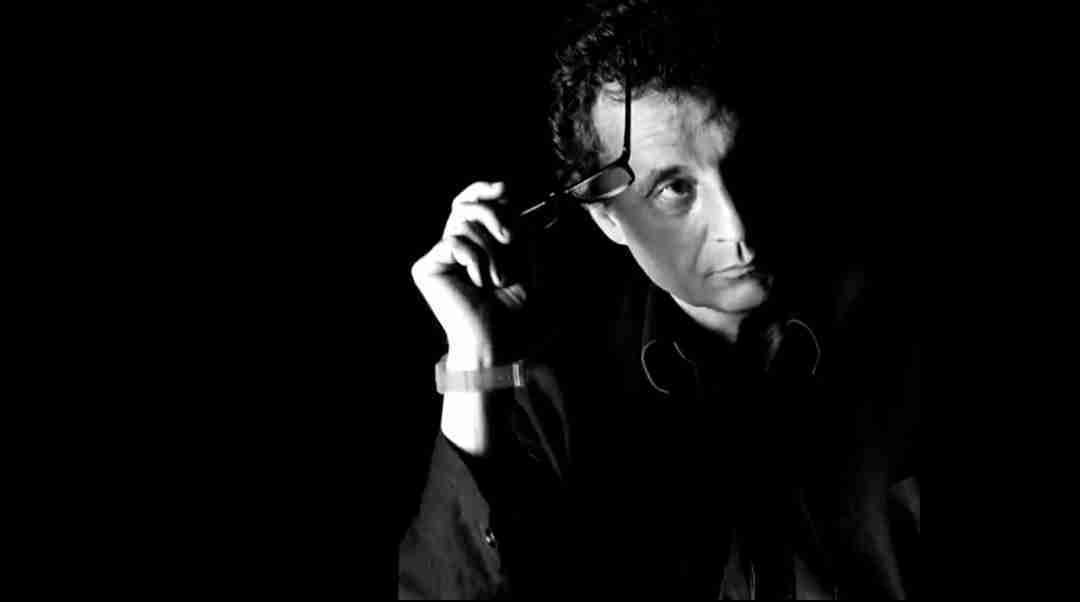
Jaime Tresserra, when design touches sensuality
Earn 10.00 Reward Points by commenting the blog post
Introduction to Jaime Tresserra
Jaime Tresserra has been a protagonist in the world of design in Spain for years. For years, his designs have also appeared in important international projects and seduced the most demanding clients.
In the words of Victor Hugo (French novelist): “The future has many names. For the weak it is the unattainable. For the fearful, the unknown. For the brave, it’s the opportunity.” This is the case of Jaime Tresserra. In his international adventure, his courage is beyond doubt. With the baggage of his work, his ideas, his artisan know-how and that exquisite taste that only a privileged few possess, he took his portfolio around the world, conquering the most demanding wills and taking the design of his work to the top.
I highlight the importance of Jaime Tresserrra’s design at an international level. If anyone has raised the value of Spanish Design, it has been Jaime Tresserra, an essential reference. For years now , we have been able to proudly show what we know how to do. Which is no small thing.
Nor should we forget his land, Catalonia, cradle of great architects, designers, artists, etc… Lluís Domènech, Antoni Gaudí, Ricardo Bofill, Enric Miralles, Oscar Tusquets, Miquel Milá,among others, have been the protagonists of great creations. Is it a Mediterranean thing? Will Barcelona’s cosmopolitan character have an influence?
When someone sees a desk from the Tresserra Collection, a shelf, or an armchair, the imperative and unavoidable need to touch the work arises. It seems that we do not believe what we see and, only by confirming the truth of the furniture with touch, we breathe deeply and realize the importance of each piece.
Today’s technology allows us to make very good furniture and finishes at an impressive speed. However, the excellent artisanal know-how of Tresserra Collection gives each piece an additional plus that I would not be able to explain. The furniture gives off that exquisite aroma of real emotions, as if they had their own “soul”.
This short introduction serves to create a certain atmosphere and learn more about Jaime Tresserra.
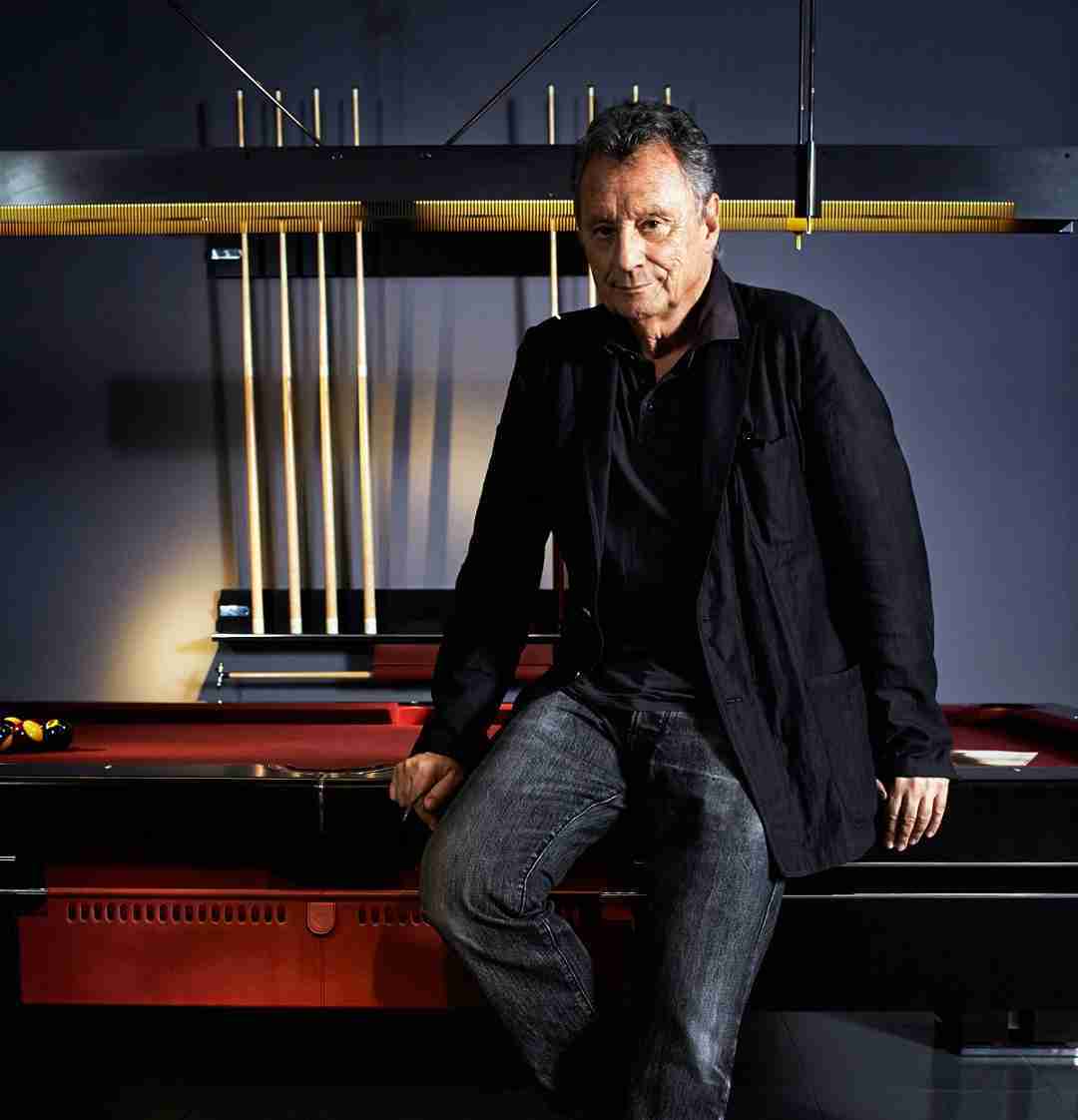
Jaime Tresserra leaning on his “Bolero” pool table, behind a lamp and cue holder.
Biographical notes
Born in Barcelona in 1943, Jaime Tresserra Clapés, exclusive designer of the Tresserra Collection, grew up in a family of actors and couturiers from which he inherited the sensibility exhibited in his works. A law student, he left the first year to take an interest in various artistic specialties taught at the Massana School in Barcelona.
A small previous step in the world of advertising led him to finally start in interior architecture, creating the first exclusive furniture for his clients.
In 1987 he created J.Tresserra Design as a foretaste of what would later become the Tresserra Collection. He presented his first furniture collection at the “International Furniture Fair” in Valencia, where he won the award for Best Modern Furniture Design.
1989 is a very important year in Jaime Tresserra’s career. its furniture appears in Tim Burton’s film “Batman”, which won the Oscar for Best Art Design.
Later he exhibited his creations at the International Furniture Salons of Milan and Cologne, where he received very good acceptance and criticism. During that time, he developed several interior architecture projects, such as the 28 luxury apartments of the Hotel Arts in Barcelona (1992) that brought him great international recognition.
Once again, cinema would give Jaime Tresserra more joy, James Dearden’s “Kiss Me Before I Die” (1992) and Louis Malle’s “Herida” (1993) presented outstanding pieces from the Tresserra Collection in their set designs, confirming Jaime’s lasting union with cinema. Later, artists such as Tina Turner and Brad Pitt relied on Jaime Tresserrra’s design in their own homes.
1994 is the year that he dedicates to expansion, opening his new showroom in Barcelona (Josep Bertrand, 17), as well as spaces in major world capitals (Madrid, Moscow, Berlin, Boston, Chicago, London, St. Petersburg). In 2005 it opened its first store in Paris, in front of the Louvre Museum and in 2014, on the Upper East Side of New York.
In recent years she has continued her creative work designing new pieces for Tresserra Collection and exclusive pieces for different projects.

Samuro and Butterfly. New collection of the State Museum of Applied Arts in Munich.
Style
Articles in the press, reports and interviews, carefully selected and ordered in tresserra.com answer some questions about Jaime Tresserra’s style. Although he recognizes himself as influenced by several lines of design, he does not join any particular current. “I don’t have school, I have memory. I am, what you could say, a sniper. The mixture of influences gives it this difficult classification in terms of style and location in time.” Hello (30.08.2012)
Some would immediately incorporate Jaime Tresserrra’s design into Art Deco, others, like me, are not so clear. Although some of his creations breathe a certain “deco” air and, confessed to being in love with the straight line, Jaime Tresserra also likes curves with impossible radii and colors such as white, black and hazelnut. He also recognizes himself as a follower of the first members of the Bauhaus, Philippe Starck and above all, his admired Miquel Milá.
Self-taught, he confesses that his school was the “wonderful street”, he remembers himself as a “voyeur” (Loredana Vitale, undated). I understand that he is referring to his enormous curiosity that, since he was a child, he has had about certain conversations, forms and functions. It gives the impression that Jaime Tresserrra’s mind is a sponge that collects everything around him.
Its design is non-conformist, it does not abandon any project, nor does it settle for any solution. He imagines the basic form in his mind, but develops the idea to perfection, giving the project a very complete identity, leaving nothing to chance, or any loose ends. All its solutions are elegant, studied to the point of exhaustion, sized with exquisite proportionality and prepared for use by several generations. He does not consider a part finished until he personally checks every detail, every drive.
The materials with which he works are of a singular nobility: wood (light walnut, sycamore, maple, sapelli, feathered, veneers…), metals (stainless steel, brass, chrome…), leather (cowhide, leather, embossed, die-cut…) and others that never detract from the previous ones. The combination of materials he makes is always irreproachable, giving each piece a firm and lasting impression of quality. The use of this type of material, rightly, justifies it by its good aging. He doesn’t care that his pieces have some “war wound” on them, or that they wait patiently for repurchase in an antique store.
If the use of noble materials is one of his main hallmarks, the craftsmanship, the care, the sublime execution of the works and the details with which he culminates his works, are the icing on the cake. Without fear, I would say that no one works like him. By dint of improving every day, to his credit, he has an exceptional group of professionals, involved, like himself, in the intense task of moving. Every detail, die-cut or embossed is done with care and care. The marquetry and the excellent varnishing of its pieces force us to run our fingers over its smooth surfaces.
Master of seduction, by the way, he looks for different touches for each act. The soft and delicate touch of the wood, the perfume of some woods such as cedar, the cold touch of the metal that contrasts with the warmth of the leather, the careful marquetry that invites you to a leisurely contemplation… Everything is calculated to achieve the precise emotion at each moment and a sensuality that lasts over time.
Their creations are designed for their owners to use and care for, and then pass them on to the next generation.
Those keys forgotten in a small drawer, that compartment that still holds old letters perfumed, the wear and tear of the leather of that sofa with a footstool, or those mathematical formulas that were engraved on that piece of furniture and in my mind. A universe of sensations that only a master like Jaime Tresserra knows how to interpret and transmit.
His style? You qualify it.
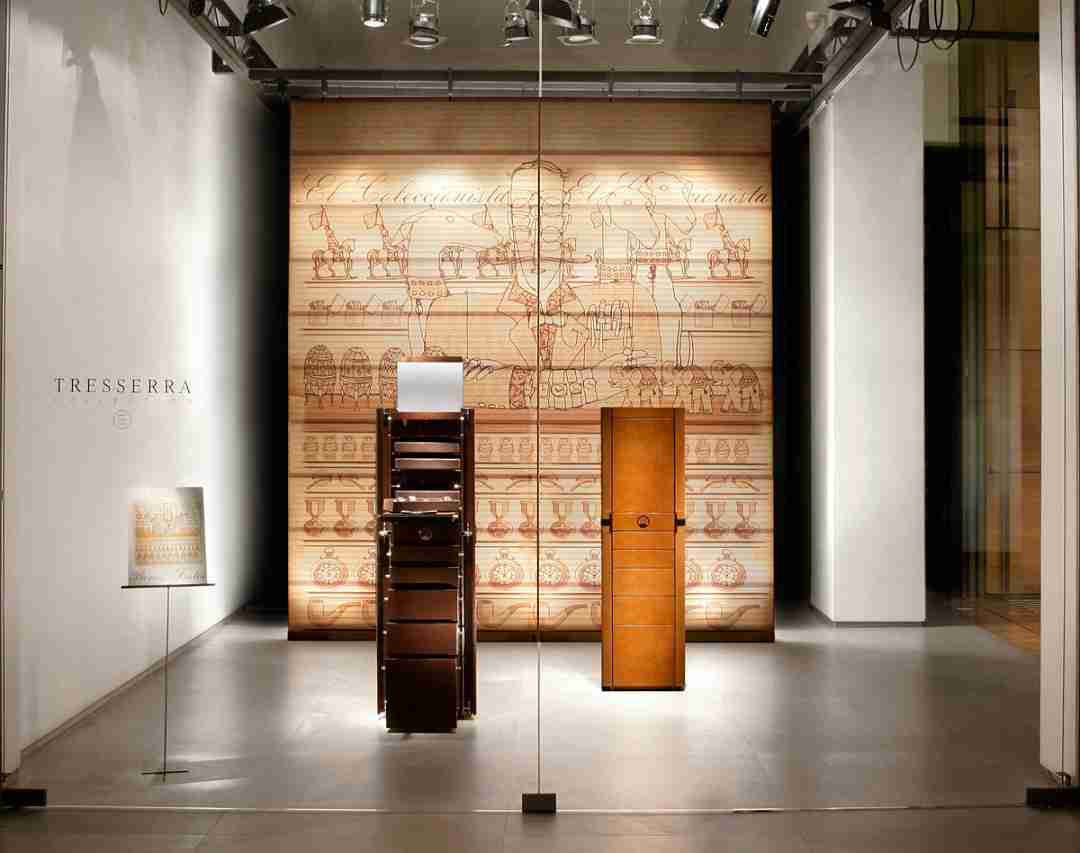
Collector’s Furniture. Barcelona Showroom , Tresserra Collection.
Collection
Jaime Tresserra, in his role as an interior architect, included his furniture ideas in the projects he carried out for his clients. It was the way he understood to be the right way to personalize a project and satisfy his clients. The process to make their designs was not simple: it was about looking for and finding artisans who were in a position to make “unique pieces”. The problem was that, sometimes, the artisans could not carry out their commissions, either because of their workload, or because of the sophistication of their designs or because of the level of finish that Jaime Tresserra requested.
Someone must have convinced him to make his own pieces, in small and limited series. In any case, he, after so many walks through so many workshops, was the one who knew the most about his designs. He accepted the challenge. He had to form a team and start producing his own collection. This is how Tresserra Collection was born, a simply unique catalogue of furniture, accessories and solutions.

Furniture exhibited in the New York Showroom, Tresserra Collection.
Furniture
Furniture design has been one of Jaime Tresserra’s main applications. His creations, of surprising inspiration, are brimming with quality and good workmanship. Conceptually, each piece arises from simple ideas, the result of his constant observation.
Observing some sketches of his works, I have been able to verify that the basic lines of each piece are of exemplary purity. Straight lines, impossible curves and studied proportions work, first of all, to achieve the perfect function. Subsequently, he outlines the details to make each use an unforgettable ritual.
Jaime Treserra designs a piece of furniture that he has already visualised conceptually. But the birth of each piece is due to a creative process that takes time and ingenuity. Master of a complete artisanal technique, he adopts, in each creation, the best solution to each challenge. In this way, the union of two planks, the cells of an interior or the operation of a hinge have a unique treatment, seeking, in each situation, the solution that offers the most guarantee, safety and aesthetic contribution.
Only when everything is ready does Jaime Tresserra check it personally. It is not only part of a quality control, it is the examination of its own criteria.
The range of action of its furniture includes the residential section and even office and collective furniture. I have selected some pieces, ordered by uses, which I will comment on below.

Tresserra Collection seats. Arts chair, Casablanca sofa, Haiku stool and Haiku chairs.
Seats

Spinnacker 2 chair, Tresserra Collection.
Spinnacker Chair 2, 1987
This chair is a manual of elegance. Two stylized walnut wood structures (they serve as legs and handles) are joined by a board that will act as a seat (padded and upholstered in black leather). Each structure has, on its front, a milled channel from its upper part to exceed the seat. In this milling, a nickel-silver metal piece screwed into 4 points is inserted.
The finely curved backrest is fixed to the two metal pieces by means of 4 screws and forms a plane with the armrests. The rear legs are held in place by a screw-in metal rod. On this, by means of a tensioner, another rod is deployed that reaches a curved metal piece that runs along the lower part of the backrest.
Dimensions: (width x depth x height) Spinnacker: 52 x 53 x 75 cms. Spinnacker XL: 57.5 x 59 x 78 cms. Hardware: Silver nickel. Chair finishes: Light / Dark Walnut. Seat finishes: Velveton, peccary, leather and client fabric. Backrest Finishes: Walnut / Upholstery: Velveton, peccary, leather and client fabric.

Casablanca Armchair, Tresserra Collection.
Casablanca Armchair, 1987
One of Jaime Tresserra’s first designs. Starting from a solid hidden base, a slightly curved back/back is prepared in Light Walnut wood (giving a feeling of seclusion). These two surfaces serve as support for the seat and backrest, which, with sufficient padding, are covered for the first time with beige velveton. On them, another padded sheet of beige velveton with stitched bands is held in place by leather straps.
The back /backrest is joined to the seat by means of two arms made of walnut wood with a very attractive elliptical curve. The ends of the arms have a metallic cover in Shiny Nickel that joins them to the seat and backrest. The upper ends, in addition, are joined by a shiny nickel rod behind the back/backrest.
As an additional accessory , you can request a magazine rack made of stainless steel and stitched and embossed cowhide leather, which is adjusted by means of a clamp screw to the arms.
Dimensions: (width x depth x height) Armchair 79 x 115 x 82 cms. Footrest 60 x 50 x 38 cms. Finishes: light walnut / dark walnut. Upholstery: Velveton, leather or fabric / client leather. Padded cover: Velveton / leather with leather straps. Hardware: Shiny nickel.

Lola armchair, Tresserra Collection.
Lola Armchair, 2013
Another exercise in elegance by Jaime Tresserra. On this occasion, starting from two 90º curved sides made of Walnut, he screws a seat and backrest delicately covered in hazelnut cowhide leather. The armrests are partially covered with the same leather stitched in white, and in turn, allows the insertion of a polished stainless steel rod on their side. The walnut sides connect to the floor with a thick polished stainless steel rod like a sled. The longitudinal register made on the wooden sides allows the placement of 2 stainless steel straps that arm the armchair and give it an architectural nuance.
Dimensions: (width x depth x height) Armchair 100 x 87 x 76 cms. Footrest 62 x 45 x 37 cms. Finishes: light walnut / dark walnut. Cowhide leather: hazelnut / dark brown. Hardware: stainless steel.

New York Armchair, Tresserra Collection.
New York Armchair, 2002
This armchair is an extraordinary exercise in know-how, on this occasion Jaime Tresserra opts for metal and leather, making a very light and elegant design at the same time. Conceptually it is very interesting, as it leaves the entire structure in the hands of thin parallel stainless steel plates. Also interesting is the round shape that all the vertices adopt and that allows the light seat to glide smoothly on the floor.
The rest, i.e. everything that remains in contact with the body, is elegantly covered with finely stitched cowhide leather (in the image: dark brown). Both in the seat and in the backrest and footrest, it introduces a light padding protruding from the lower plane. It has a headrest as well as a magazine rack incorporated on the sides. As a contribution to comfort, the backrest is adjustable in 3 positions. A very elegant cylindrical cushion covered in cowhide leather is also available.
Dimensions: (width x depth x height) Armchair 74.5 x 99.5 / 113 x 92 cms. Footrest 59 x 61 x 37 cms. Structure and Hardware: Stainless steel. Finishes: Cowhide leather: hazelnut / dark brown.

Banco África with backing, Tresserra Collection.
Africa Bank with Support, 1998
This bench, with an elegant and technological appearance, has been designed on Jaime Tresserrra’s favourite materials (light walnut wood, cowhide leather and stainless steel). The whole essence of Tressera is in the design of this bench: the straight horizontal lines , the architectural pillars of the bench and its metal braces, the technique of fixing the metal to the wood by milling and then embedding and screwing the metal into the wood and the gentle curvature of the seat and backrest.
To continue, the details: the metal pillars of the backrest, the stainless steel tube that, fixed on the edges of the seat, also holds the leather, the thin leather gussets stitched at the vertices and, of course, the technological die-cut of the leather on the seat and backrest.
Dimensions: (width x depth x height) Bench 230 x 60 x 38 cms. Bench with backrest 230 x 67 x 74 cms. Bench with backrest in walnut: Light / Dark Finishes: Cowhide leather: hazelnut color / dark brown. Hardware: Stainless steel sulphur.

Tables from Tresserra Collection. Straps Table, Round Table, Round Tension Table, Rectangular Tension Table
Tables

Beetle coffee table, Tresserra Collection.
Beetle Coffee Table, Reissue 2023
On many occasions, Jaime Tresserra leaves unmistakable signs of his sources of inspiration. In this case, there is a certain similarity between this coffee table and the animal that stars in its name.
On a circular base of light walnut, Tresserra builds a very visual circular prism . First, he divides the prism vertically with a walnut board over the diameter of its base, then, also in walnut but thicker and raised, he prepares an eccentric section perpendicular to the diameter. This section will be closed with 2 pivot doors with a spectacular curved shape. To leave its unmistakable stamp, it makes a vertical and semicircular “bite” to the prism where it will house the axes of the pivot doors and the stainless steel finish of the straight division. The rest of the prism is completed with two symmetrical 8 mm tempered glass lids that rest on elegant stainless steel fittings .
The idea is to prepare 4 storage sections: 2 exposed sections covered with glass lids and 2 sections hidden behind curved doors. Horizontal milling on the curved doors and on the diametrical division adds another interesting architectural detail.
Dimensions: (diameter x height) 110 x 37 cms. Finishes: Light / dark walnut. Hardware: Stainless steel. Glass: Tempered 8 mm.

Corner game table, Tresserra Collection.
Corner Game Table, 1998
An example of simplicity based on perfect proportions. The Corner table is square and has 8 edges of the same thickness made of light walnut . As a table top, Tressera has a light metal structure of stainless steel rods, slightly raised on the horizontal edges, on these rods he places an acid-etched crystal. This glass top is inlaid with 4 tiny bolts that will be used to fix an elegant table top made of finely stitched hazelnut cowhide leather .
An ingenious stainless steel folding accessory, it rests hidden under the support edges and allows you to deposit a glass with drinks or a small ashtray.
Dimensions: (width x length x height) 100x100x74 cms. Table: Light / dark walnut. Glass top: 19 mm acid etched top. Cover: Cowhide leather color: hazelnut / dark brown.

Ni Hao Console, Tresserra Collection.
Ni Hao console, 2008
This console, clearly inspired by the East, can be located in the reception of any space. It is a narrow table made of three light walnut boards of the same thickness, finely mitered at their joints. The vertical boards, like structural legs, have a central channel that provides lightness. Above the console lid, a careful structure of stainless steel rods holds 3 wooden cases of 1, 2 or 4 compartments hidden under elegantly die-cut and stitched hazelnut cowhide leather covers .
Dimensions: (width x depth x height) 180 x 45 x 70 cms. Console: Light / Dark Walnut. Hardware: Stainless steel. Wooden cases and cowhide leather covers: hazelnut / dark brown.

Imagine side table, Tresserra Collection.
Imagine side table, 1995
Starting from two circles in Light Walnut wood, Jaime Tressera carries out a simple and effective design exercise. It removes an arc from the circle and, on the theoretical diameter perpendicular to the removed section, places a stainless steel structure composed of 2 U-shaped plates separated by spacers screwed between them.
These two circles, the lower one slightly larger, will be two perfect shelves for a bedside table or small console for drinks and/or magazines, books or objects. The surprise comes in the upper circle, under which it prepares two ingenious pivoting semicircular compartments to house small objects. These little boxes are finely coated on their edges with hazelnut-colored cowhide leather, which, like a belt, and over the typical “bite” have two stainless steel rods for actuation.
Dimensions: (diameter x height) 47/52 x 52 cms. Structure and hardware: stainless steel. Top and base: Light / dark walnut wood. Drawers: Pivoters in hazelnut / dark brown cowhide leather.

Auxiliary Furniture from Tresserra Collection. Buterfly entrance table, Eliptic Bar Furniture, Trunk Dresser, Key Chiffonier.
Auxiliary Furniture

Carpet desk furniture, Tresserra Collection.
Carpet desk, 1987
In the words of Jaime Tresserra, the inspiration for this elegant desk comes from imagining a sheet of paper that wants to be folded in half. It is one of the best pieces in the Tresserra collection, and it is, due to its brilliant concept and its excellent interpretation and execution.
It starts with a curved light walnut piece that will serve as the base of this extraordinary desk. The projected curve will be followed by 2 additional articulated pieces of light walnut, ending in a slightly convex countercurve. To highlight the Victorian protections of the vertices of the lid, plated in silver, and the leather side straps that hold the folded articulated parts. As an architectural detail is the visualization of the piano hinge that joins the base with the first articulated curved piece.
The interior, which completes the space left free by the articulated walnut pieces, consists of 2 sets of drawers and a top tray. In the centre, a pencil case compartment is flanked by two flap-shaped boxes, all made of sycamore wood.
This piece of furniture highlights the careful assembly of walnut veneers at a 90º angle, giving a very special image of movement.
Dimensions: (width x depth x height) 94 x 52 x 13 cms. Finishes: Light / dark walnut, sycamore interiors. Hardware: silver-plated and leather straps (there is the possibility of engraving the central hardware). Optional glass base.

Collector’s Chiffonier, Tresserra Collection.
Collector’s Chiffonier, 1998
Another of the great pieces of the Tresserra Collection. As a stylized skyscraper, Jaime Tresserra presents this Chifonier Furniture called “Collector”. When we see this piece of furniture closed, we briefly visualize some horizontal lines that hint at drawers , but that is nothing compared to what appears when we open the furniture.
Starting from the slender central circle finished in cowhide, under which the lock of the furniture is hidden, to the beautiful rounded corners of its front, also finished in cowhide, we find a display of unimaginable drives, solutions and customizations.
From the entrance, the elegant curved corners are rotated 180º to allow the furniture to be opened and access to the drawers. At the top, the articulated lid with mirror allows access to the first compartment. Underneath, behind a front articulated lid, we have 5 trays exquisitely covered in hazelnut cowhide leather that rest on a fine structure of stainless steel rods. This lid remains horizontal with a leather envelope as an improvised desk/shelf.
Under the lock module, 5 drawers of 3 sizes, perfectly finished, provide more storage volume. All drawers and lids have stainless steel bolts on their sides that, when the cabinet is closed, remain blocked by the curved front corners. On request, clock modules, pencil cases and trays with compartments can be prepared.
Dimensions: (width x depth x height) 42 x 32 x 143 cms. Vertical furniture: Light / dark walnut Hardware: supplied / glossy nickel. Containers and trays: Hazelnut / dark brown cowhide leather. Secret lock for locking the opening of the furniture.

Cronos watch cabinet, Tresserra Collection.
Cronos Watch Cabinet, 2015
Another vertical exercise by Jaime Tresserra, this time to house watches. This slender, linear “skyscraper” contains neatly stored units of time .
It is a cedar furniture fully covered on the outside with finely stitched hazelnut cowhide leather . It has a shiny nickel hardware on the front with the Tresserra anagram which, when pressed, reveals the security lock of the furniture. The opening is made by means of 2 L-shaped doors that reveal removable modules with “Swiss Kubik” rotor for automatic watches. It is about keeping automatic watches with power reserve at any time, as well as presenting them in a very attractive way.
At the bottom of the furniture there are 3 drawers to house accessories and complements of our “works of time”.
Dimensions: (width x depth x height) 17 x 17 x 173 cms. Interior: Natural cedar wood. Outside: Hazelnut / dark brown cowhide leather. Hardware: Nickel shine.

Samuro Dresser Furniture, Tresserra Collection.
Samuro Chest of Drawers, 1989
In homes there has always been a chest of drawers or bargueño, with drawers of different sizes, where families keep important things. In addition, it was significant of the “status” of the family. In the case at hand, Tresserra, with a clear oriental influence, has created a truly iconic chest of drawers.
Awarded and exhibited in museums, it is probably Jaime Tresserra’s masterpiece, and it is so because of the enormous load of sensitivity and liturgical ritual that accompanies this creation.
Two curves, which in their prolongation, would be secants, conceive a duplicate volume full of symbolism. Like a fish body , the piece of furniture is presented as the reference piece of the home. Taoist symbols and a structure of doors and drawers filled with symbolism make this piece of furniture, along with its delicate details, a masterpiece.
The first thing I want to highlight are its impeccable curves, which provide an interesting volume that, to the eye, does not seem invasive. Also noteworthy, as part of the symbology of this chest of drawers , are its horizontal and vertical lines, some of which are highlighted and invite you to operate. Simple hemispherical hollows make the opening of the articulated upper doors a ceremony. The drawers that are operated like piano keys, the different sizes and even a hidden shelf make this piece of furniture something mysterious but endearing.
Sometimes, these types of dressers hid secret compartments. In keeping with tradition, two compartments have been placed that will fulfill the function of hiding things.
Dimensions: (width x depth x height) 116 x 42 x 178 cms. Dresser: Light / dark walnut wood. Hardware: sulphurised / glossy nickel.

Office Furniture, Tresserra Collection. Casablanca management chair, Nobel management table, Parallel table and Desks desk.
Office Furniture

Messa Lettera, Tresserra Collection.
Mesa Lettera, 2001
This table has been designed taking into account the thickness of the top and legs. In this thickness, the designer has also devised to include drawers and secret compartments. It is a table full of ingenuity and profits.
The cleanliness of this table is its main feature. Despite housing a battery of 4 raised boxes, Jaime Tressera has achieved a very clean and orderly exercise. It was about hiding features and surprising the user. For this reason, the drawers disappear when closed and the LED lamp is retractable, so it will form a plane in the battery of drawers. This battery is also mobile, being able to move to the outside of the table, revealing an elegant cowhide lid under which there are 3 practical compartments with a leather base, one of them, pencil case.
The whole display of ingenuity culminates with the front drawer (which will also be hidden when closed) and 2 thin lines in shiny nickel that delimit the desk area.
Dimensions: (width x depth x height) 140 x 69 x 73 cms. Finishes: Light / dark walnut (image in sycamore). Hardware: sulphurised / nickel gloss. Retractable lamp: 2 x 2.2W led bulbs.

Vela meeting table, Tresserra Collection.
Vela Gasket Table
Proof of the non-conformity of Jordi Tresserra’s design is this meeting table. As with circles (bites, blotters, etc…), or certain curves, the designer proceeds to modify them, giving them another personality added to the initial one. This is the case of this boardboard, which breaks the classic image of the triangle, slightly curving its sides and inviting the collective with its soft shapes.
The design is based on 2 equilateral triangles with slightly curved sides, the lower one, base of the table, will begin a triangular prism that will support the table top. Includes a lightweight stainless steel footrest. The impressive Triangular top, 338 cms. sideways, is made of three pieces of light walnut delimited between them by stainless steel plates (following the bisector of the interior corners), which end in a cylindrical piece that turns the vertices into blunt. The thickness of the lid is lowered on its perimeter.
The capacity of this impressive board table is 10 speakers.
Dimensions: (side x bisector x height) 338 x 251 x 74 cms. Hardware: stainless steel.

Other furniture and designs from the Tresserra Collection. Imagine bench, Imagine headboard, Contrapunto bookstore and Bolero pool table.
Other furniture

Prologue Bookshop, Tresserra Collection.
Librería Prologue, 1995
A modular bookstore like Prologue cannot go unnoticed. Made of light walnut wood with cedar interiors, it represents another exponent of the level of quality and detail of the Tresserra Collection.
Modules 84 cm wide, they have vertical beams with stainless steel embedded fittings . Lightweight zippers for shelf placement are elegantly finished in stainless steel. A horizontal cylindrical bar, anchored to the vertical beams, allows the smooth movement, by means of wheels, of a stylized stainless steel ladder that will allow access to the upper shelves. Careful LED lighting on the upper shelves does not allow a detail to be overlooked.
A wide range of fittings and accessories in stainless steel and cowhide leather allow for many customizations: metopes, lecterns, drawers, doors, indicators, shelves, lighting, magazine racks, etc…
Dimensions: (width x depth x height) 84 x 30 x 220/280 cms. Finishes: light / dark walnut, cedar.. Hardware: stainless steel. Accessories: hazelnut / dark brown cowhide leather. Lighting: Led 2,700 K.
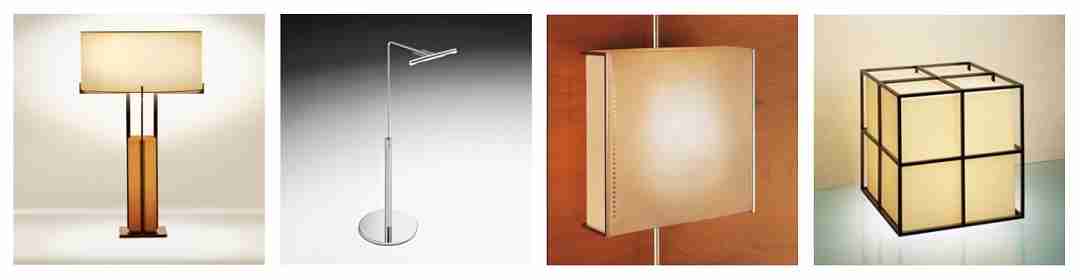
Lighting, Tresserra Collection.
Lighting
A discipline also undertaken by Jaime Tresserra. In this segment of the design of the Tresserra Collection , the use of LED technology and the profusion of metal as the protagonist would stand out. However, and thanks to the ease of surprising us, he also uses chainmail (stainless steel meshes), cowhide, fabrics, wood and glass (with various treatments).
With the same dedication as in the furniture, its design is very elaborate , achieving a simply exceptional final product. Let’s look at some of his creations.

Jocker floor lamp, Tresserra Collection.
Jocker Floor Lamp, 2016
With Jaime Tresserra’s best know-how, the Jocker floor lamp is presented as a very intense exercise in sobriety. I would highlight its proportions and the clever solution for screen scrolling.
Starting from a circular base of polished stainless steel , a finely coated tube in cowhide leather leads us to an ingenious L-shaped solution that picks up a small cylindrical prism covered in cream ribbing. The filigree is the vertical part of the L, which not only contains the wiring inside, but also allows the screen to be moved its entire diameter to illuminate, for example, reading when you are sitting in an armchair or armchair. How?, by means of a very discreet metal appendage at the base of the screen.
Dimensions: (base diameter, 35 cms. Shade diameter, 50 cms. Total opening, 78 cms. Height, 140/173 cms. Material: Stainless steel with cowhide leather, hazelnut / dark brown color. Screen: Cream color rib. LED: 21W

Oliverio pinza floor lamp, Tresserra Collection.
Oliverio pinza table lamp, 2013
This table lamp is a technological recreation of the Tresserra Collection. Present in some of the office tables, it is also used in other types of tables such as desks or consoles.
The design is a minimalist execution in stainless steel. Starting from an L-shaped tube, through which the wiring runs inside, an external cylinder is used that allows, by means of a small key (grub screw), to adjust the height of the lamp. Attached to this cylinder, 3 U-shaped plates with a vise adjustment screw will leave the lamp firmly attached to the thickness of the table.
At its horizontal end there is a discreet adjustable circle (by means of a thin rod) that contains the LED lighting. The upper face of this circle is finely covered in cowhide stitched with the Tresserra Collection logo.
Dimensions: (height x length) 80 x 55 cms. Accepted thicknesses: 40 / 55 mm. Material: Stainless steel with cowhide leather, hazelnut / dark brown color. Led: 5W.

Stardust table lamp, Tresserra Collection.
Stardust Table Lamp, 2004
I don’t know if you will believe me if I confess that this table lamp has me hypnotized. I really like its shape, similar to that of a ballistic projectile. It is an extra original and, let me say it, surprising and ingenious table lamp.
Jaime Tresserra has wanted, in this creation, to filter the light but hide the source. Let me explain: on a circular base, a circle of LEDs will illuminate a projectile-shaped glass screen upwards. The genius is how to get the light sifted. Surprise! By means of a stainless steel chainmail, a mesh made with an infinity of links intertwined with each other, achieving an authentic fabric that adopts the shape of glass and hides, by resting on the surface, the base of the lighting.
Dimensions: (diameter, 20 cm. height, 41 cm.) Material: Base and chainmail in stainless steel. Glass screen. Led: 5W. Lighting: with intensity regulator.
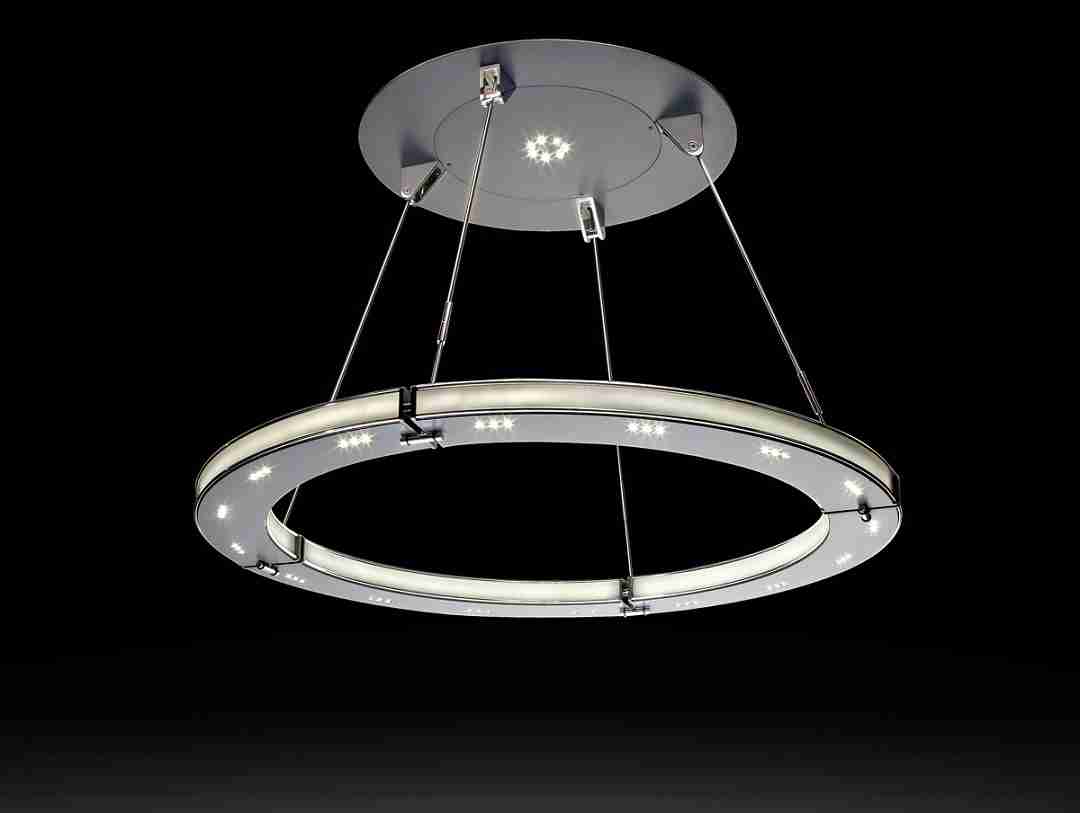
Velden ceiling lamp, Tresserra Collection.
Velden Ceiling Lamp, 2008
Two matt black treated aluminium discs, one anchored to the ceiling and the other suspended by thin stainless steel tubes adjustable by tensioners make up this ceiling lamp design from the Tresserra Collection. To highlight the lower Led lighting made by groups of 3 LEDs forming a perimeter circumference. The lamp also features a perimeter shade that occupies the thickness of the disc and allows the diffusion of perimeter LED lighting.
Dimensions: (upper disc diameter, 86 cm. lower disc, 150 cm.) Height between discs, taking into account the height of the ceiling. Material: Matte black finish aluminum, stainless steel. Lighting: Led with intensity regulator.
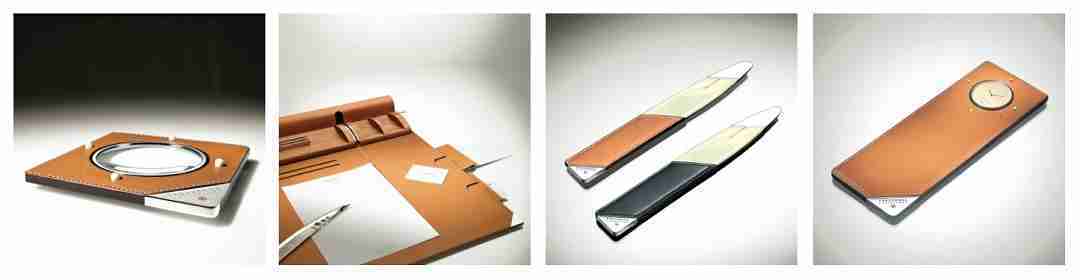
Objects, Tresserra Collection.
Objects
With extraordinary taste and a delicate finish, some of the objects we use in the office, at home or in a game, are also the target of the Tresserra Collection. Designed with care and with an additional twist to the classic concept of the object in question, these objects raise their value to that of “small works of art”.
Made with selected materials, they evoke the value of authenticity, turning a simple game or a wastebasket into an invitation to an unforgettable ritual. I have selected some objects and commented on them so that you can contemplate these solutions from the Tresserra Collection.

Barabino Backgamon Board, Tresserra Collection.
Barabino backgamon board, 2004
With some usual measurements for the realization of a board, in this case backgamon, Jaime Tresserra gives us a new lesson in design and finishes. Slightly rectangular, this top is made of cedar wood elegantly covered with cowhide leather, on which the triangles have been exquisitely die-cut by means of subtle micro-cylindrical punches.
The execution is exceptional, since the skin bends slightly towards the players ending in an elegant aluminum rod that will act as a support. Two small boxes, one for each player, with an ivory-like actuation token slide and expose the compartments where the chips and dice are located. Everything, finely stitched, gives the image of quality and good taste that Tresserra Collection likes.
Dimensions: (width x length) 47 x 52 cms. Material: Cedar wood and hazelnut / dark brown cowhide leather. Chips and dice: ivory simile.

Cylindrical Wastebasket, Tresserra Collection.
Cylindrical Bin, 2016
A regular trash can? It seems so, and it is, as it maintains its cylindrical shape and slightly softened edges. Its interior, made of stainless steel , gives a first idea of the type of bin we are visualizing. Its extraordinary stitched cowhide leather lining undoubtedly adds value, but its matching hardware must be added to complete the work. Also noteworthy is the removable PVC interior, which serves to ensure that nothing deteriorates.
Dimensions: (diameter x height) 28 x 35 cms. Material: Stainless steel with hardware. Exterior lined in hazelnut / dark brown cowhide leather. Inner bucket: PVC.

Snif Candlestick, Tresserra Collection.
Snif Candle Holder, 2004
There are many types of candlesticks, the most common have a glass where you can put the candles. This one does not. Tresserra, in this case, uses a cylindrical tube from Pirex and adds an interesting accessory in shiny nickel that, hanging from the upper edge, keeps the sail straight and in place that is held on a pin with a grub screw. Without a doubt, an elegant and special way to house candlelight.
Dimensions: height, 42 cms. Material: Pyrex tube and shiny nickel hardware. Includes 6 candles with anti-drip system.

Unique pieces, Tresserra Collection.
Unique pieces
“In order to free that part of the imagination that is usually repressed by the imposition of functional limitations, I have begun this series of unique pieces that let my creativity run free, with the intention of freeing my spirit from impossible dreams.” Jaime Tresserra.
I couldn’t explain it better. I will present two of these pieces that, as Tresserra himself has indicated, arise from “impossible dreams”.
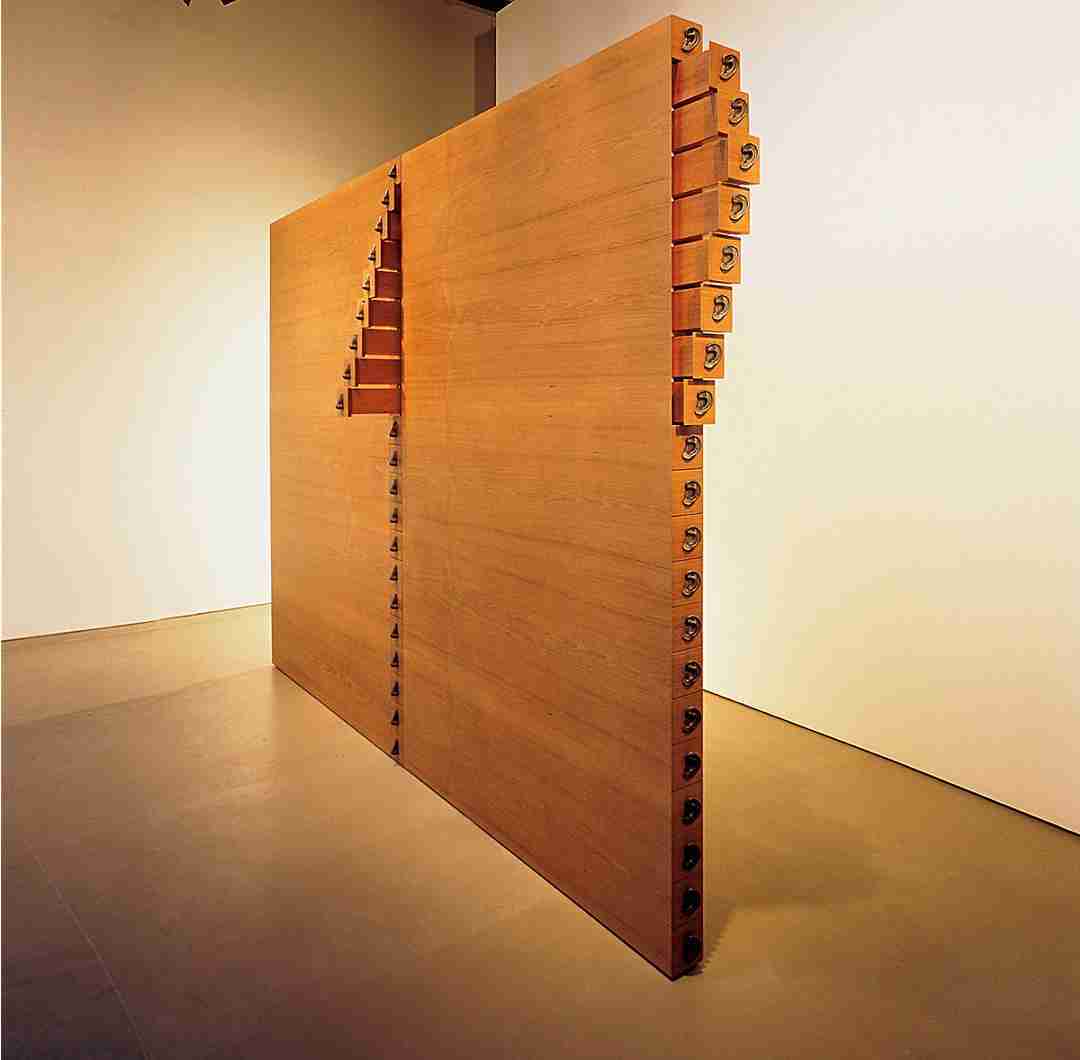
Two Senses Furniture, Tresserra Collection.
Mueble Dos Sentidos, 1993
“This is my tribute to smell and hearing, two senses that ignite when one decides to turn off one’s sight, an overrated tool in the craft of design. Thus, these two sources of feeling become protagonists here. In addition to being contemplated, the Two Senses begs to be smelled and listened to: the soft smell of teak and the restrained music of bronze hold a hidden world of memories dematerialized in songs and perfumes”. Jaime Tresserra.
I don’t know why I imagined this piece of furniture in an old apothecary. Then, as the article progressed (report, rather), and I was getting more details, I understood that Jaime Tresserrra’s reflection is correct. Two Senses is an existential work, a tribute to these two senses that, at times, we undervalue.
The restrained perfume of teak wood and the musical evocation of bronze awaken our sense of smell and our hearing to be able to justly appreciate this work of art.
As usual in Jaime Tresserra’s design, everything is already imagined and, when it comes to making it, the technique improves expectations. It is a rectangular piece of furniture, made of teak wood with horizontal veining. In the center, smell, represented by small drawers with mitered lids whose handle is a Bronze nose. Suggestive, isn’t it?. On the sides, as in our own head, the ears, also represented by little boxes whose handle are 2 bronze ears. Even more suggestive!
The furniture maintains a certain mystery, while the side drawers are deep and narrow, the central ones seem deeper than the wall that contains them. The secret is a small T on the back that houses the central drawers and keeps the furniture balanced. In addition, due to the prominence of the teak wall, it goes unnoticed.
Dimensions: (width x depth x height) 150 / 244 x 41 x 184 / 192 mm. Drawers: 42 long (side), 21 short (central). Drawer lid 8×8 cms. Handles: Bronze, ear and nose shape.
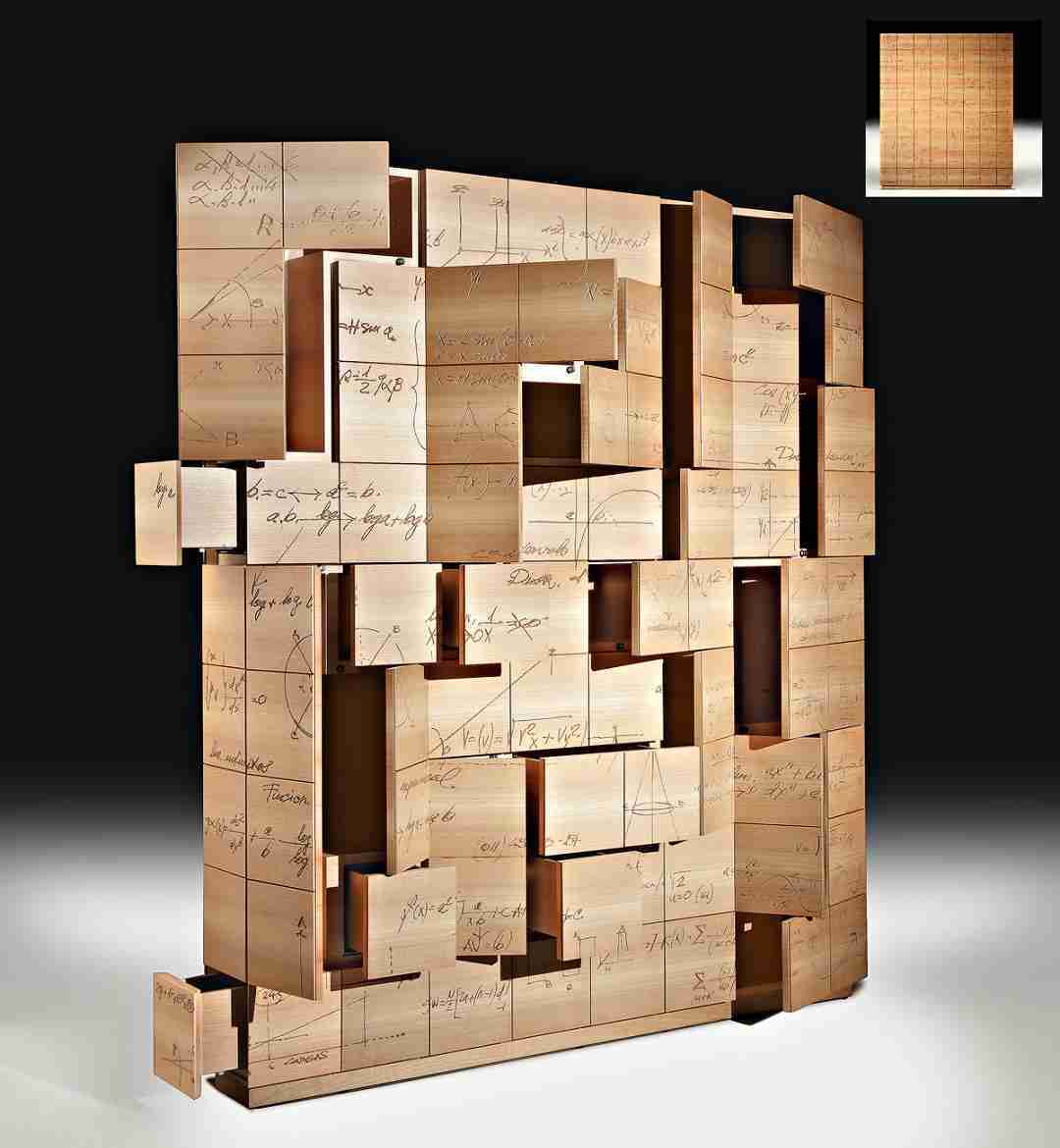
Formulas Furniture, Tresserra Collection.
Formulas Furniture, 2009
“In homage to my mathematics teacher who tormented my childhood with his incomprehensible cryptic explanations on the blackboard, irrevocably promoting my artistic vocation.” Jaime Tresserra.
An answer to a question from the past. In this exercise of understanding and remembrance, Jaime Tresserra takes us to the mathematics of his childhood and adolescence. It is curious to see how the designer himself gets down to work and repeats, with his calligraphy, one by one the formulas that choked him years ago. Now, paying tribute to the professor who taught them, he repeats them as he would never have imagined.
For this occasion, Tresserra uses a rectangle that repeats a module pattern of 20×20 cm. All made of light / dark walnut wood, teak and ebony, it forms an ingenious labyrinth of doors to access the compartment modules. In addition, evoking that past, he continuously engraves on the doors formulas , vectors, angles, radii numbers and unknowns, obtaining the most brilliant answer to the most difficult exam.
Dimensions: (width x depth x height) 163 x 42 x 187 px. Materials: Light/dark walnut wood, teak and ebony.
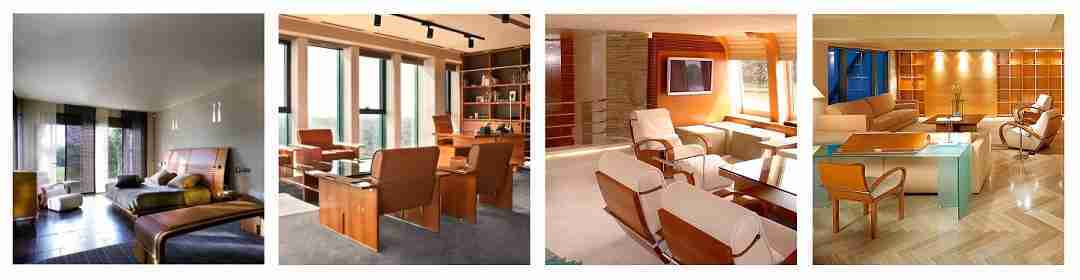
Projects, Tresserra Collection.
Projects
I have already commented that Jaime Tressera’s professional beginnings have a lot to do with interior architecture. In this field he performs very well and some of his projects have been highly praised by specialized critics.
It is no secret that the construction of 28 apartments at the Hotel Arts (Barcelona) was a strong boost in his career as an interior designer and architect. His projects, like his collector’s works, are imbued with a particular stamp. A standard-bearer for quality and extraordinary taste, he uses minimalism and colour as basic criteria, always carrying out an exhaustive analysis of light (surely inspired by the Mediterranean Sea), with which he manages to complete his ideas in a very personal way.
Residential projects, communities, yachts and other actions complete an enviable portfolio.
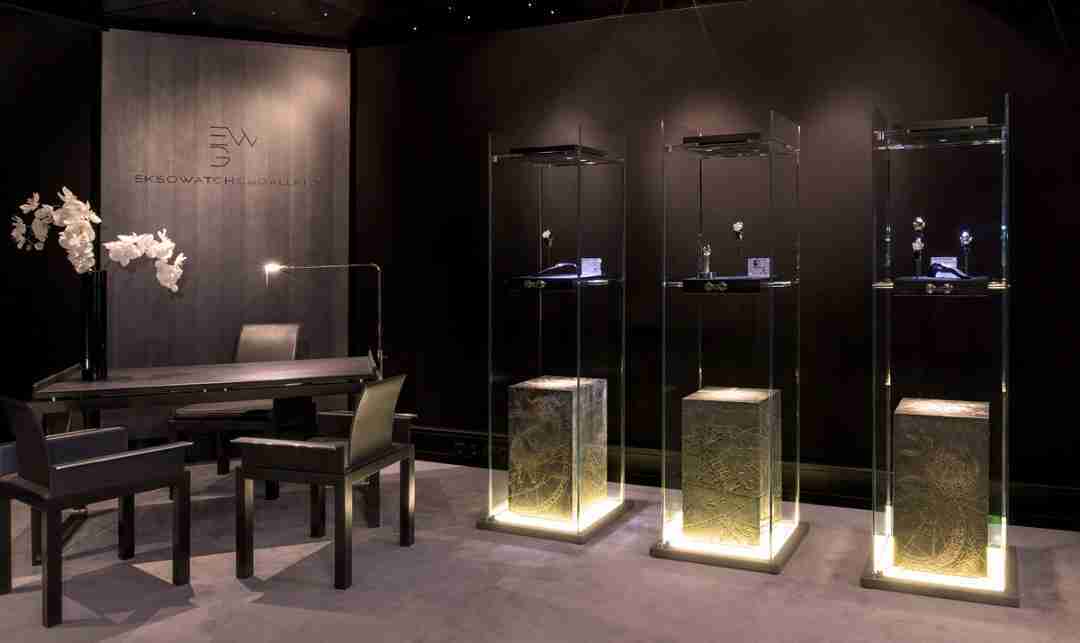
Watch showroom, Tresserra Collection.
Watch showroom, Paris
I have selected this project which, although with little graphic material, represents the differential character of Jaime Tresserra.
In this action, I would highlight, above any previous analysis, the treatment of light. It is difficult to achieve a more intimate atmosphere than with this dim light and with details of superior intelligence. I confirm that he does not miss one, and, in this case, what it is about, is selling luxury watches, and that is what he does.
If you look at the upper lighting, like a starry sky, you will notice that Tresserra only briefly affects it, giving the maximum prominence to the clocks. It subliminally invites customers to first visit the display cases, superbly lit from the floor, absolutely starring in the showroom.
The watches are illuminated by small upper LEDs and stand out in the display case. On the demonstration table, with an envelope made of dark brown cowhide, the Oliverio pinza lamp will highlight the pieces in expert hands.
Customers will take a seat in two proportionate Haiku chairs, upholstered in dark brown cowhide .
The real works of art, in addition to the clocks, are the display cases. Here he has prepared some clean glass display cases, which he has given prominence with lower prisms with oriental motifs at the base of the display case and on the display shelf. Stainless steel rods will suspend the shelf in the air and hide the lock that keeps the display case closed. The lower lighting of the display case gives it a unique character.
Opinion
While it is true that I was looking forward to working on this article, it is no less true that, after the weeks of work, I have learned a lot about the work of Jaime Tresserra and about Spanish design. I’m not wrong if I place this designer among the best in Spanish and International Design, and I have to do it because of his innate conditions to climb to the top.
If before starting the article I knew Tresserra’s work, now I have understood it a little more. I have found some answers that I did not know, probably because I had not asked myself some questions that I should have asked myself before.
The fact is that the designs that pass through Tresserrra’s hands culminate in exceptional pieces, authentic works of art. Everything passes through his mind and becomes his hands, his pencil does not know how to draw lines without emotions. Its curves, proportions, materials, touch… Everything invites us to dream.
I really like his defense of craftsmanship, more specifically, of artisans, and I also like his unambiguous defense of noble materials. In his hands, wood, leather, metal, glass take on the prominence of the best finery, enhance the works and invite them to the passage of time.
When a work by Tresserra falls into your hands, enjoy it intensely, you are obliged to pass it on to the next generation. Don’t forget.
Information, bibliography and media
We use our own and other means with the availability allowed by current legislation and free access to the World Wide Web. (See Terms & Conditions)
Texts: Owned, based on information from Loredana Vitale, Tresserra Collection, Wikipedia.
Images: Tresserra Collection.
Videos: s/n.