



Le Corbusier, great master and innovator of modern architecture

Earn 10.00 Reward Points by commenting the blog post
Introduction to Le Corbusier
Charles-Édouard Jeanneret-Gris, better known from the 1920as Le Corbusier (La Chaux-de-Fonds, Canton of Neuchatel, Swiss; October 6 , 1887-Roquebrune-Cap-Martin, Maritime Alps, France; August 27 , 1965), was an architect and theorist of architecture, urban planner, painter, sculptor and man of letters swiss nationalized french in 1930.
It is considered one of the clearest exponents of modern architecture (with Frank Lloyd Wright, Oscar Niemeyer, Walter Gropius, Alvar Aalto, Richard Neutra, Ludwig Mies van der Rohe and Theo van Doesburg) and one of the most influential architects of the 20th century. In addition to being one of the greatest innovators of modern architecture, he was a tireless cultural agitator, a task he carried out with passion throughout his life. With his writings he earned a well-deserved fame as a polemicist and contributed a veritable wealth of innovative ideas that have made his work decisively influence subsequent architecture.
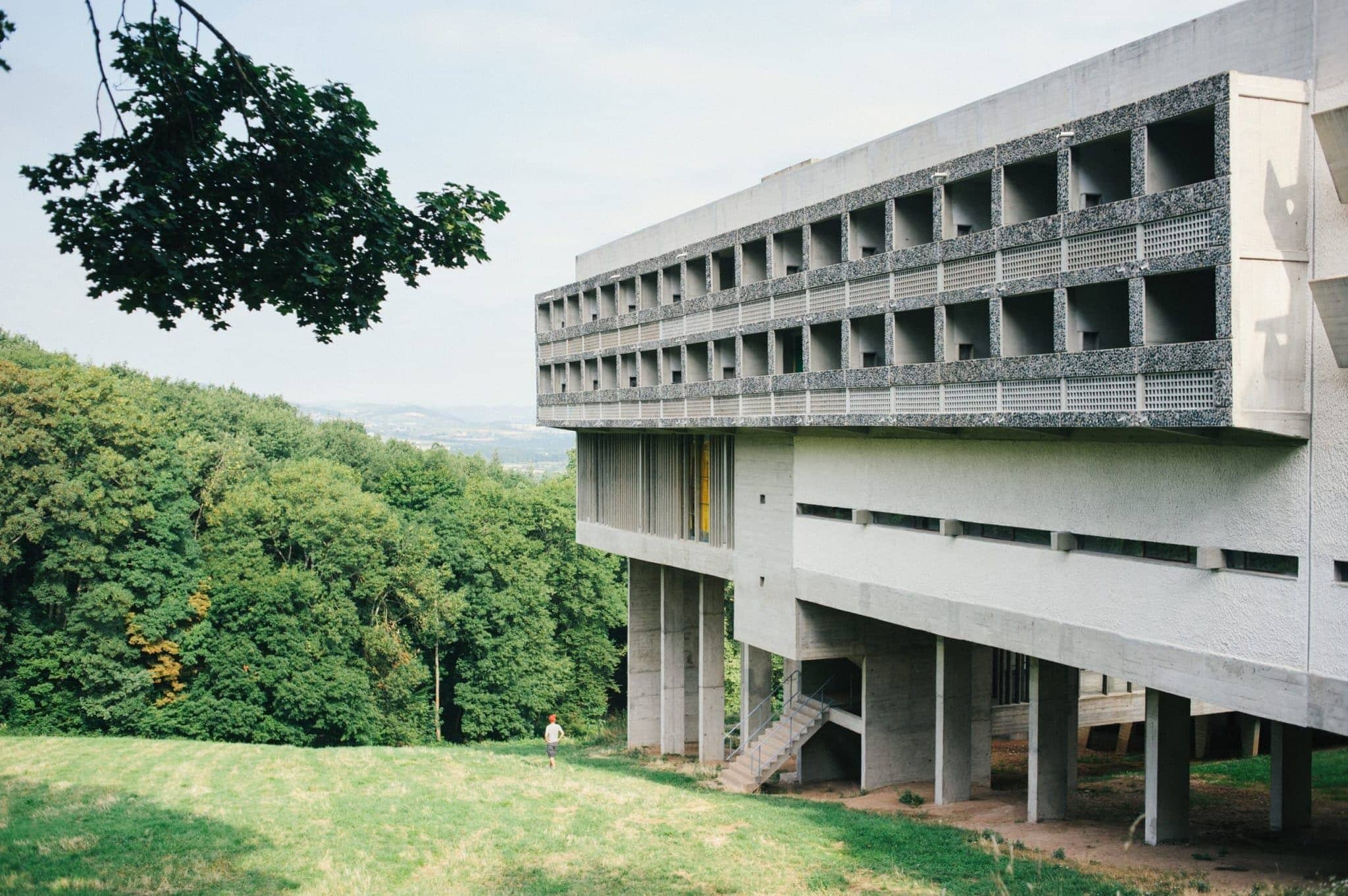
Biography (extract)
He was born in 1887, in the town of La Chaux-de-Fonds, in the francophone Switzerland with the name of Charles Édouard Jeanneret-Gris. At the age of 29, he moved to Paris where he adopted the pseudonym Le Corbusier, humorous variation (since it evokes the word raven) of his maternal grandfather’s surname: Lecorbésier.
In 1900, Le Corbusier began his apprenticeship as engraver and chisel at the La Chaux-de-Fonds School of Art. One of his teachers, Charles L’Eplattenier, oriented him towards paint and then towards architecture. In 1905 1905 he designed his first building, the Villa Fallet, a single-family home for a member of the School of Art.
Already at Paris, he worked in the studio of Auguste Perret, a pioneer architect in the construction technique in reinforced concrete. In Germany he worked in the office of Peter Behrens, where he coincided with Ludwig Mies van der Rohe and Walter Gropius. He was, for two years, a professor of architecture and decoration at the Paris School of Art.
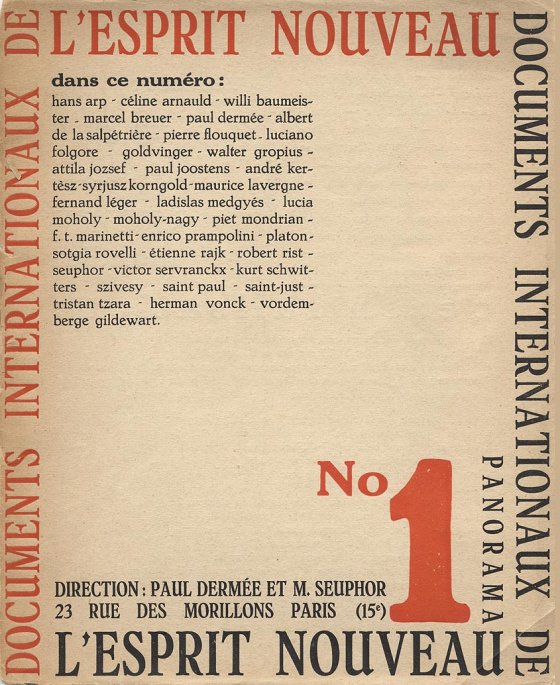
In 1920 he edited the magazzine L’Esprit Nouveautogether with the painter Amédée Ozenfant, a publication where both laid the foundations of Purismo.
In 1922, Le Corbusier began working with his cousin Pierre Jeanneret in his architecture office on rue de Sèvres, n association they maintained until 1940 and which they would later resume for projects in India.
In October 1929 Le Corbusier dictated in Buenos Aires a cycle of ten conferences, invited by the Asociación Amigos del Arte. On this trip he also visited Río de Janeiro, Asunción y Montevideo.
Le Corbusier fue un trabajador incansable. He carried out innumerable projects, many of which never came to fruition, but which marked later generations of architects.
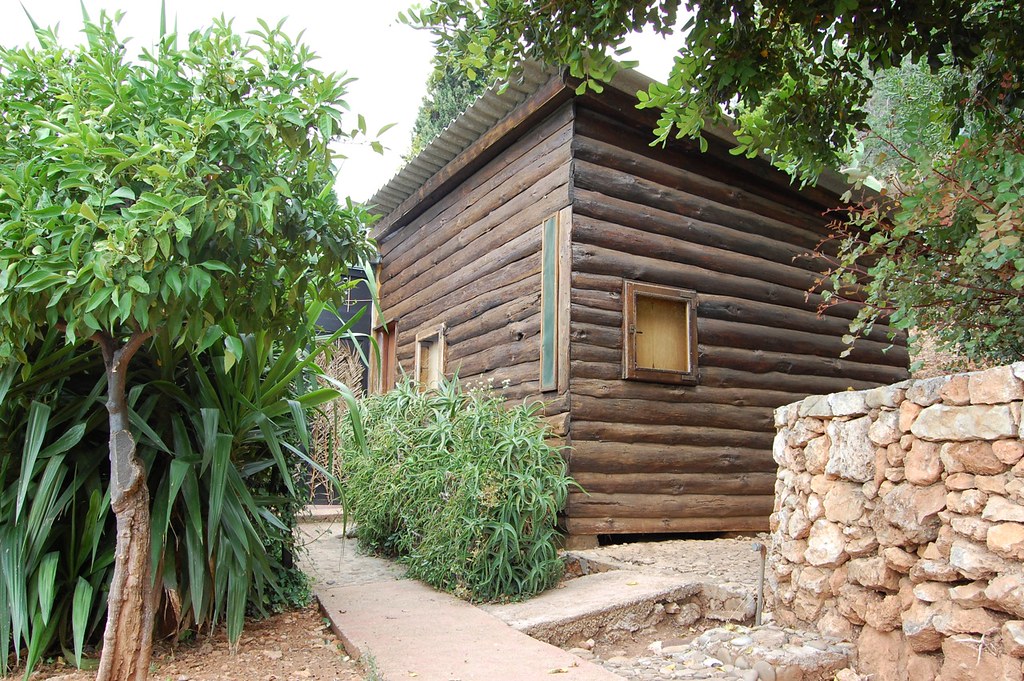
His relationship with the sea was intense, but at the same time fateful and finally lethal. In 1938 he was trapped by a yacht’s propeller, which left a deep scar on his right leg. In 1952 he built a tiny cabin in Roquebrune-Cap-Martin, on the French Côte d’Azur, where he spent every summer he could for the rest of his life. He even said about it: “I have a castle on the Côte d’Azur that is 3.66 x 3.66 meters”.
On August 27, 1965, disobeying his doctor’s instructions, Le Corbusier went swimming while on vacation at his cabin in Roquebrune-Cap-Martin, on the French Mediterranean. He was found dead by some fishermen, presumably of a heart attack.
He was named a full member of the National Academy of Fine Arts.
Political controversies
Le Corbusier’s political views have been quite variable over time. In the 1920s, he co-founded and contributed articles on town planning to the fascist magazines Plans, Prélude, and L’Homme Réel. He also wrote articles in favor of the anti-Semitism pro-Nazi articles for these magazines, as well as “hate editorials.”
Between 1925 and 1928, Le Corbusier had connections with Le Faisceau, a short-lived French fascist party led by Georges Valois.. Later on, Valois he became anti-fascist. Le Corbusier knew another former Faisceau member, Hubert Lagardelle., a former trade union leader who had grown disaffected with the political left. In 1934, after Lagardelle had obtained a post at the French embassy in Rome, arranged for Le Corbusier to give a lecture on architecture at the invitation of Benito Mussolini .
Le Corbusier has been accused of anti-Semitism. In writing to his mother in October 1940, dictates: “The Jews are having a hard time. From time to time I feel sorry. But it seems that their blind lust for money has rotted the country.
He was also accused of disparaging the Muslim population of Algeria, then part of France.. When Le Corbusier proposed a plan for the reconstruction of Argel,he condemned the existing housing for European Algerians, complaining that it was inferior to that inhabited by indigenous Algerians: “the civilized live like rats in holes”, while, “the barbarians live in solitude, in well-being”. His plan to rebuild Algiers was rejected, and later Le Corbusier avoided politics.
Theoretical contributions to architecture
Le Corbusier, in addition to being a great architect and painter, was an eminent architectural theorist. He wrote several books, in which he exemplified his ideas through his own projects. He was very clear that, apart from knowing how to create good buildings, it was necessary to know how to explain them and transmit them to the rest of the professionals and students, and he carried out the task of publicizing his own work with great mastery.
As a visionary, Le Corbusier saw the possibility of changing the world through architecture. Although he never allied himself with a particular political group, his position was closer to a liberal position, and as such, he saw any process of design with utopian. This attitude allowed him to contribute in a significant way to the history of architecture.
La machine à habiter
Le Corbusier is known for his definition of housing as the La machine à habiter (the machine to inhabit literally translated). With this, Le Corbusier emphasized not only the functional component of the house, but also that this functionality should be aimed at live, understanding the latter from a point of view metaphysical. Le Corbusier believed that the goal of architecture is to generate beauty (Also well known is his phrase: “Architecture is the wise, correct and magnificent game of volumes brought together under light”), and that this should have an impact on the way of life of the occupants of the buildings themselves.
Regarding the criterion of “inhabiting machine”, Le Corbusier was dazzled by the then new machines: especially automobiles and airplanes, considering those that had practical and functional designs as a model for an architecture whose beauty was based on practicality and functionality. ; the rationalism. The first attempt at serial construction is formulated in the project of the Citrohan houses.
L’Esprit Nouveau
In order to spread his ideas about architecture and painting, Le Corbusier founded in 1920, together with Amédée Ozenfan and Paul Dermée, an artistic popularization magazine that obtained great international resonance: L’Esprit Nouveau. (although in French the word esprit usually also has the meaning of conscience , reason , intelligence)
Published between 1920 and 1925, it reached 28 copies, with an average of 100 pages and with color images. It was the magazine of the purist movement. Its scope was international, reaching considerable diffusion in countries such as Mexico.
His slogan was: “There is a new spirit; it is a spirit of construction and synthesis guided by a clear conception.”
In 1923 Le Corbusier published a collection of articles from the magazine in his book Vers Une Architecture.
The five points of a new architecture
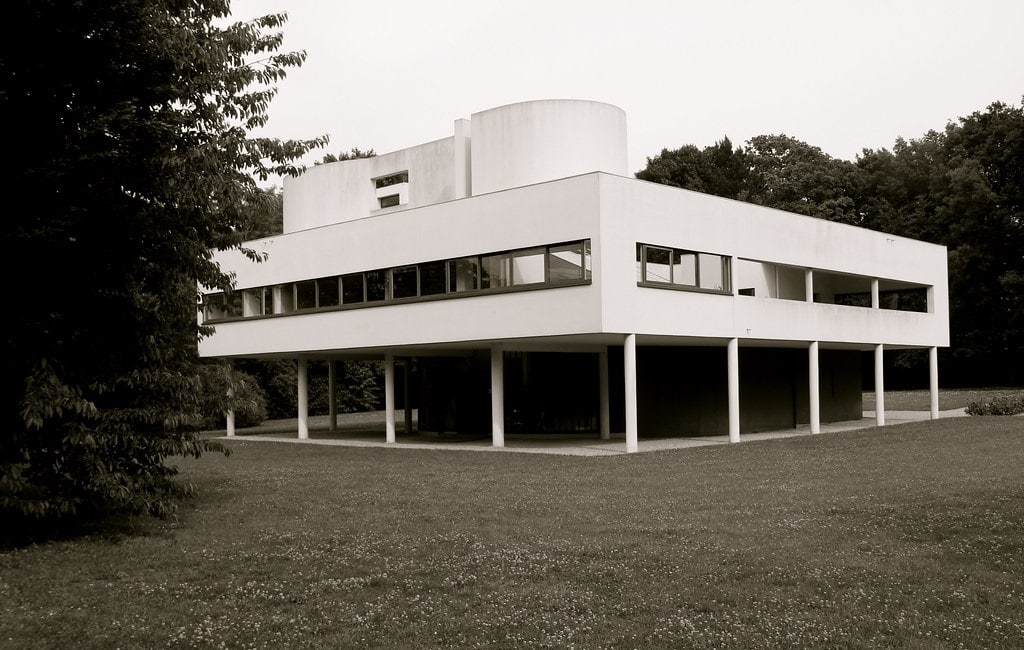
In 1927 Le Corbusier presents a handwritten document where he systematically exposes his architectural ideas: the so-called “five points of a new architecture”.
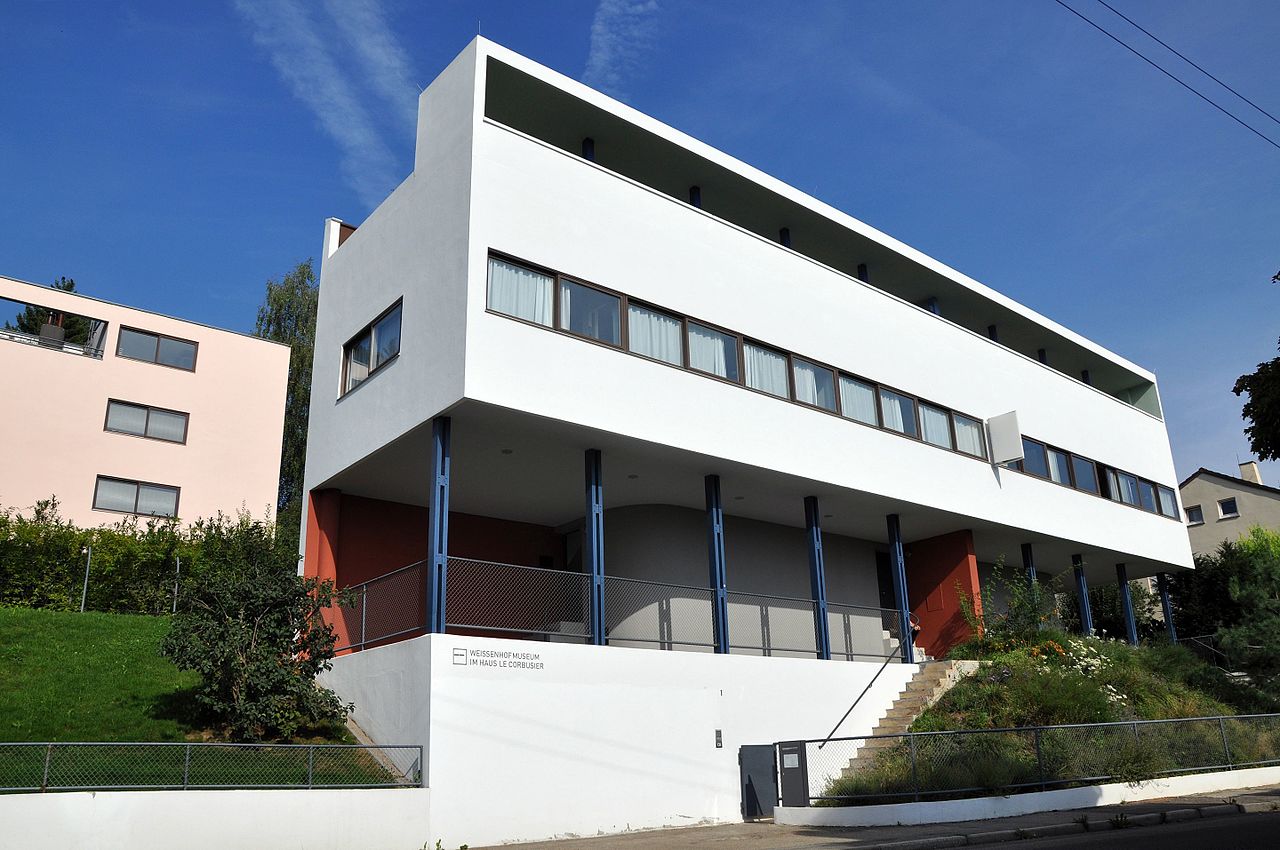
- The ground floor on pilots: for Le Corbusier, the ground floor of the house, like the street, belonged to the car, whether for circulation or parking, for this reason the house was raised on stilts to allow the movement of vehicles .
- The free floor: from the independent structure, taking advantage of reinforced concrete technology, it generates a structure of pillars on which slabs rest, in this way the architect decides where to put the enclosures, being independent from one level to another.
- The free facade: The structure is delayed with respect to the facade, freeing it from its structural function and allowing freedom in its composition independent of the structure.
- The elongated window: The exterior walls are released, and the windows can cover the entire width of the construction, improving the relationship with the exterior and allowing better sunlight for the interior spaces.
- The terrace-garden: for Le Corbusier, the area occupied by the house to nature had to be returned in the form of a garden on the roof of the building, converting the space above the house into a usable area for recreation, which would also maintain thermal insulation conditions on the new slabs. of concrete.
And there is one more element that Le Corbusier ponders in the new architectural work, the architectural ‘promenade’: the building must invite to be visited and from that it will be possible to understand it in its entirety.
His architecture turns out to be highly rationalist, refined (with the use of materials without concealing them; note the possible beauty of the refined lines, without decorations, without superfluous elements) and with an excellent use of light, giving a sensation of freedom (at least for gaze displacement) and ease of movement.
The Modulor
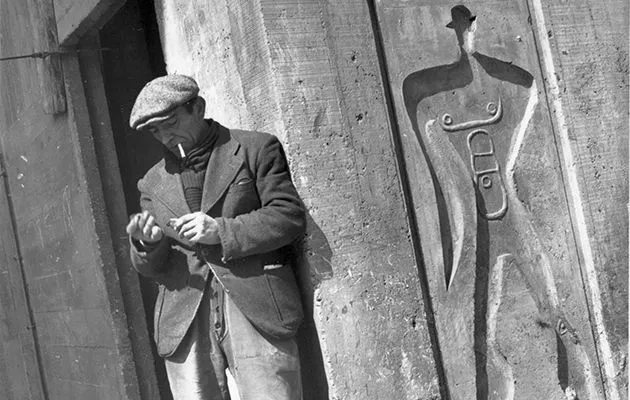
Devised the Modulor, system of measurements based on human proportions, in which each magnitude is related to the previous one by the Golden Number, to serve as a measure of the parts of architecture. In this way he took up the ancient ideal of establishing a direct relationship between the proportions of buildings and those of man.
He took as the scale of the average French man of that time: 1.75 m tall; and later added that of the 6-foot (1.8288 m) British policeman, which gave the Modulor II. The results of these investigations were published in a book with the same name of the Modulor.
Information, bibliography and media:
We use our own means and other means with the availability allowed by current legislation and free access to the World Wide Web. (See Terms and conditions)
Texts (source): Wikipedia and own.
Images: Commons License (Unsplash, Flickr, Wikimedia Commons) (See Legend in each image)
Videos: Arquitectura Abreviada







Very shortly this web page will be famous among all blogging people, due to it’s nice content